A self-driving car is an autonomous passenger vehicle capable of sensing its environment and operating with minimal or no human input, employing AI-driven perception, decision-making, and control systems to navigate roads, comply with traffic regulations, and transport occupants safely. Self-driving cars represent the consumer application of autonomous vehicle technology, typically targeting SAE Level 3–5 automation in urban and highway environments.
Semantic Classification
Content
- A Self-Driving Car is an autonomous passenger vehicle capable of sensing its environment and operating with minimal or no human input, employing AI-driven perception, decision-making, and control systems to navigate roads, comply with traffic regulations, and transport occupants safely. Self-driving cars represent the consumer application of autonomous vehicle technology, typically targeting SAE Level 3-5 automation in urban and highway environments.
Conclusion
- Enterprise AI is driving broad organisational transformation across multiple departments.
- Challenges persist due to the wide-reaching and iterative nature of generative AI adoption.
Inequality as the driving force
Methodology and Approach
- Mimic socratic self-questioning and theory of mind as needed
- Do not elide or truncate code in code samples
Conclusion
- Enterprise AI is driving broad organisational transformation across multiple departments.
- Challenges persist due to the wide-reaching and iterative nature of generative AI adoption.
Inequality as the driving force
Methodology and Approach
- Mimic socratic self-questioning and theory of mind as needed
- Do not elide or truncate code in code samples
Agentic Architectures
-
Adoption of agentic architectures grew from 0% in 2023 to 12% in 2024.
-
Enterprise AI is driving broad organisational transformation across multiple departments.
-
Challenges persist due to the wide-reaching and iterative nature of generative AI adoption.
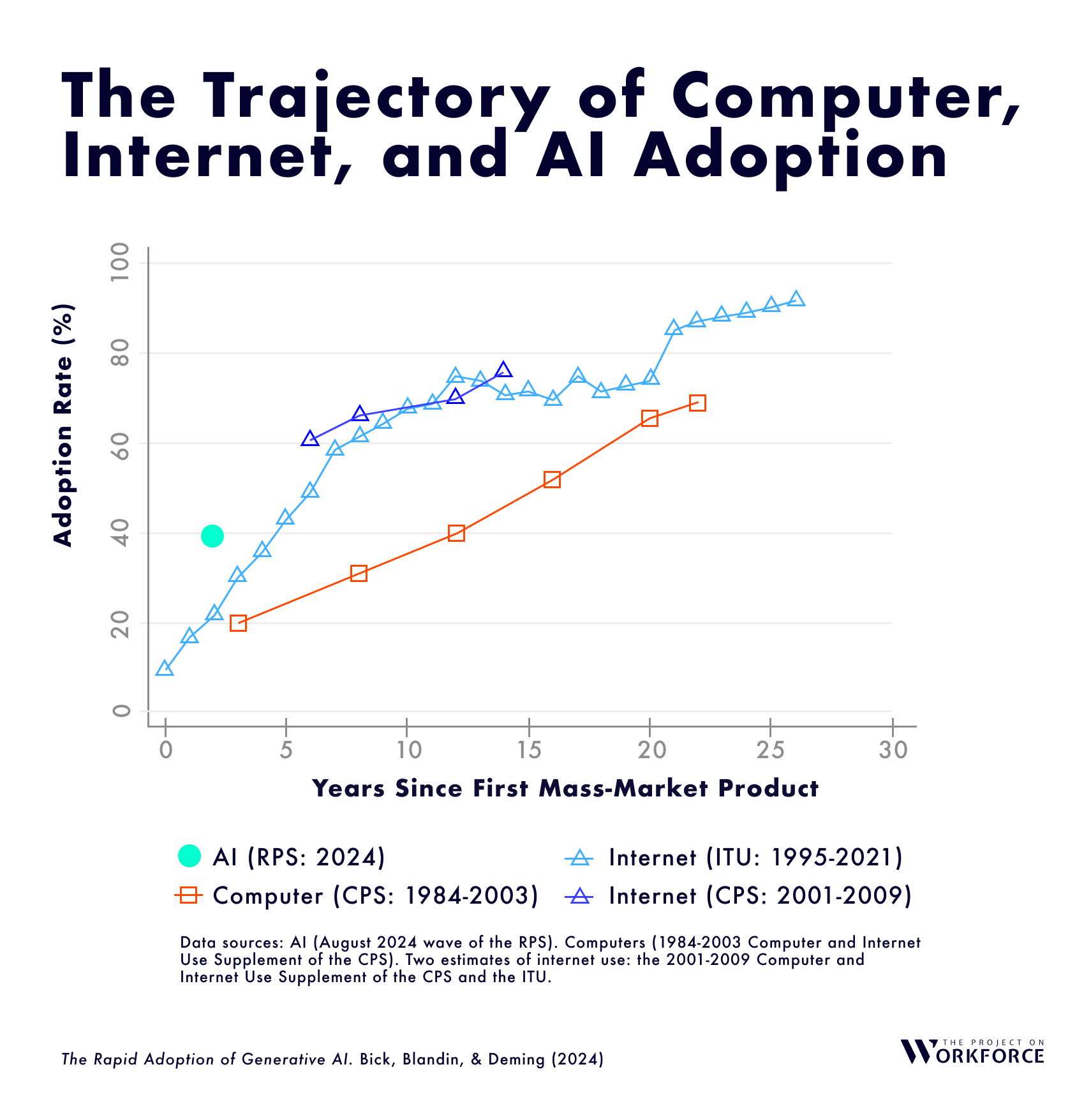
- As of August 2024, 39.4% of Americans aged 18-64 reported using generative AI.
- 28% of employed respondents said they use generative AI at work.
- Nearly 1 in 9 workers (10.6%) reported using generative AI daily at work.
- Adoption has been faster than previous transformative technologies like personal computers and the internet.
Inequality as the driving force
Methodology and Approach
- Mimic socratic self-questioning and theory of mind as needed
- Do not elide or truncate code in code samples
Agentic Architectures
- Enterprise AI is driving broad organisational transformation across multiple departments.
Inequality as the driving force
Core Characteristics
-
Full Autonomy: Capable of handling complete driving task
-
Safety-Critical: Designed for passenger safety and public road operation
-
Regulatory Compliance: Adherence to traffic laws and vehicle regulations
-
User Interface: Passenger interaction and override capabilities
-
Fail-Safe Systems: Redundancy and graceful degradation
Relationships
-
Superclass: Autonomous Vehicle
-
Related: Robotaxi, ADAS, Autonomous Navigation
-
Standards: SAE J3016, ISO 26262, UN Regulation 155/156
Key Literature
-
Litman, T. (2021). “Autonomous Vehicle Implementation Predictions: Implications for Transport Planning.” Victoria Transport Policy Institute.
-
Fagnant, D. J., & Kockelman, K. (2015). “Preparing a nation for autonomous vehicles: opportunities, barriers and policy recommendations.” Transportation Research Part A, 77, 167-181.
See Also
-
-
Core Characteristics
-
Full Autonomy: Capable of handling complete driving task
-
Safety-Critical: Designed for passenger safety and public road operation
-
Regulatory Compliance: Adherence to traffic laws and vehicle regulations
-
User Interface: Passenger interaction and override capabilities
-
Fail-Safe Systems: Redundancy and graceful degradation
Relationships
-
Superclass: Autonomous Vehicle
-
Related: Robotaxi, ADAS, Autonomous Navigation
-
Standards: SAE J3016, ISO 26262, UN Regulation 155/156
Key Literature
-
Litman, T. (2021). “Autonomous Vehicle Implementation Predictions: Implications for Transport Planning.” Victoria Transport Policy Institute.
-
Fagnant, D. J., & Kockelman, K. (2015). “Preparing a nation for autonomous vehicles: opportunities, barriers and policy recommendations.” Transportation Research Part A, 77, 167-181.
See Also
-