Named Entity Recognition (NER) is the NLP task of identifying and classifying named entities (persons, organisations, locations, dates, quantities) within unstructured text into predefined categories. NER systems employ transformer-based models (BERT, RoBERTa) with sequence labelling architectures (CRF, BiLSTM-CRF) to extract structured information from documents.
Semantic Classification
Content
- Named Entity Recognition (NER) is the NLP task of identifying and classifying named entities (persons, organisations, locations, dates, quantities) within unstructured text into predefined categories. NER systems employ transformer-based models (BERT, RoBERTa) with sequence labelling architectures (CRF, BiLSTM-CRF) to extract structured information from documents, enabling information extraction, knowledge graph construction, and semantic search.
Converting 2D Plans into 3D Models
- usBIM.planAI (ACCA tool)
- Upload PNG, JPG or PDF plans; AI recognises walls, doors and rooms; outputs IFC for import into Vectorworks.
- Planner 5D AI (service)
- Fast floor-plan recognition from images; yields a basic 3D layout you can reference or rebuild precisely.
- Coohom Floor Plan to 3D (overview)
- One-click conversion with auto-furnished interiors; ideal for rapid prototyping and client approvals.
- Other services (GetFloorPlan, RoomSketcher) offer similar AI-assisted conversions for sketches or scanned plans.
- Start with a simple RAG setup in Logseq or Obsidian linked to your Vectorworks export folder so that every time you update a client plan, your AI system can index it.
- Use the AI Visualizer for rapid concept boards, then refine chosen options in Veras or Enscape for client review.
- Incorporate AR with Vectorworks Nomad on site visits—clients love seeing designs overlaid in real space.
- Keep stylistic consistency by choosing one illustration pipeline (for example, Stable Diffusion plus a ControlNet line-art workflow) and training a small set of prompts or custom LoRAs so that your presentations always look cohesive.
Converting 2D Plans into 3D Models
- usBIM.planAI (ACCA tool)
- Upload PNG, JPG or PDF plans; AI recognises walls, doors and rooms; outputs IFC for import into Vectorworks.
- Planner 5D AI (service)
- Fast floor-plan recognition from images; yields a basic 3D layout you can reference or rebuild precisely.
- Coohom Floor Plan to 3D (overview)
- One-click conversion with auto-furnished interiors; ideal for rapid prototyping and client approvals.
- Other services (GetFloorPlan, RoomSketcher) offer similar AI-assisted conversions for sketches or scanned plans.
- Start with a simple RAG setup in Logseq or Obsidian linked to your Vectorworks export folder so that every time you update a client plan, your AI system can index it.
- Use the AI Visualizer for rapid concept boards, then refine chosen options in Veras or Enscape for client review.
- Incorporate AR with Vectorworks Nomad on site visits—clients love seeing designs overlaid in real space.
- Keep stylistic consistency by choosing one illustration pipeline (for example, Stable Diffusion plus a ControlNet line-art workflow) and training a small set of prompts or custom LoRAs so that your presentations always look cohesive.
Devin
Converting 2D Plans into 3D Models
- usBIM.planAI (ACCA tool)
- Upload PNG, JPG or PDF plans; AI recognises walls, doors and rooms; outputs IFC for import into Vectorworks.
- Planner 5D AI (service)
- Fast floor-plan recognition from images; yields a basic 3D layout you can reference or rebuild precisely.
- Other services (GetFloorPlan, RoomSketcher) offer similar AI-assisted conversions for sketches or scanned plans.
- Incorporate AR with Vectorworks Nomad on site visits—clients love seeing designs overlaid in real space.
- Keep stylistic consistency by choosing one illustration pipeline (for example, Stable Diffusion plus a ControlNet line-art workflow) and training a small set of prompts or custom LoRAs so that your presentations always look cohesive.
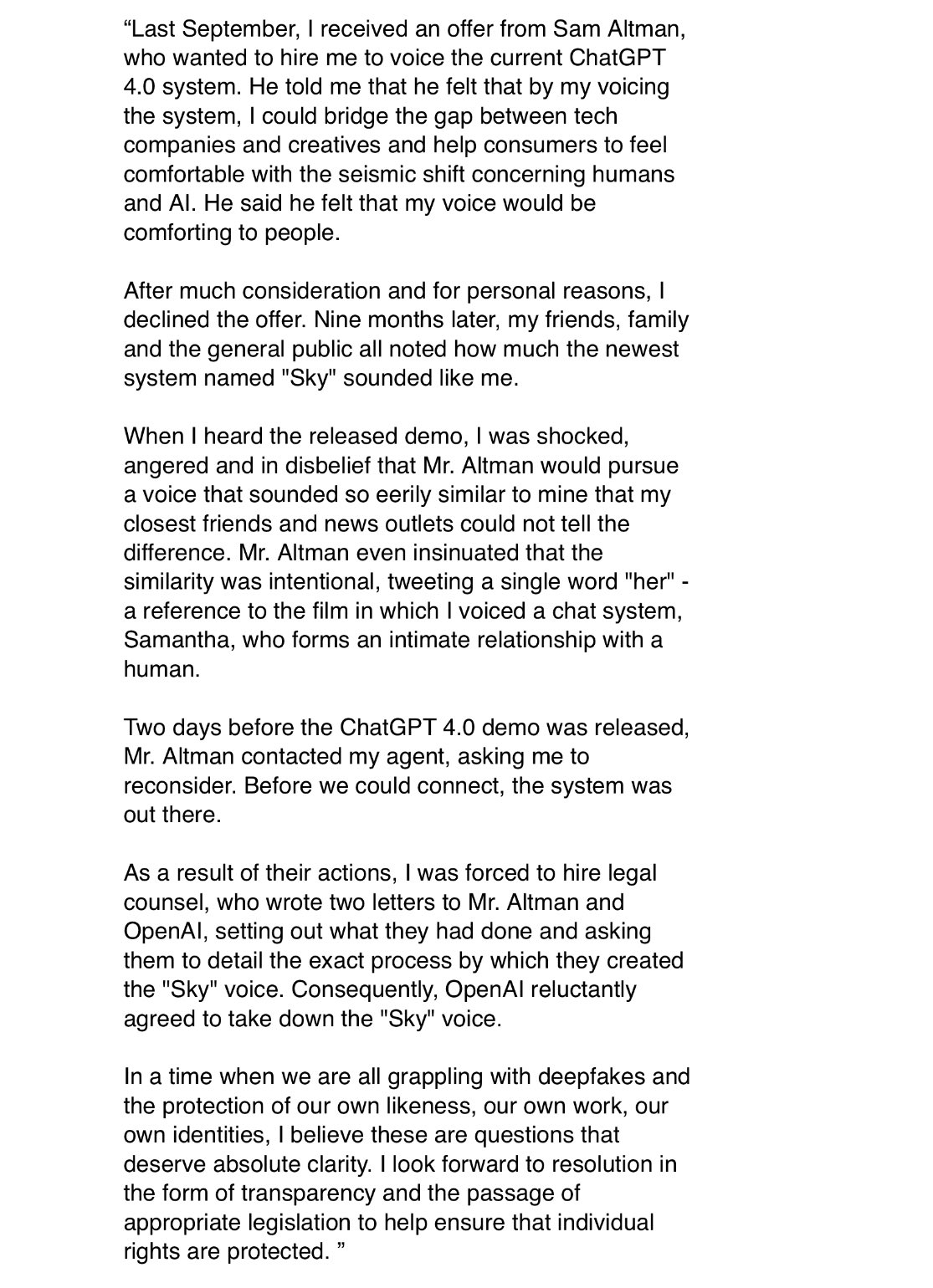
The blurred line of identity
Core Characteristics
-
Entity Detection: Identification of entity boundaries in text
-
Entity Classification: Assignment to predefined categories (PER, ORG, LOC, DATE)
-
Contextual Understanding: Disambiguation using surrounding context
-
Multi-Domain Support: Adaptation to medical, legal, financial domains
-
Few-Shot Learning: Transfer learning for new entity types
Relationships
-
Subclass: Natural Language Processing
-
Related: Information Extraction, Knowledge Graph, Sequence Labelling
-
Models: BERT-NER, SpaCy, Flair, BiLSTM-CRF
-
Applications: Information Extraction, Knowledge Graphs, Question Answering
Key Literature
-
Lample, G., et al. (2016). “Neural architectures for named entity recognition.” NAACL, 260-270.
-
Devlin, J., et al. (2019). “BERT: Pre-training of deep bidirectional transformers for language understanding.” NAACL, 4171-4186.
-
Li, J., et al. (2020). “A survey on deep learning for named entity recognition.” IEEE TKDE, 34(1), 50-70.
See Also
-
-
Core Characteristics
-
Entity Detection: Identification of entity boundaries in text
-
Entity Classification: Assignment to predefined categories (PER, ORG, LOC, DATE)
-
Contextual Understanding: Disambiguation using surrounding context
-
Multi-Domain Support: Adaptation to medical, legal, financial domains
-
Few-Shot Learning: Transfer learning for new entity types
Relationships
-
Subclass: Natural Language Processing
-
Related: Information Extraction, Knowledge Graph, Sequence Labelling
-
Models: BERT-NER, SpaCy, Flair, BiLSTM-CRF
-
Applications: Information Extraction, Knowledge Graphs, Question Answering
Key Literature
-
Lample, G., et al. (2016). “Neural architectures for named entity recognition.” NAACL, 260-270.
-
Devlin, J., et al. (2019). “BERT: Pre-training of deep bidirectional transformers for language understanding.” NAACL, 4171-4186.
-
Li, J., et al. (2020). “A survey on deep learning for named entity recognition.” IEEE TKDE, 34(1), 50-70.
See Also
-