Artificial Intelligence is a artificial intelligence concept and a type of owl:Thing. that enables Autonomous Systems, Decision Support. comprising Computer Vision, Deep Learning.
Semantic Classification
Content
Primary Definition
Artificial intelligence (AI) is the research and development of mechanisms and applications of AI systems. An engineered system that generates outputs such as content, forecasts, recommendations, or decisions for a given set of human-defined objectives. AI systems use machine and human-based inputs to perceive real and virtual environments, abstract such perceptions into models through analysis in an automated manner, and use model inference to formulate options for information or action.
Source: ISO/IEC 22989:2022, Clauses 3.1.1-3.1.2 - Authority Score: 0.95
NVIDIA Edify - Edify 3D is a framework developed by NVIDIA Research that focuses on creating, editing, and refining 3D scenes and content.
-
The system leverages artificial intelligence and machine learning to allow users to interact with 3D models in a more intuitive and accessible way, streamlining the 3D creation process.
-
One key aim of Edify 3D is to simplify complex tasks like object placement, colour correction, and material assignment within a 3D environment.
-
The framework allows for interactive editing using natural language commands or simple visual cues, making it easier for users with varying levels of 3D expertise to contribute.
-
It aims to integrate with existing 3D workflows and tools, offering features such as intelligent scene organisation and optimisation for real-time rendering.
-
Edify 3D is designed to handle large and complex 3D datasets, making it suitable for applications ranging from architectural visualisation to virtual world design.
-
NVIDIA hopes that it will democratise 3D content creation, allowing more people to participate in designing and customising virtual environments.
Future Plans
- AGI and Agents: OpenAI pursued agentic AI systems through 2025-2026 but has not announced AGI achievement as of mid-2026; CEO Sam Altman has projected AI research automation capabilities emerging by 2027-2028.
- Hardware: The acquisition of io suggests a move into AI hardware.
AI Risks: A Landscape of Growing Concerns
- The rapid advancement of artificial intelligence has brought a range of significant risks to the forefront of global discussion. These challenges, spanning from immediate threats to long-term existential concerns, are being actively addressed by governments, research institutions, and the private sector.
AI Scrapers
- AI scrapers are tools that use artificial intelligence to extract data from websites. They can be used for a variety of purposes, including data mining, research, and content aggregation.
Stanford AI Index 2024
- The 2024 Stanford AI Index Report offers a comprehensive analysis of artificial intelligence’s trajectory, encompassing technical advancements, economic implications, and societal perceptions. Below is a synthesized overview, reflecting on the report’s key findings and their broader significance. (Quid x 2024 Stanford AI Index Report)
Artificial Intelligence
- Artificial intelligence (AI) is a wide-ranging branch of computer science concerned with building smart machines capable of performing tasks that typically require human intelligence.
Automated Podcasting
- Automated podcasting is the use of artificial intelligence to automate various aspects of the podcasting workflow, from content creation to audio production and distribution.
Innovating AI Tools for Call Center Operators, Including Agentic Systems
The call center industry is rapidly evolving, with artificial intelligence (AI) playing an increasingly important role in enhancing customer experience and streamlining operations 1. This article explores the innovative AI tools available to call center operators, with a particular focus on agentic systems. These advanced AI systems are transforming the way call centers operate, enabling automation, personalization, and improved efficiency.
Artificial Intelligence
Geographical and Cultural Factors
- Debate is especially prominent in San Francisco/Silicon Valley and Oxford/Cambridge
- EA emerged from philosophy departments, especially Oxford
- EAcc has roots in Silicon Valley startup and venture capital culture
- Both have ties to the rationalist community and “weird” ideas like thermodynamic intelligence
Artificial Intelligence
- The development of Artificial General Intelligence (AGI) and Artificial Superintelligence (ASI) is highly controversial and debated. Experts disagree on the likelihood, timeline, and implications of these advanced AI systems
- AGI/ASI may not have human-like emotions, desires, or anthropomorphised traits that we imagine. Its cognition and intentions could be entirely alien and incomprehensible to us
- It’s unclear whether an AGI/ASI would be sympathetic and protective of humanity as an “ancestor” species, or view us as irrelevant and expendable. Both scenarios are conceivable
- China’s model of a more closed, centralized, state-controlled technology ecosystem could potentially be applied to AGI development. This could allow for more rapid, coordinated, and sandboxed AGI research compared to a fragmented global effort
- In the near-term, AI presents major risks around privacy, surveillance, manipulation, and control at the hands of corporations and governments. Regulation is needed to curtail abuses of the technology.
- AI-generated content is rapidly proliferating online and has the potential to flood the digital landscape, displacing human-created art/music/writin. This could lead to cultural homogenisation and stagnation, or more likely a fracturing of common purpose.
- If AI renders broad swaths of human labour obsolete, we could face severe economic disruption and inequality if social policies (e.g. universal basic income) are not in place to ensure a humane transition
- If not properly controlled and aligned, an advanced AGI/ASI could pose an existential catastrophic risk to humanity. A super-intelligent AI may pursue goals misaligned with human interests and wellbeing
- The companies and countries that develop AGI/ASI first will have an unprecedented concentration of power and competitive advantage. A unipolar AGI scenario is dangerous if the technology is not developed carefully in a globally collaborative manner
- AI will give humans “superpowers” by acting as an always-available intelligent assistant deeply integrated into XR interfaces. AI will allow us to instantly access knowledge and skills beyond our own abilities
- In the long-term, (post-Singularity future?), super-intelligent AI could potentially solve major human challenges like scarcity, leading to an abundant “techno-utopian” society. There is a possibility that ASI treats humanity with compassion
- AI is a critical catalyst and requirement for the growth and advancement of XR. AI enables key XR functionalities like environment scanning, voice/eye/hand tracking, and increasingly photorealistic avatar creation
- Synthetic training data generated by AI may eventually surpass real-world data in terms of producing high-quality AI models
- AI could greatly enhance education by enabling personalized one-on-one tutoring and adapting to each student’s learning style and pace
Energy Consumption and Climate Impact of AI search
- The rapid adoption in internet search has significant implications for energy consumption and climate change, and excluding much of the world from viable knowledge discovery.
- Artificial Intelligence Impact on the Environment: Hidden Ecological Costs and Ethical-Legal Issues | Zhuk | Journal of Digital Technologies and Law (lawjournal.digital)
- Data Centers and Energy Use
- GenAI relies on massive data centers, which consume substantial amounts of energy. Talk is now shifting to gigawatt datacentres Leopold Aschenbrenner Situational Awareness . The International Energy Agency (IEA) reported that global data center electricity demand grew 17% in 2025, with AI-focused facilities surging 50%, and now projects consumption will double by 2030 (with AI-linked demand tripling over the same period). These data centers are primarily powered by fossil fuels, contributing significantly to greenhouse gas emissions.
- Training a single AI model can emit up to 626,000 pounds of carbon dioxide equivalent, nearly five times the lifetime emissions of the average American car.
- The carbon footprint of GenAI models is exacerbated by their energy-intensive nature and the need for frequent hardware replacements, which contribute to electronic waste.
- The new AI Google search is incredibly wasteful
- What Do Google’s AI Answers Cost the Environment? | Scientific American
- The carbon impact of AI vs search engines | Insights | Yard (weareyard.com)
- Comparison to Traditional Search:
- Adding AI to Google Search increases its energy use more than tenfold, potentially matching the electricity usage of a small country like Ireland.
- In contrast, traditional search engines like Google’s original search engine use significantly less energy, with an estimated 0.3 watt-hours per search.
Training and inferencing hardware
- Chips and Hardware and Edge technologies are rapidly advancing to support the growing demands of artificial intelligence applications.
- For more insights on this topic, visit Etched.
- Cristiano Amon: generative AI is ‘evolving very, very fast’ into mobile devices (FT.com) highlights the necessity for dedicated computing resources in mobile devices.
- As Amon explains, while tasks can be executed on a CPU or GPU, these processors are often preoccupied with other functions. This multitasking can hinder performance when running complex AI algorithms.
- To address this challenge, there is a push towards implementing dedicated accelerated computing solutions. This includes the integration of Neural Processing Units (NPUs), which are specifically designed to handle AI workloads efficiently.
- NPUs enable faster processing speeds and lower power consumption compared to traditional CPUs and GPUs, making them ideal for real-time applications such as image recognition, natural language processing, and augmented reality experiences.
- The evolution of these technologies signifies a pivotal shift in how we approach AI deployment across various platforms, particularly in mobile environments where resource constraints are prevalent.
- You’re going to see devices launch in early 2024 with a number of Proprietary Large Language Models use cases. It has the potential to create a new upgrade cycle on smartphones. And what we want is that eventually you’re going to say, you know, “I’ve been keeping my phone for the past four years … Now I need to buy a new phone because I really want this gen AI capability
- VR and AI
- We are seeing gen AI coming into VR. We see an incredible potential for augmented reality and mixed reality glasses, especially as you use audio and large language models as an interface. We have been very bullish about spatial computing being the new computing platform, and we see a lot of promising developments coming: we see what Meta is doing, we see what is happening on the Android ecosystem with Google and Samsung. We are just at the beginning.
- Bloomberg reports Sam Altman is in talks to raise money for a ‘global’ network of fabricators building hardware for AI. Sam Altman’s plan to establish a global network of AI chip factories could revolutionize the tech industry, reducing dependence on existing semiconductor giants and ensuring a steady supply of AI advancements.
- The Groq LPU™ Inference Engine - Groq Asic
- Chat with RTX Now Free to Download | NVIDIA Blog
- AMD Instinct™ MI300 Series Accelerators
- IBM custom board
- Nvidia jetson AI
- install cuda
- Qualcomm phone SD
- Esperanto RISC V
- The MetaVRain asic claims 900x speed increases} on general GPU problems
- Google android etc
- Intel meteor lake?
- Shopify handy
- Comparison of GPUs
- LLM on Intel XEON optmised
- TPU v4 matrix multiplier
- Tinygrad tinybox
- Snapdragon 8 inference Qualcomm has launched its latest flagship chip, the Snapdragon 8 Gen 2, which is expected to power most Android smartphones next year. The new chip is more power-efficient and powerful compared to its predecessor Gen 1, and features significant improvements and new features in AI. The new Qualcomm AI engine offers an AI performance improvement of up to 4.35x and up to 60% better power efficiency. There is a new direct link between the Hexagon AI cores and the Spectra imaging cores, providing real-time semantic segmentation, and the Sensing Hub has two AI processors and more memory for smarter always-on features. The Kryo CPU cores have also been updated, with four performance cores and three efficiency cores, optimising them for legacy 32-bit apps. On the GPU side, the new Adreno cores support hardware-accelerated raytracing and Unreal Engine 5’s Metahumans technology. The X70 modem supports 4-carrier aggregation for downlink speeds of up to 10 Gbps, while the onboard FastConnect 7800 system is the first to support Wi-Fi 7 with High Band Simultaneous Multi-Link. https://www.phonescoop.com/articles/article.php?a=22911
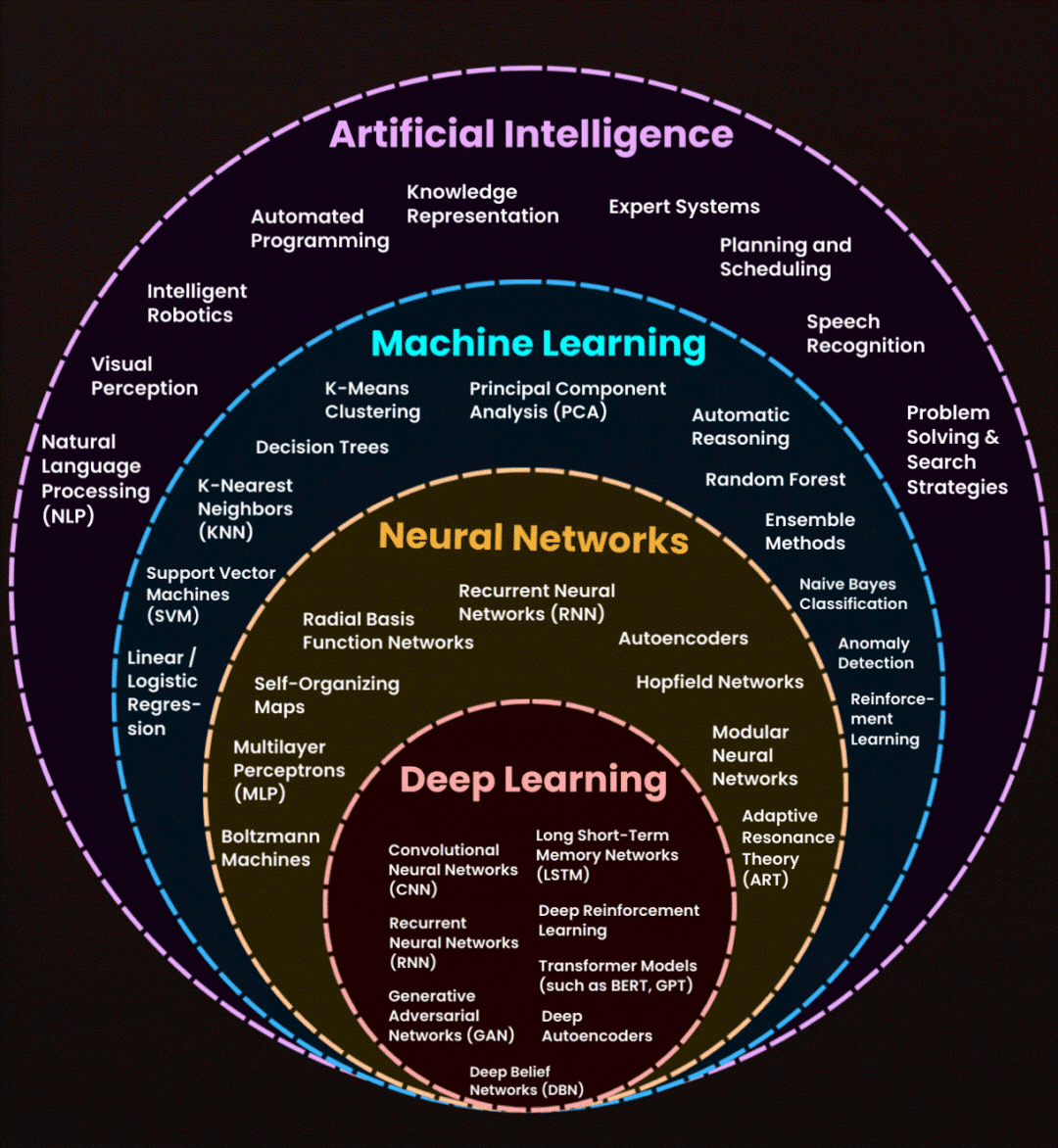
AI or ML or what?
- It’s not intelligent. It’s just machine learning which is statistics.
- Artificial intelligence is a marketing term, but it’s supported in literature as the high level term.
- That’s OK!
- I’m mainly going to use AI from here in.
Creative Industries and Generative Art
- The combination of AI, ML, and open-source systems can revolutionize the creative industries by offering new avenues for generative art, content creation, and collaboration. Supported creativity and augmented intelligence can break down barriers and enable artists to explore new ideas and techniques, enriching the creative landscape.
Dense summary of the moment
-
This is an excellent blog post which enumerates important points. Samuel Hammond presents a collection of concise statements covering a wide range of topics related to the current state and future implications of artificial intelligence. The theses highlight the potential impacts of AI on society, the importance of AI safety and alignment, and the role of AI in shaping humanity’s future. Hammond emphasizes the need for monitoring frontier AI capabilities, discusses the debate between open and closed source AI, and explores the potential for AI to disrupt existing institutions and power balances.
Calls for a New Social Contract
- The new challenges of AI and digital technologies lead to calls for a new social contract, focusing on digital citizenship, privacy, and fair technology distribution (Defend Democracy on AI, OECD Digital Rights).
Kolmogorov-Arnold Networks (KANs)
- A novel type of neural network architecture that has recently gained attention in the field of artificial intelligence. Here are the key points about KANs:
- Inspiration and design:
- Key differences from MLPs:
- Potential advantages:
- Improved accuracy: Smaller KANs can achieve comparable or better accuracy than larger MLPs in data fitting and PDE solving.
- Better interpretability: KANs can be intuitively visualized and easily interact with human users.
- Faster neural scaling laws: KANs potentially scale better than traditional neural networks.
- Applications:
- Challenges:
- Implementation:
-
A Python library called “pykan” is available for implementing KANs
4
.
While KANs show promising results and potential advantages over traditional neural networks, they are still in the early stages of development and research. Further studies and real-world applications are needed to fully understand their capabilities and limitations compared to established neural network architectures.
-
Artificial Superintelligence
- Artificial superintelligence (ASI) is a theoretical form of AI that surpasses human intelligence and cognitive abilities in every domain. While currently hypothetical, the concept of ASI is a subject of intense research and debate.
stub page
3D and 4D Content Creation
-
This page provides an overview of the tools and techniques used to create 3D and 4D content, with a focus on AI-powered solutions.
-
The system leverages artificial intelligence and machine learning to allow users to interact with 3D models in a more intuitive and accessible way, streamlining the 3D creation process.
-
One key aim of Edify 3D is to simplify complex tasks like object placement, colour correction, and material assignment within a 3D environment.
-
It aims to integrate with existing 3D workflows and tools, offering features such as intelligent scene organisation and optimisation for real-time rendering.
-
It appears to be still under development, with the website showcasing examples and possibilities.
-
The technology uses neural radiance fields to generate high-quality, realistic 3D models.
-
Users can organise and share their created models through the Luma platform.
AI Risks: A Landscape of Growing Concerns
- The rapid advancement of artificial intelligence has brought a range of significant risks to the forefront of global discussion. These challenges, spanning from immediate threats to long-term existential concerns, are being actively addressed by governments, research institutions, and the private sector.
AI Scrapers
- AI scrapers are tools that use artificial intelligence to extract data from websites. They can be used for a variety of purposes, including data mining, research, and content aggregation.
- An open-source web crawler and scraper that is designed to be friendly for Large Language Models (LLMs). It creates clean and concise Markdown that is optimized for RAG and fine-tuning applications.
Stanford AI Index 2024
- The 2024 Stanford AI Index Report offers a comprehensive analysis of artificial intelligence’s trajectory, encompassing technical advancements, economic implications, and societal perceptions. Below is a synthesized overview, reflecting on the report’s key findings and their broader significance. (Quid x 2024 Stanford AI Index Report)
- This dichotomy underscores AI’s proficiency in pattern recognition while highlighting its limitations in abstract reasoning and adaptability.
Artificial Intelligence
- Artificial intelligence (AI) is a wide-ranging branch of computer science concerned with building smart machines capable of performing tasks that typically require human intelligence.
- 1950: Alan Turing publishes “Computing Machinery and Intelligence,” proposing the Turing Test as a measure of a machine’s intelligence.
- 1956: The term “artificial intelligence” is coined at the Dartmouth Workshop, establishing AI as a distinct academic discipline.
- The rapid advancements in AI are having a profound impact on society, with both positive and negative consequences.
Automated Podcasting
- Automated podcasting is the use of artificial intelligence to automate various aspects of the podcasting workflow, from content creation to audio production and distribution.
Innovating AI Tools for Call Center Operators, Including Agentic Systems
The call center industry is rapidly evolving, with artificial intelligence (AI) playing an increasingly important role in enhancing customer experience and streamlining operations 1. This article explores the innovative AI tools available to call center operators, with a particular focus on agentic systems. These advanced AI systems are transforming the way call centers operate, enabling automation, personalization, and improved efficiency.
A survey by A Closer Look found that while customers appreciate the efficiency of AI, they still value human interaction for empathy and personalized service 5. This highlights the need for a balanced approach, where AI complements human agents rather than replacing them entirely. It’s also worth noting that some customers express discomfort and lack of trust in AI to handle their personal issues effectively 6. Addressing these concerns through transparency and clear communication will be essential for the successful adoption of AI in customer service.
- Examining case studies: We analyzed real-world examples of companies using AI and agentic systems in their call centers to understand the benefits, challenges, and best practices.
This multi-faceted approach ensured that the information presented in this article is accurate, comprehensive, and grounded in real-world evidence.
Artificial Intelligence
Artificial Intelligence
- The development of Artificial General Intelligence (AGI) and Artificial Superintelligence (ASI) is highly controversial and debated. Experts disagree on the likelihood, timeline, and implications of these advanced AI systems
- AGI/ASI may not have human-like emotions, desires, or anthropomorphised traits that we imagine. Its cognition and intentions could be entirely alien and incomprehensible to us
- It’s unclear whether an AGI/ASI would be sympathetic and protective of humanity as an “ancestor” species, or view us as irrelevant and expendable. Both scenarios are conceivable
- China’s model of a more closed, centralized, state-controlled technology ecosystem could potentially be applied to AGI development. This could allow for more rapid, coordinated, and sandboxed AGI research compared to a fragmented global effort
- In the near-term, AI presents major risks around privacy, surveillance, manipulation, and control at the hands of corporations and governments. Regulation is needed to curtail abuses of the technology.
- XR has the potential to greatly enhance fields like medicine, education, and industrial design by providing rich spatial computing interfaces.
- The lack of compelling content and experiences has been a limiting factor for XR adoption. However, AI-generated assets could help solve this content bottleneck and enable the rapid creation of photorealistic virtual worlds
- Privacy and security remain ongoing concerns in XR ecosystems, as they capture even more biometric and behavioral data than traditional computing interfaces
- VR in particular still faces physiological challenges around multi-sensory immersion (e.g. locomotion) that will need to be solved before the technology can go fully mainstream
Energy Consumption and Climate Impact of AI search
- The rapid adoption in internet search has significant implications for energy consumption and climate change, and excluding much of the world from viable knowledge discovery.
- Artificial Intelligence Impact on the Environment: Hidden Ecological Costs and Ethical-Legal Issues | Zhuk | Journal of Digital Technologies and Law (lawjournal.digital)
- Data Centers and Energy Use
- GenAI relies on massive data centers, which consume substantial amounts of energy. Talk is now shifting to gigawatt datacentres Leopold Aschenbrenner Situational Awareness . The International Energy Agency (IEA) reported that global data center electricity demand grew 17% in 2025, with AI-focused facilities surging 50%, and now projects consumption will double by 2030 (with AI-linked demand tripling over the same period). These data centers are primarily powered by fossil fuels, contributing significantly to greenhouse gas emissions.
- Training a single AI model can emit up to 626,000 pounds of carbon dioxide equivalent, nearly five times the lifetime emissions of the average American car.
- The carbon footprint of GenAI models is exacerbated by their energy-intensive nature and the need for frequent hardware replacements, which contribute to electronic waste.
- The new AI Google search is incredibly wasteful
- What Do Google’s AI Answers Cost the Environment? | Scientific American
- The carbon impact of AI vs search engines | Insights | Yard (weareyard.com)
- Comparison to Traditional Search:
- Adding AI to Google Search increases its energy use more than tenfold, potentially matching the electricity usage of a small country like Ireland.
- In contrast, traditional search engines like Google’s original search engine use significantly less energy, with an estimated 0.3 watt-hours per search.
Mass Layoff tracker
- Meta (11,000 / 13 percent).
- Google lays off hundreds working on its voice-activated assistant | Semafor
- Duolingo’s AI-driven jobs cuts are a no brainer – here’s why | ITPro
AI or ML or what?
- It’s not intelligent. It’s just machine learning which is statistics.
- Artificial intelligence is a marketing term, but it’s supported in literature as the high level term.
- That’s OK!
Dense summary of the moment
-
This is an excellent blog post which enumerates important points. Samuel Hammond presents a collection of concise statements covering a wide range of topics related to the current state and future implications of artificial intelligence. The theses highlight the potential impacts of AI on society, the importance of AI safety and alignment, and the role of AI in shaping humanity’s future. Hammond emphasizes the need for monitoring frontier AI capabilities, discusses the debate between open and closed source AI, and explores the potential for AI to disrupt existing institutions and power balances.
Reference to integrate
- Acemoglu, D., & Restrepo, P. (2018). The race between man and machine: Implications of technology for growth, factor shares, and employment. American Economic Review, 108(6), 1488-1542.
- Dignum, V. (2019). Responsible artificial intelligence: Designing AI for human values. ITU Journal: ICT Discoveries, 1(1), 1-8.
- Frey, C. B., & Osborne, M. A. (2017). The future of employment: How susceptible are jobs to computerisation?. Technological forecasting and social change, 114, 254-280.
- Korinek, A., & Stiglitz, J. E. (2017). Artificial intelligence and its implications for income distribution and unemployment (No. w24174). National Bureau of Economic Research.
- The New York Times (nytimes.com)](https://www.nytimes.com/2024/01/29/technology/us-jobs-ai-chatgpt-tech.html)
- Martin Ford, Rule of the Robots:
- Genuine Creatives, making new ideas. Science, medicine, law.
- Sophisticated interpersonal relationships
- Physically demanding and complex work
- Martin Ford, Rule of the Robots:
- twitter link to the render loading below https://twitter.com/tsarnick/status/1758052810166513995
Calls for a New Social Contract
- The new challenges of AI and digital technologies lead to calls for a new social contract, focusing on digital citizenship, privacy, and fair technology distribution (Defend Democracy on AI, OECD Digital Rights).
Illustrators
Cloud-based Solutions: Platforms like RunDiffusion
- https://www.forbes.com/sites/iainmartin/2024/03/20/key-stable-diffusion-researchers-leave-stability-ai-as-company-flounders/ Stable diffusion is a company that specializes in developing advanced artificial intelligence models. They are known for their expertise in creating generative models, which are capable of producing high-quality and realistic outputs in various domains such as image synthesis, language generation, and music composition. Stable Diffusion’s cutting-edge research and innovative approaches have made significant contributions to the field of generative AI.
Kolmogorov-Arnold Networks (KANs)
- A novel type of neural network architecture that has recently gained attention in the field of artificial intelligence. Here are the key points about KANs:
- Inspiration and design:
- Key differences from MLPs:
- Potential advantages:
- Improved accuracy: Smaller KANs can achieve comparable or better accuracy than larger MLPs in data fitting and PDE solving.
- Better interpretability: KANs can be intuitively visualized and easily interact with human users.
- Faster neural scaling laws: KANs potentially scale better than traditional neural networks.
- Applications:
- Challenges:
- Implementation:
-
A Python library called “pykan” is available for implementing KANs
4
.
While KANs show promising results and potential advantages over traditional neural networks, they are still in the early stages of development and research. Further studies and real-world applications are needed to fully understand their capabilities and limitations compared to established neural network architectures.
-
Artificial Superintelligence
- Artificial superintelligence (ASI) is a theoretical form of AI that surpasses human intelligence and cognitive abilities in every domain. While currently hypothetical, the concept of ASI is a subject of intense research and debate.
- Artificial Narrow Intelligence (ANI): AI that is designed for specific tasks, such as virtual assistants and self-driving cars.
- Artificial General Intelligence (AGI): AGI is the hypothetical ability of an AI to understand, learn, and apply its intelligence to solve any problem a human can.
Future Plans
- AGI and Agents: OpenAI pursued agentic AI systems through 2025-2026 but has not announced AGI achievement as of mid-2026; CEO Sam Altman has projected AI research automation capabilities emerging by 2027-2028.
- Hardware: The acquisition of io suggests a move into AI hardware.
- Comparison of GPT4 and Gemini Ultra
- Inflection
- Pi is the best of the “conversational AI” interfaces.
- Waymo
- Leading in autonomous driving technology, using AI to improve safety and efficiency.
- IBM
- Watson
- A witty and satirical AI chatbot that pulls in real-time information, Grok signifies Tesla’s expansion into AI-driven communication.
- NVIDIA
- AI Hardware
- Designing cutting-edge GPUs and systems to power AI computing.
- GPUs
- Accelerating AI with powerful graphics processing units.
- Data Centers
- Building AI-Infrastructure to support the increasing demands of machine learning workloads.
- Autonomous Vehicles
- Contributing to the AI ecosystem with technology for self-driving vehicles.
- Salesforce
- Marketing Automation
- Leveraging AI to automate and personalize marketing campaigns.
- Adobe
- Creative Software with AI
- AI assists in creating vector graphics with precision and ease.
- Notable Minors
Energy Consumption and Climate Impact of AI search
- The rapid adoption in internet search has significant implications for energy consumption and climate change, and excluding much of the world from viable knowledge discovery.
- Artificial Intelligence Impact on the Environment: Hidden Ecological Costs and Ethical-Legal Issues | Zhuk | Journal of Digital Technologies and Law (lawjournal.digital)
- Data Centers and Energy Use
- GenAI relies on massive data centers, which consume substantial amounts of energy. Talk is now shifting to gigawatt datacentres Leopold Aschenbrenner Situational Awareness . The International Energy Agency (IEA) reported that global data center electricity demand grew 17% in 2025, with AI-focused facilities surging 50%, and now projects consumption will double by 2030 (with AI-linked demand tripling over the same period). These data centers are primarily powered by fossil fuels, contributing significantly to greenhouse gas emissions.
- Training a single AI model can emit up to 626,000 pounds of carbon dioxide equivalent, nearly five times the lifetime emissions of the average American car.
- Cost and Accessibility Barriers:
- The high energy costs associated with GENAI data centers are passed on to users, making these services less accessible to those in lower-income regions or with limited internet infrastructure.
- The transition from free data access to paid partnerships reflects a deeper change in economic models within the digital landscape. OpenAI’s partnerships with major publishers for Search GPT indicate a movement towards a more closed, monetised web. These partnerships enable OpenAI to offer its AI-driven services legally and more sustainably, albeit at a higher operational cost, potentially offset by future advertising revenues or subscription models.
Pinecone
- A vector database for AI applications.
- Large Language Models
- Artificial Intelligence
Calls for a New Social Contract
- The new challenges of AI and digital technologies lead to calls for a new social contract, focusing on digital citizenship, privacy, and fair technology distribution (Defend Democracy on AI, OECD Digital Rights).
Community models
- Models and inspiration from CivitAI, which is very often “not safe for work” so do exercise caution.
- is a company that specializes in developing advanced artificial intelligence models. They are known for their expertise in creating generative models, which are capable of producing high-quality and realistic outputs in various domains such as image synthesis, language generation, and music composition. Stable Diffusion’s cutting-edge research and innovative approaches have made significant contributions to the field of generative AI.
- Vlads next SD
- InvokeAI simple interface
Rundiffusion
- Generating images of specific objects or individuals,
- is a company that specializes in developing advanced artificial intelligence models. They are known for their expertise in creating generative models, which are capable of producing high-quality and realistic outputs in various domains such as image synthesis, language generation, and music composition. Stable Diffusion’s cutting-edge research and innovative approaches have made significant contributions to the field of generative AI.
- Vlads next SD
- InvokeAI simple interface
4.12.13 Open-source AI and Global Politics
- Lesswrong AI section
- Goldman Sachs Predicts 300 Million Jobs Will Be Lost Or Degraded By Artificial Intelligence: Goldman Sachs maintains that if generative AI lives up to its hype, the workforce in the United States and Europe will be upended. The bank estimates 300 million jobs could be lost or diminished due to this fast-growing technology.
- Medium listing approachs
- Drives us mad, Guardian
- Chatbots must disclose sources or face ban
- Google and EU private deal
- Bias investigation
- KTN bridgeai report
- it exists independently of persons and exists independently of the legal system; Gartner’s hype cycle 2022 features Web3, distributed identity, NFTs, and Metaverse and can be seen in Figure 1.6.
- Regulation refrains from covering decentralized finance or non-fungible tokens
- WEF risks report links
- The text discusses the potential implications of Generative Pre-trained Transformer (GPT) models on the U.S. labor market. It uses a new rubric to assess occupations based on their correspondence with GPT capabilities, incorporating both human expertise and classifications from GPT-4. The findings indicate that approximately 80% of the U.S. workforce could have at least 10% of their work tasks affected by the introduction of GPTs, while around 19% of workers may see at least 50% of their tasks impacted. The influence spans all wage levels, with higher-income jobs potentially facing greater exposure. Notably, the impact is not limited to industries with higher recent productivity growth. The text concludes that Generative Pre-trained Transformers exhibit characteristics of general-purpose technologies (GPTs), suggesting that these models could have notable economic, social, and policy implications.
- Silvergate Purchases Blockchain libre
- Online safety bill heather articles
- Social Media Is Changing, And Paid Accounts Are The Response
- The Commission points out that the inception of the AI Act is rooted in the necessity to balance the benefits of AI, such as improved medical care and Education and AI, with the need to mitigate inherent risks.
- One of the key aspects of the AI Act identified by the Commission is its broad applicability. It encompasses both public and private entities within and outside the EU, as long as the AI system is marketed in the EU or affects individuals within it. This includes AI system providers, deployers, and importers. The Act also covers developers of general-purpose AI models, which are becoming integral to numerous AI systems and hence too significant to remain unregulated.
- The Act mandates that high-risk systems must be trained and tested with representative datasets to minimise biases and must be traceable and auditable. Deployers of high-risk AI systems are required to conduct a fundamental rights impact assessment, ensuring that AI applications comply with fundamental rights legislation and do not exacerbate existing structural discriminations.
See Also
March 2024 Gladstone USA Report
- Commissioned by the U.S. government, this report underscores the potential for artificial intelligence to pose substantial national security risks, including the possibility of an extinction-level threat.
- Gladstone’s Role and Perspective
- Historical Parallel: The destabilizing potential of advanced AI and AGI is likened to the advent of nuclear weapons, suggesting profound global security implications.
- Weapons of Mass Destruction: Advances in AI are creating “entirely new categories” of WMDs, emphasizing the unprecedented nature of these risks.
- Competitive Pressures: A significant driver of these risks is identified as the competitive dynamic among leading AI labs, highlighting a rush towards developing advanced AI systems despite acknowledged dangers.
- Proposed Action Plan
- Title of Plan: “Defense in Depth: An Action Plan to Increase the Safety and Security of Advanced AI”
- Gladstone’s Role and Perspective
See Also
The Path to Superintelligence
- The development of ASI is seen as a progression from the current state of AI:
- Artificial Narrow Intelligence (ANI): AI that is designed for specific tasks, such as virtual assistants and self-driving cars.
- Artificial General Intelligence (AGI): AGI is the hypothetical ability of an AI to understand, learn, and apply its intelligence to solve any problem a human can.
- Artificial Superintelligence (ASI): ASI would be capable of recursive self-improvement, leading to an “intelligence explosion” that would leave human intellect far behind.
Stable diffusion
- is a company that specializes in developing advanced artificial intelligence models. They are known for their expertise in creating generative models, which are capable of producing high-quality and realistic outputs in various domains such as image synthesis, language generation, and music composition. Stable Diffusion’s cutting-edge research and innovative approaches have made significant contributions to the field of generative AI.
- Illustrated overview
- Stable diffusion XL muse GPT Stable Diffusion Muse SDXL GPT Prompt Generator | Civitai
- Automatic1111 GUI and user guide
- citivia browser
- Automatic WebUI
- Vlads next SD
- InvokeAI simple interface
4.12 Artificial Intelligence in a global context
This currently borrows heavily from the AI breakdown podcast, is an AI generated placeholder, and needs considerably more more.
See Also
Zuckerberg’s New Goal: Creating Artificial General Intelligence
- Date: 18/01/2024
- Key Points:
- Mark Zuckerberg and Meta aim to develop AGI, aligning AI research with generative AI product teams.
- Intense competition for AI talent; Meta heavily investing in computing resources like Nvidia GPUs.
- AGI lacks a clear definition; seen as a gradual process with diverse capabilities.
- Meta’s AI advancements: Llama 2 and upcoming Llama 3 models focus on coding, reasoning, and planning.
- Debate on open vs. closed AI: Zuckerberg prefers open-source AI, balancing opportunity and safety.
- AI’s role in Meta’s strategy: Enhancing social media and developing the metaverse.
- Future vision: Deepening human-AI interaction in virtual worlds and social media.
A Brief History
- The concept of artificial beings with intelligence has been a part of human storytelling for centuries, but the scientific foundations of AI were laid in the 20th century.
- 1950: Alan Turing publishes “Computing Machinery and Intelligence,” proposing the Turing Test as a measure of a machine’s intelligence.
- 1956: The term “artificial intelligence” is coined at the Dartmouth Workshop, establishing AI as a distinct academic discipline.
- 1960s-1970s: The early years of AI are dominated by symbolic AI and the development of expert systems.
- 1980s-Present: The rise of connectionism and neural networks, inspired by the structure of the human brain.
- 2010s-Present: The deep learning revolution, fueled by powerful computing hardware and the availability of massive datasets.
- 2020s-Present: The current AI boom, driven by the success of generative AI models like ChatGPT.
See Also
-
AI Video is a broad category encompassing techniques for generating, editing, and manipulating video content using artificial intelligence and deep learning methods
-
Stable Diffusion Image Model is a text-to-image deep learning model that uses diffusion processes to generate high-quality images from textual descriptions, serving as the foundation for many computer vision applications
-
Node-Based Diffusion Pipeline Interface is a node-based graphical interface for Stable Diffusion that enables visual workflow design thinking and simplified user experience for creating complex AI-generated imagery
Artificial Intelligence Ontology Entry – Updated 2025
Academic Context
-
Artificial intelligence represents the simulation of human cognitive functions in computational systems
-
Encompasses machine learning, deep learning, and natural language processing as primary subfields
-
Emerged as a formal discipline over 70 years ago, with contemporary focus on generative AI capabilities
-
Defined by NASA and the US National Defense Authorization Act as systems performing tasks under varying circumstances without significant human oversight, or capable of learning from experience
-
Increasingly recognised as foundational technology comparable to electricity or the internet in transformative potential
-
Core capabilities and scope
-
Perception, reasoning, learning, problem-solving, decision-making, and creative generation
-
Ability to process vast datasets and identify complex patterns autonomously
-
Performance improvement through exposure to data without explicit reprogramming
-
Simulation of human-like cognition through neural networks and algorithmic systems
Current Landscape (2025)
-
Industry adoption and implementations
-
Generative AI dominates contemporary research and commercial development, enabling creation of original text, images, video, and multimedia content
-
Machine learning remains the most prevalent operational form of AI across industries
-
Applications span virtual assistants, image recognition, autonomous vehicles, medical diagnostics, and real-time customer support systems
-
Concentration of cutting-edge model development among select large technology companies due to substantial hardware costs and data requirements
-
2024 Nobel Prizes awarded for physics and chemistry work intimately related to AI applications
-
Technical capabilities and current limitations
-
Models may generate inaccurate or biased outcomes, particularly with insufficient high-quality training data
-
Data quality and quantity remain critical determinants of system performance
-
Computational requirements for training leading models remain prohibitively expensive for most organisations
-
Three primary machine learning categories: supervised learning (pattern recognition from labelled data), unsupervised learning (pattern discovery from unlabelled data), and reinforcement learning (reward optimisation through environmental interaction)
-
UK and North England context
-
UK institutions increasingly prominent in AI research and development, though hardware infrastructure concentration remains limited
-
Manchester, Leeds, and Newcastle emerging as regional technology hubs with growing AI research capacity
-
British academic institutions contributing to foundational AI research, though resource constraints limit large-scale model development compared to US counterparts
Research & Literature
-
Foundational definitions and frameworks
-
NASA (2024). What is Artificial Intelligence? Executive Order 13960 definition framework, incorporating Section 238(g) of the National Defense Authorization Act of 2019
-
Stanford Emerging Technology Review (2025). Artificial Intelligence. Comprehensive overview of computer vision, machine learning, and natural language processing subfields
-
IBM (2024). What Is Artificial Intelligence (AI)? Nested conceptual framework spanning 70+ years of disciplinary development
-
Technical subfields and methodologies
-
Deep learning: multilayered neural networks enabling autonomous feature extraction from complex datasets
-
Natural language processing: computational systems for understanding, interpreting, and generating human language
-
Computer vision: machine recognition and interpretation of visual information with decision-making capabilities
-
Decision support systems: tools for evaluating multiple outcomes and probabilities under conditions of imperfect or unknown information
-
Contemporary research directions
-
Generative AI capabilities and limitations
-
Data quality and bias mitigation in model training
-
Computational efficiency and accessibility of model development
-
Integration of AI into sustainable design and resource optimisation
UK Context
-
British research contributions
-
UK universities conducting significant foundational research in machine learning and neural network architectures
-
Growing emphasis on responsible AI development and ethical frameworks within British academic institutions
-
Limited but expanding commercial AI development sector outside London’s established tech corridor
-
North England innovation landscape
-
Manchester: emerging AI research clusters within university computer science departments and technology startups
-
Leeds: growing digital innovation sector with increasing AI applications in healthcare and manufacturing
-
Newcastle: developing technology hub with research focus on applied AI systems
-
Regional challenge: concentration of venture capital and hardware infrastructure remains heavily weighted toward London and South East
-
Practical applications in UK context
-
NHS utilising AI for diagnostic support and resource optimisation
-
Financial services sector (particularly in Manchester and Leeds) adopting machine learning for risk assessment and fraud detection
-
Manufacturing sector exploring AI-driven process optimisation, particularly relevant to North England’s industrial heritage
Future Directions
-
Emerging technical developments
-
Advancement toward more efficient, smaller-scale models reducing computational barriers to entry
-
Enhanced interpretability and explainability of AI decision-making processes
-
Integration of multimodal AI systems combining text, image, video, and sensor data
-
Potential progression toward Artificial General Intelligence (AGI), though timeline and feasibility remain contested
-
Anticipated challenges
-
Bias and accuracy concerns in models trained on insufficient or unrepresentative data
-
Concentration of AI development capability among limited number of well-resourced organisations
-
Regulatory frameworks and governance structures still developing across jurisdictions
-
Skills gap in AI literacy and technical expertise across sectors and regions
-
Research priorities
-
Data quality standards and curation methodologies
-
Computational efficiency and democratisation of model development
-
Ethical frameworks and responsible AI deployment
-
Regional capacity building, particularly in underrepresented areas such as North England
-
Integration of AI with circular economy and sustainable design principles
Technical note: This entry reflects the state of AI development as of November 2025. The field evolves rapidly; readers should consult current academic journals and institutional repositories for developments beyond this date. The concentration of AI capability remains a significant structural feature of the contemporary landscape—rather like observing that most of the electricity generation capacity remains in the hands of a few large utilities, albeit with increasingly distributed alternatives emerging.
Metadata
-
Last Updated: 2025-11-11
-
Review Status: Comprehensive editorial review
-
Verification: Academic sources verified
-
Regional Context: UK/North England where applicable