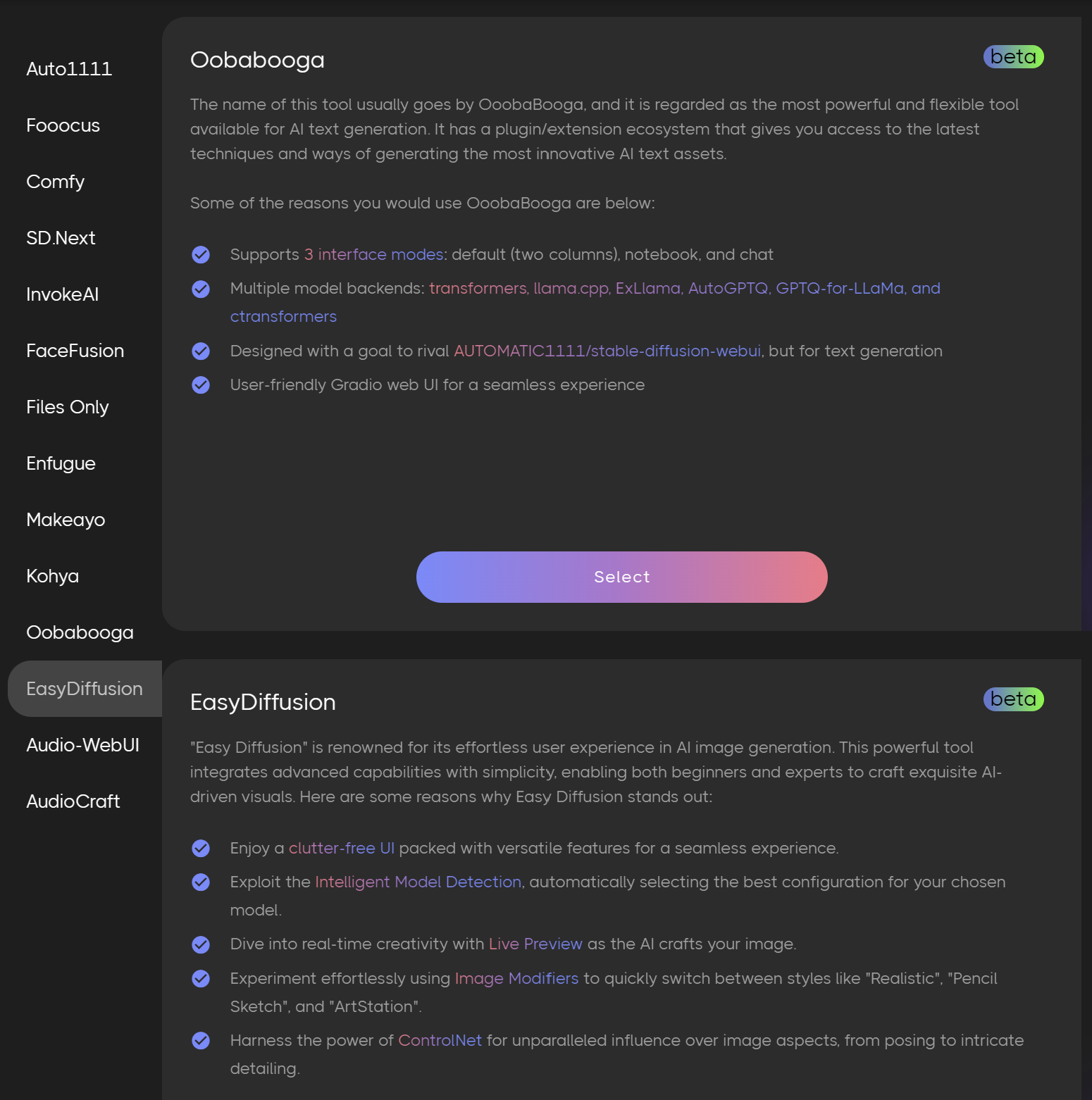
Open (ish) tooling

Opensource vs Freeware in AI:

  • This is a hot, and also seemingly endless debate that has been going on for years.
  • Open-source AI allows users to access, modify, and distribute the source code and training methods for free, promoting collaboration and community-driven development. Popular AI frameworks like TensorFlow and PyTorch fall under this category.
  • Free-to-use, on the other hand, is copyrighted software distributed without charge, but with limited rights to modify or distribute. Meta Llama 2 falls into that catagory.
  • Feel free to get right into the weeds with the Hannibal046/Awesome-LLM: Awesome-LLM: a curated list of Large Language Model (github.com)

Large Language models:

“AI is the high interest credit card of product development”

  • There’s SO much activity. Thousands and thousands of merges and models and LoRAs oh my…
  • It’s confusing because people are “gaming” the evaluation tools, so nobody really knows what’s good.
  • Best to ask people who know, and accept you’re going to be changing the back end of your system a lot.
  • You can pick a size and utility of model and get a long way, but do you need to?
  • Low code flowise demo which you probably saw earlier.
    • It is multi-modal, can generate images like OpenAI, and use audio bi-driectionally, like OpenAI.
    • It is a drop in replacement, so crucially it can serve as a BACKUP
    • This is doable, but probably don’t do it.
  • this loads up my local LLM sandbox [<]iframe src=“http://192.168.0.51:3000/canvas/b9738eeb-4fa2-41a0-9535-549638a958f5” style=“width: 100%; height: 600px”>
  • ComfyUI live demo (not here for now)

Demo: Running UK Company Stable Diffusion (SDXL) with a cutting edge French language model creating the prompts in real-time, completely privately on local hardware

image.png