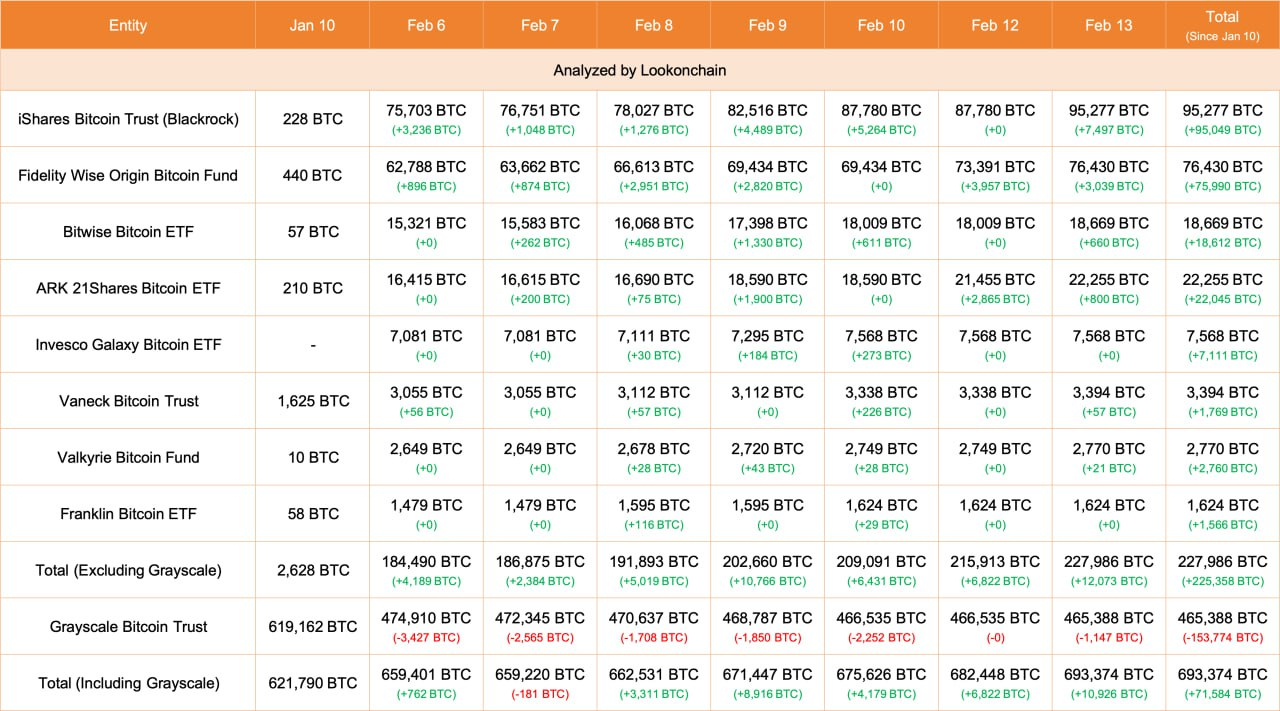
- There is a non-zero risk that Bitcoin could be co-opted and therefore controlled by the US financial system
https://twitter.com/BTC_Archive/status/1838227189835108862
-
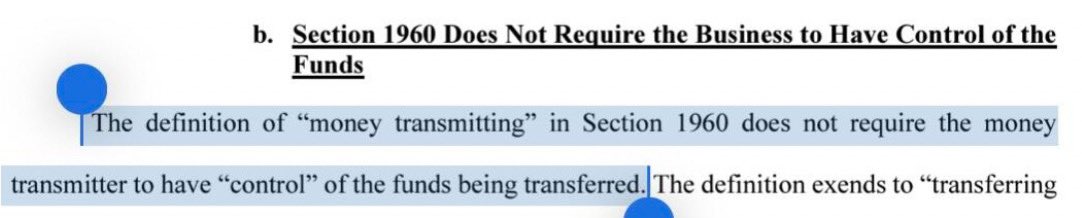
The USA is currently positioning it’s tax system such that Lightning service providers, and Bitcoin and crypto personal wallets will be forced in law to comply with money transmitter licenses. This reporting requirement is a practical impossibility and unlikely to be codified into law. Nonetheless the chilling effect is shuttering businesses.
https://twitter.com/PhoenixWallet/status/1783878658014249027
-
The emerging direction of travel here is that USA consumers will be heavily incentivised to use the licensed and approved ETF vehicles, which can be sufficiently monitored by their tax services. It is likely that self custody of Bitcoin will by allowed, but it’s very possible that the on and off ramps in to the dollar system will be very tightly controlled.
-
In this hypothetical scenario, there is the opportunity for Wall Street to successfully orchestrates an attack on Bitcoin through the proliferation of Bitcoin exchange-traded funds (ETFs) that are settled in cash rather than actual Bitcoin. We might consider the potential impacts and the narrative that could unfold. This situation would essentially create “paper Bitcoin,” similar to what has occurred in other commodity markets, where the traded instruments represent the asset but don’t necessarily entail ownership of the physical commodity.
The Setup
- Imagine a world where Bitcoin ETFs have gained significant traction, primarily among U.S. investors who prefer the regulated, traditional financial market entry points to the actual cryptocurrency. These ETFs are appealing because they offer exposure to Bitcoin’s price movements without requiring investors to deal with the complexities and security concerns of holding the cryptocurrency. However, as these are cash-settled, the ETFs do not impact the actual supply and demand of Bitcoin directly but rather create a parallel market for Bitcoin exposure.
The Disjunction
- With approximately 2 million Bitcoin reportedly liquid on exchanges at this moment, the market is relatively thin compared to the vast global financial markets. If a large portion of Bitcoin investment shifts to these ETFs, forced through tax compliance laws in the USA, there could be a significant discrepancy between the “paper” Bitcoin and actual Bitcoin supply-demand dynamics. The real crunch comes when, for any reason, a substantial number of ETF holders decide to convert their holdings into actual Bitcoin. The ETFs, being cash-settled, might not be backed by an equivalent amount of real Bitcoin. This disjunction between the paper and physical Bitcoin could lead to a crisis of trust and liquidity.
- https://x.com/CryptoVizArt/status/1800394787284996362
https://x.com/CryptoVizArt/status/1800394787284996362
Global vs. U.S. Market Dynamics
- While the U.S. might spearhead this form of Bitcoin investment through ETFs, the global Bitcoin market remains diverse and less regulated in many jurisdictions. International holders and traders of actual Bitcoin might react differently to the ETF market movements, leading to potential arbitrage situations or exacerbating the liquidity crisis if they lose confidence in the price stability and seek to liquidate their holdings for fiat or other assets.
The Fallout of Being “Caught”
- If it becomes apparent that the ETFs are significantly unbacked by actual Bitcoin, or if there’s a regulatory or market shift that forces a reconciliation between paper and physical Bitcoin, the fallout could be dramatic. The immediate effect would likely be a significant price correction as the market attempts to realign the perceived value of Bitcoin with its actual available supply. This correction could be further amplified by panic selling, leading to a crash in both the paper and physical Bitcoin markets.
Regulatory Repercussions and Market Reaction
- The revelation of a large-scale discrepancy between paper and physical Bitcoin would likely lead to intense regulatory scrutiny and possibly new regulations or bans on similar financial products. This regulatory response could stifle innovation and investment in the cryptocurrency space, at least temporarily, and lead to a loss of trust in financial institutions involved in the ETF market. The cryptocurrency community, known for its resilience and innovation, might respond by pushing further towards decentralized finance (DeFi) solutions and away from traditional financial systems. This shift could accelerate the adoption of technologies that provide more transparency and direct control over digital assets, such as improved self-custody solutions and transparent, decentralized exchanges that do not rely on traditional financial intermediaries.
Conclusion
- In this hypothetical narrative, the creation and widespread adoption of cash-settled Bitcoin ETFs lead to a significant disjunction between the paper and physical Bitcoin markets, eventually resulting in a crisis of confidence and liquidity when the discrepancy becomes apparent. The repercussions would ripple through the cryptocurrency and traditional financial markets, leading to regulatory crackdowns, market crashes, and potentially a paradigm shift towards more decentralized and transparent financial systems. While this scenario is speculative, it underscores the importance of understanding and critically evaluating the implications of integrating cryptocurrency into traditional financial products and the systemic risks that could emerge from such integration.