The phase of the AI lifecycle encompassing the design, creation, training, and validation of artificial intelligence systems, including activities such as algorithm selection, data preparation, model architecture design, training process execution, hyperparameter optimisation, performance eand do…
Semantic Classification
Content
- The phase of the AI lifecycle encompassing the design, creation, training, and validation of artificial intelligence systems, including activities such as algorithm selection, data preparation, model architecture design, training process execution, hyperparameter optimisation, performance evaluation, and documentation, conducted according to established engineering principles, ethical guidelines, and governance frameworks to produce AI systems suitable for their intended purpose.
Case Studies and Research
-
- Accessibility in Software Practice: A Practitioner’s Perspective: This research paper identifies the challenges software practitioners face in integrating accessibility into design and development processes. It highlights the need for better documentation, specialized skills, and organisational support to address accessibility effectively.
-
- A Survey on Virtual Reality for Individuals with Autism Spectrum Disorder: Design Considerations: Although focused on VR, the principles of designing for individuals with Autism Spectrum Disorder (ASD) can be applied to non-immersive software. The paper discusses the importance of clear, consistent interfaces and the potential for tailored software experiences to meet diverse user needs.
Industry’s Ascendancy in AI Research and Development
- In 2023, industry players developed 51 notable machine learning models, overshadowing academia’s contribution of 15. Collaborations between industry and academia resulted in 21 significant models, marking a new high. (Stanford’s 2024 AI Index Report Highlights Key Trends)
- The escalating costs associated with training advanced AI models, such as GPT-4’s estimated 191 million, have made it challenging for academic institutions to compete. (AI Index Report 2024 – Artificial Intelligence Index)
United States’ Leadership Amidst China’s Rapid Progress
- The U.S. led in producing 61 notable AI models in 2023, outpacing the European Union’s 21 and China’s 15. (Research and Development | The 2024 AI Index Report | Stanford HAI)
- Despite this lead, China’s advancements in AI research publications and patent filings indicate a narrowing gap, emphasizing the intensifying global competition in AI development. (US ahead in AI innovation, easily surpassing China in Stanford’s new ranking)
Layer 2: Modular Human-Computer Interface:
- The framework proposes the development of collaborative global networks for training, research, biomedical, and creative industries using immersive and accessible environments. Engaging with ideas from diverse cultural backgrounds can enrich the overall user experience. Industry players have noted the risk and failures associated with closed systems like Meta and are embracing the “open Metaverse” narrative to de-risk their interests. To enable a truly open and interoperable Metaverse, it is crucial to develop open-source APIs, SDKs, and data standards that allow different platforms to communicate and exchange information. While the initial focus will be on building around a simpler open-source engine, the framework aims to link across standards such as Unity, [Unreal Engine], and [NVIDIA Omniverse Platform] as it develops. This can be accomplished using the federation layer.
Virtual Training and Simulation:
- CVEs can facilitate skill development and training in various industries, such as healthcare, military, aviation, and emergency response. Trainees can practice procedures in a virtual environment, with natural language AI providing instructions, explanations, or feedback. Generative AI can now create entire interactive 3D environments on the fly, allowing for the rapid prototyping and deployment of complex, adaptable virtual scenarios. AI-powered avatars and non-player characters (NPCs) are also becoming more lifelike, capable of nuanced and dynamic interactions, which is particularly impactful in areas like virtual training and customer service, where realistic simulations and interactions are paramount.
Virtual Art & Media Collaboration:
- Artists, animators, and multimedia professionals can collaborate in CVEs to create and develop their projects, such as films, animations, or video games. Natural language AI can help in storyboarding, scriptwriting, or character development, while visual generative ML can generate new visuals or adapt existing assets based on user input and style preferences.
Promoting Open Standards and Interoperability:
- For the Metaverse to truly thrive, it is essential to promote open standards and interoperability among various platforms and systems. This can be achieved by fostering collaboration between industry stakeholders, encouraging the development of open protocols, APIs, and data standards, and actively supporting the open-source community.
Industry Conversations:
- Continued dialogue and collaboration among industry stakeholders are vital to ensuring the successful development of the open-source Metaverse. By engaging in conversations and understanding the cautious appetite for the ideas presented, the community can work together to shape the future of digital society and overcome the challenges that lie ahead.
Applications and Use Cases
- Deep agents work well for:
- Comprehensive research and analysis
- Large-scale software development projects
- Complex problem-solving requiring multiple approaches
- Tasks that benefit from extended reasoning and reflection
- High-stakes decisions requiring thorough analysis
Title: Bitcoin Mining Supporting Renewable Energy Development
Introduction
- A new study led by Cornell researchers proposes using Bitcoin mining to support the development of renewable energy projects.
- It focuses on the precommercial phase of wind and solar farms, suggesting potential profits through Bitcoin mining.
Conclusion
-
The research indicates that Bitcoin mining can be utilized to financially support and enhance the development of renewable energy projects, offering a novel approach to climate change mitigation.
-
https://crypto.news/bitcoin-mining-reaches-new-all-time-high-of-54-renewable-use/
The Open-Source Dilemma
- While the bill does not explicitly prohibit open-source AI development, concerns remain regarding its potential chilling effect on the open-source community. The provisions regarding liability for downstream modifications of released models could discourage developers from openly sharing their work, particularly if they fear potential legal repercussions for unintended consequences arising from third-party modifications.
- This apprehension could lead to a reduction in the availability of open-source AI models and code, hindering collaborative research efforts and limiting access to valuable resources for smaller players and academic institutions.
Cody
- The AI Coding Assistant
- Introduction to Cody
- Developed by Sourcegraph, co-founded by Beang Liu, CTO.
- Aims to revolutionize software development with AI.
- Integrates into various editors, enhancing developer productivity.
- Foundation and Purpose
- Rooted in Beang’s early interest in AI and machine learning at Stanford AI lab.
- Addresses the gap between the potential of programming and the drudgery of day-to-day software engineering tasks.
- Focuses on reducing time spent on reading and understanding existing code.
- Defining Spatial Computing
- Initially focused on advanced search capabilities in real coding environments.
- Aimed at achieving ‘flow’ in programming through efficient information retrieval.
- Integration of AI in Sourcegraph and Cody
- Shift towards AI-enhanced coding tools around 2017-2018.
- Early experiments with applying large language models (LLMs) to code search.
- Development driven by advancements in AI, especially in neural networks and LLMs.
- Capabilities of Cody
- Provides AI-driven coding assistance in various IDEs.
- Features include inline completions, high-level Q&A, and specific coding commands.
- Unique in augmenting large language models with contextual information from Sourcegraph.
- Future Aspirations for Cody
- Aims to automate more complex software development tasks.
- Foresees the potential for AI to generate pull requests and change sets from issue descriptions.
- Emphasizes the importance of context quality in improving code generation.
- Technical Challenges and Innovations
- Balances traditional information retrieval with AI-driven approaches.
- Focuses on optimizing search architecture and context retrieval for better code generation.
- Explores the use of small models for faster and more cost-effective solutions.
- The Evolution of Software Development with AI
- Envisions a future where individual developers are more productive and cohesive.
- Anticipates changes in the software development lifecycle due to AI integration.
- Stresses the growing importance of CS fundamentals and domain expertise in an AI-augmented future.
- Introduction to Cody
Coding and Development:
- ChatGPT-4: Strong coding assistance, including SQL queries and web development.
- Gemini Ultra: Offers code generation with an export option to Replit, though sometimes less detailed than ChatGPT-4.
Web Design & Development
Coding Assistance (Learning & Development)
- Task: Learning to code or speeding up development processes with AI help.
- OpenAI (GPT-4/API)
- Description: Can explain code, generate code snippets, debug errors, and help learn programming concepts. Used in ‘Learning to Code with AI’ series for understanding and implementation (e.g., adding a chatbot via API).
- Cost: API usage is paid. ChatGPT Plus ($20 USD/month) provides access to GPT-4.
- Website: OpenAI / ChatGPT
- Cursor
- Description: AI-powered code editor (fork of VS Code) designed for pair-programming with AI. Helps write, edit, and understand code faster.
- Cost: Free tier available. Pro plans offer more features/higher AI usage limits, starting around $20 USD/month.
- Website: Cursor (Note: URL updated from .sh to .com)
2. Adherence to Principles
- Adherence to the five fundamental principles of standards development:
- Due process. Decisions are made with equity and fairness among participants. No one party dominates or guides standards development. Standards processes are transparent and opportunities exist to appeal decisions. Processes for periodic standards review and updating are well defined.
- Broad consensus. Processes allow for all views to be considered and addressed, such that agreement can be found across a range of interests.
- Transparency. Standards organizations provide advance public notice of proposed standards development activities, the scope of work to be undertaken, and conditions for participation. Easily accessible records of decisions and the materials used in reaching those decisions are provided. Public comment periods are provided before final standards approval and adoption.
- Balance. Standards activities are not exclusively dominated by any particular person, company or interest group.
- Openness. Standards processes are open to all interested and informed parties.
Roblox
- If anything can currently claim to be the metaverse it’s Roblox. Around 60 billion messages are sent dailyin Roblox. Investment in the metaverse ‘angle’ of the platform isstepping up with recent announcements such as “SpotifyIsland”.The company has announced text based generative art creation of scenes,and is integrating the playstation headset in their PS4 release. It’svery notable that it still hasn’t become a profitablebusiness.It is important to note that Roblox has banned NFTs. Nike have garneredsignificantattentionfor their metaverse store, front with their Roblox based metaverse. AsTheoPriestleypoints out this is likely just another expensive experiment, with afinite lifespan. expanding into generativeAI
AI Terminals and Memecoin Ecosystem
- Social media-driven AI entertainment like the AI terminal twitter account are driving actual tangible outcomes for the guiding AI actors. This creates incentives for AI agent development potentially fostering more autonomous, interconnected AI systems connected to real world events.
- Technological revolutions often emerge unexpectedly. This is entirely ground up emergent tech, and might hint at a generational shift driven by digital society incentives.
- United States:
- Strengths: Strong economy, decreasing inflation, high employment, rising consumer confidence, significant investment in physical technologies (e.g., electric vehicle charging stations) and AI.
- Concerns: Rising federal debt, high healthcare spending, potential negative supply shocks from decoupling from China and trade disruptions.
- Opportunities: Implement industrial policy, restrain healthcare spending growth, raise taxes, increase science spending.
- Outlook: Potential era of austerity similar to the 1990s, with inflation potentially averaging around 3% over the next decade.
- China:
- Problems: Massive property bust leading to insolvency in banks, developers, and local governments. Overreliance on manufacturing to drive growth, potentially leading to overcapacity and trade wars. Demographic decline due to an aging population and low birth rates.
- Faults: Discouragement of service sector growth and overinvestment in unproductive infrastructure. Reliance on cheap exports, potentially leading to international trade barriers.
- Opportunities: Implement property taxes, prioritize high-quality growth through innovation and productivity improvements, address demographic challenges through policies encouraging longer working lives and increased college graduation rates.
- Outlook: Economic slowdown and potential trade wars. Debt levels may reach levels similar to Japan. Unlikely to experience an economic implosion, but will likely see lower growth rates due to demographic challenges.
- Japan:
- Strengths: Key hub for electronics manufacturing with potential for growth due to decoupling from China. Efficient permitting processes and ease of distributing subsidies make it attractive for foreign investment in chip fabrication plants. Improving relations with South Korea.
- Problems: Long-standing demographic issues despite rising fertility rates. Broken corporate culture hinders promotion of young and dynamic talent.
- Opportunities: Implement industrial policy to reclaim its position as a major electronics manufacturer, address corporate culture issues, increase immigration.
- Outlook: Potential for economic growth due to increased foreign investment and opportunities in the electronics manufacturing sector. Demographic decline will continue to exert a drag on the economy, but automation may mitigate the impact.
- South Korea:
- Strengths: Strong technological capabilities, potential to benefit from decoupling from China and increased demand from other countries.
- Problems: Critically low fertility rate, high consumer debt, gender divide in politics, and challenges to its manufacturing sector due to China’s efforts to reduce reliance on Korean suppliers.
- Opportunities: Increase immigration, strengthen integration with non-China East Asian economies, and address social issues contributing to low birth rate.
- Outlook: Despite current struggles, South Korea has the potential for future growth due to its technological capabilities and opportunities presented by shifting global supply chains.
- Taiwan:
- Strengths: Dominant position in the semiconductor industry with companies like TSMC.
- Challenges: Overreliance on small businesses, vulnerability to pressure from China due to economic ties and the risk of war, potential need to decouple from China.
- Opportunities: Diversify its economy beyond small businesses and reduce reliance on China.
- Outlook: Uncertain future due to political tensions with China and potential disruptions to its economy.
- Indonesia:
- Strengths: Potential to transition back to a manufacturing economy.
- Problems: Overreliance on mining and natural resources.
- Opportunities: Embrace decoupling from China and become an alternative manufacturing hub, strengthen relations with Japan and South Korea.
- Outlook: Potential for growth if it can successfully transition to a manufacturing economy and leverage opportunities presented by decoupling from China.
- Vietnam:
- Strengths: Success in attracting foreign direct investment and becoming a manufacturing center, particularly for Samsung.
- Challenges: Need to upgrade its higher education system and develop larger domestic businesses.
- Opportunities: Invest in higher education and foster the growth of larger businesses to reach near-developed status.
- Outlook: Positive outlook for growth if it can address its challenges in education and business development.
- India:
- Strengths: Successful poverty reduction, particularly in rural areas. Massive investments in infrastructure.
- Challenges: Need to improve the business climate for foreign direct investment, address low female education and workforce participation rates.
- Opportunities: Leverage its large population and low labor costs to become a hub for labor-intensive manufacturing, while also developing higher-tech industries.
- Outlook: Positive outlook for economic growth if it can address challenges related to foreign investment and female workforce participation.
- Pakistan:
- Problems: Economic mismanagement, overconsumption, high levels of debt, political instability, high crime rates, and reliance on international life support.
- Faults: Focus on military conflict with India instead of economic development, lack of investment in infrastructure and education.
- Opportunities: Prioritize economic development, invest in infrastructure and education, improve tax collection, and reduce crime rates.
- Outlook: Bleak outlook unless significant changes are made to address economic mismanagement and political instability.
- Philippines:
- Strengths: Underrated as an investment destination for light manufacturing, experiencing decent economic growth, improved political stability.
- Opportunities: Attract more foreign direct investment in manufacturing.
- Outlook: Positive outlook for economic growth and stability.
- Australia:
- Strengths: Successful resource-based economy with a high standard of living, progressive social policies, and a well-educated population.
- Concerns: Vulnerability to fluctuations in global demand for minerals.
- Opportunities: Continue to diversify its economy beyond resource extraction.
- Outlook: Generally positive outlook, but economic performance will be tied to global commodity prices.
- United Kingdom:
- Problems: Stagnant productivity and wage growth, difficulties in building infrastructure due to regulations, negative impacts of Brexit, overreliance on the finance industry.
- Faults: Political class out of touch with economic realities, domestic culture wars distracting from economic issues, prevalence of degrowth ideology.
- Opportunities: Prioritize economic growth, address barriers to construction and infrastructure development, increase research spending, and focus on exports.
- Outlook: Negative outlook with continued stagnation unless significant policy changes are made to promote growth.
- France:
- Strengths: Strong nuclear power infrastructure providing energy security, taking a diplomatic lead in Europe.
- Concerns: Chaotic society with frequent protests and social unrest, rigid labor market regulations hindering economic dynamism.
- Opportunities: Leverage its leadership role in Europe to promote progrowth economic policies, reform labor market regulations, address social unrest.
- Outlook: Generally positive outlook due to energy security and leadership potential in Europe, but social and economic reforms are needed for sustained growth.
- Germany:
- Problems: Overreliance on trust leading to economic vulnerabilities (e.g., dependence on Russian gas, exploitation by Chinese companies), cultural aversion to nationalism hindering strong leadership, commitment to austerity hindering necessary investments.
- Faults: Naivety in trusting other countries, allowing political ideology to hinder economic pragmatism (e.g., shutting down nuclear plants).
- Opportunities: Develop a stronger sense of national identity and economic self-interest, invest in domestic energy production and infrastructure, and adopt a more flexible approach to fiscal policy.
- Outlook: Uncertain outlook. Germany needs to address its cultural and political challenges to overcome its current economic stagnation.
- Italy:
- Problems: Stagnant and declining economy.
- Faults: Unclear. Further analysis is needed to understand the root causes of Italy’s economic problems.
- Opportunities: Unclear. Further analysis is needed to identify potential solutions to Italy’s economic challenges.
- Outlook: Negative outlook with continued economic decline unless the root causes of stagnation are addressed.
- Poland:
- Strengths: Successful economic growth driven by foreign direct investment and manufacturing exports, improved institutions due to EU membership, good education policies, strong commitment to defense spending.
- Concerns: Aging population and emigration of skilled workers.
- Opportunities: Continue to attract foreign investment and develop its manufacturing sector, address demographic challenges through immigration and policies supporting families.
- Outlook: Positive outlook for continued economic growth and development, potentially reaching income levels comparable to Western European countries.
- Egypt:
- Challenges: Large population with limited resources, water scarcity, economic dependence on the Suez Canal, and vulnerability to regional instability.
- Opportunities: Invest in solar power and manufacturing, particularly along the coast, and seek closer economic integration with Europe.
- Outlook: Significant challenges, but potential for growth if it can diversify its economy and address resource limitations.
- Saudi Arabia:
- Challenges: Stagnant economic growth despite oil wealth, declining importance as an oil producer due to global competition and the rise of electric vehicles, large and potentially restive population.
- Opportunities: Diversify its economy away from oil dependence, invest in technology and innovation, and continue gradual social reforms.
- Outlook: Facing significant economic challenges due to its reliance on oil. The success of its diversification efforts will determine its future prosperity.
- Africa (General):
- Strengths: Rapid population growth and a young workforce, abundant natural resources.
- Challenges: Poverty, political instability, ethnic divisions, resource curse, and lack of infrastructure and education in many countries.
- Opportunities: Develop labor-intensive manufacturing industries, attract foreign direct investment, improve governance and institutions, invest in education and infrastructure.
- Outlook: Africa’s future will depend on its ability to address its numerous challenges and harness its demographic and resource potential. Some countries show promise, but others face significant obstacles to development.
- Mexico:
- Strengths: Large manufacturing sector integrated with the US economy.
- Challenges: Endemic violence and insecurity due to drug cartels, hindering economic growth and development.
- Opportunities: Address the security situation to create a more stable environment for businesses and investment.
- Outlook: Mexico’s economic potential is hampered by its security problems. Until the violence is addressed, significant growth is unlikely.
- Brazil:
- Strengths: Large population, some successful examples of industrial policy (e.g., Embraer), progress in reducing inequality.
- Challenges: Resource curse leading to Dutch disease, political instability, and unattractive leadership options.
- Opportunities: Develop additional high-value export industries beyond resource extraction, address political and economic challenges to foster a more stable and dynamic economy.
- Outlook: Mixed outlook. Brazil has the potential to be a major manufacturing hub in South America, but it needs to overcome significant challenges to realize this potential.
- Colombia:
- Strengths: Improving security situation, proximity to the US, potential for economic growth.
- Opportunities: Attract foreign investment and develop its manufacturing and service sectors.
- Outlook: Positive outlook for economic growth and development.
- Dominican Republic:
- Strengths: Strong economic growth, stable political environment, diverse economy with manufacturing, finance, and tourism sectors.
- Opportunities: Continue to attract foreign investment and diversify its economy.
- Outlook: Positive outlook for continued economic growth and development.
- Haiti:
- Challenges: Extreme poverty, environmental degradation, political instability, and violence, including the presence of cannibal gangs.
- Opportunities: Requires significant international intervention to establish basic security and stability before economic development can occur.
- Outlook: Bleak outlook without major international intervention.
- Canada:
- Challenges: Economic stagnation, overreliance on resource extraction, high levels of emigration of skilled workers, NIMBYism hindering development.
- Opportunities: Diversify its economy beyond resource extraction, encourage innovation and technology development, address NIMBYism through policies such as those empowering First Nations to develop housing.
- Outlook: Canada’s economic future depends on its ability to diversify its economy and retain its skilled workforce.
Developer-Oriented Tools
-
LM Studio: Quick model mounting for API integrations.
-
AnythingLLM: Flexible for agent development and experimentation.
-
For Beginners: LM Studio or Msty provide ease of use with minimal setup.
-
For Advanced Users: Open WebUI offers extensive customisation and backend compatibility.
-
For Roleplay: SillyTavern excels in flexibility with multiple backends.
-
For Multimodal Needs: Combine Open WebUI with specific vision or TTS backends.
-
For Developers: Use Llama.cpp for rapid updates or Koboldcpp for lightweight integration.
Ng’s Agentic Patterns Series
This series of papers explores the concept of agentic patterns in AI, focusing on the development of agents capable of independent learning and goal-directed behavior. It delves into the principles and design of such agents, offering valuable insights into the future of AI and its potential impact on society.
- Building recommenders, recommenders-team/recommenders: Best Practices on Recommendation Systems (github.com)
- ML Blocks | Home is machine learning vision lego
Impact on Scientific Questions
- AI is empowering scientists to think in more expansive and creative ways.
- The acceleration provided by AI allows for broader exploration of possibilities.
- Microsoft’s partnership with Novartis has demonstrated the impact of AI on drug discovery pipelines.
- Novartis Empowers Scientists With AI to Speed Discovery and Development of Breakthrough Medicines
- Bringing Together Deep Bioscience and AI to Help Patients Worldwide
Agents in Biological Research
- AI agents have the potential to transform biological research by automating tasks such as literature review, hypothesis generation, experimental design, and data analysis. Companies like Future House are developing AI agents that can identify potential drug targets and design experiments, significantly accelerating the process of discovery. These agents, powered by large language models (LLMs) and other AI technologies, can review thousands of research papers, develop targets or hypotheses to test, and even drive autonomous labs.
- As these AI agents become more capable, they may play a crucial role in guiding research and helping humans navigate the complex landscape of biological data and interactions. The convergence of AI agents with specific tools for designing molecules, proteins, and nucleic acids could lead to rapid progress in solving challenging problems in biology and medicine.
- The development and application of AI-driven biology raise important ethical considerations and concerns related to potential misuse and the need for responsible development. While the computational design of toxic molecules is just one step in a complicated process that requires synthesis and delivery, the increasing capabilities of AI agents and the potential for state-sponsored bad actors highlight the need for oversight and safety measures.
- Robust safety protocols, regulations, and ethical frameworks are essential to guide the development and application of these technologies. International collaboration is crucial to address the global nature of biological threats and prevent the proliferation of dangerous technologies. Hiring capable individuals with strong moral grounding and good intentions in companies and organizations working on these technologies is also important.
The Bank of England’s Experiment
- The Bank of England, in collaboration with the BIS Innovation Hub,conducted a field test of CBDC technology known as Project Rosalind. Thetest explored various CBDC use cases, including offline payments, retail transactions, and micropayments. The test focused on a centralised ledger hosted by the Bank of England and involved the development of APIfunctionalities for different scenarios. The BIS considered these experiments informative for the ongoing discussions on CBDCs.
Version Control
- Asset versioning: Nucleus Server maintains a version history of USD files and assets, allowing users to track changes over time
- Branching and merging: Users can create separate branches of USD files for experimentation or parallel development, and merge changes back into the main branch
- File locking: Nucleus Server supports file locking to prevent conflicts and ensure exclusive access to assets when needed
Opensource vs Freeware in AI:
- This is a hot, and also seemingly endless debate that has been going on for years.
- Open-source AI allows users to access, modify, and distribute the source code and training methods for free, promoting collaboration and community-driven development. Popular AI frameworks like TensorFlow and PyTorch fall under this category.
- Free-to-use, on the other hand, is copyrighted software distributed without charge, but with limited rights to modify or distribute. Meta Llama 2 falls into that catagory.
- Feel free to get right into the weeds with the Hannibal046/Awesome-LLM: Awesome-LLM: a curated list of Large Language Model (github.com)
Virtual training and simulation
- CVEs can facilitate skill development and training in various industries, such as healthcare, military, aviation, and emergency response. Trainees can practice procedures in a virtual environment, with natural language AI providing instructions, explanations, or feedback, and visual generative ML potentially customizing scenarios to adapt to each user’s learning curve.
Virtual art & media collaboration
- Artists, animators, and multimedia professionals can collaborate in CVEs to create and develop their projects, such as films, animations, or video games. Natural language AI can help in storyboarding, scriptwriting, or character development, while visual generative ML can generate new visuals or adapt existing assets based on user input and style preferences.
Promoting Open Standards and Interoperability
- For the Metaverse to truly thrive, it is essential to promote open standards and interoperability among various platforms and systems. This can be achieved by fostering collaboration between industry stakeholders, encouraging the development of open protocols, APIs, and data standards, and actively supporting the open-source community.
Industry Conversations
- Continued dialogue and collaboration among industry stakeholders are vital to ensuring the successful development of the open-source Metaverse. By engaging in conversations and understanding the cautious appetite for the ideas presented, the community can work together to shape the future of digital society and overcome the challenges that lie ahead.
Academic science mindset, is business product mindset
- Scientific inquiry maps to product management. Central Role of Product Design Managers: Deciding what to do next.
| Scientific Method | Lean Product Development | General Product Development |
|---|---|---|
| Observe | Build | Where do we want to go (Vision) |
| Hypothesise | Measure | Where are we now (Data/Analysis) |
| Test | Learn | Where should we go next (Strategy) |
MidJourney v5&6
- twitter link to the render loading below https://twitter.com/LibertyRPF/status/1737848545657618873
- Super popular San Francisco-based MidJourney, Inc.
- Cost: Starts at $10/month with various subscription plans.
- User Interface: Primarily through Discord, with a website under development.
- Strengths: Excellent image quality, new prompt following is far better, V6 does great humans and locations.
- Weaknesses: Discord not user-friendly for image generation, prompting rules change per model.
- Skill Level: Suitable for beginners and intermediates, the mainstay of creatives.
- TechHalla on X: ”🆕 Version 6 of MidJourney is here! 😱 What’s new? How can I use it? All the updates here with prompt examples 👇 PromptShare MidJourney AIArtCommunity https://t.co/ZJJCxXkIpb” / X (twitter.com)
- automatically published
- AI, the Economy, and the Future of Work:
- Robin Hanson, economist, author, and a leading voice on futurism, is a famous naysayer about the medium term potential of AI and automation. While he does believe in AI that is capable of replacing and exceeding human capability, he is stanchly of the opinion that it’s not generalisable in the short term and that humanity is heading for significant slowdown and fallback due to demographics.
- This scans with my feeling that in the main people are NOT adopting these AI tools en masse because of habits and simply intertie.
- He offers thought-provoking perspectives on the potential impact of Artificial Intelligence on society and the economy, With a focus on his book Age of Em and the blog “Overcoming Bias,” Hanson’s insights challenge conventional narratives about AI and its applications, but I wonder how much his research is simply convoluted with the slump in innovation due to the Lead Poisoning Hypothesis.
- Hanson’s Measured Approach to AI Progress
- Despite the excitement surrounding recent AI advancements, including those of Google’s Gemini 1.5, Hanson expresses a measure of skepticism about the imminent arrival of transformative AI (often termed Artificial General Intelligence or AGI). He observes a historical pattern of overestimating the immediate impact of new AI paradigms, highlighting the importance of a long-term and factual approach to assessing AI progress.
- Hanson emphasizes that the question of AI feasibility is a separate one from AI integration and adoption. He cites his son’s software firm’s experiences with language models, illustrating the challenges of adapting human workflows to effectively leverage AI tools. This underscores the gap between AI potential and the behavioural changes needed for its successful deployment.
- The talks about “rot” as potentially evergreen problem (also see How complex systems fail)
- The Growth Trajectory
- Hanson does envision a future where AI plays a pivotal role in driving economic growth, potentially mitigating the challenges of population decline. He believes AI could take over many human jobs, supporting economic expansion even in the face of demographic shifts. Hanson’s book Age of Em further explores this idea, contemplating a future where brain emulations enhance human labour and reshape economic systems. He sees it as between 60 and 90 years away.
- Economic Disruptions and Adaptations
- The discussion of AI naturally leads to its economic implications, both for individual businesses and society as a whole. Hanson stresses the need to understand broader economic shifts when predicting how the labor market might change in response to AI. While acknowledging the potential for disruption, Hanson believes the process will likely be incremental, with a need for continuous adaptation by individuals and organizations.
- Insights Grounded in Perspectives
- At the heart of these discussions lies Hanson’s calculated timeline of 60 to 90 years for achieving full, human-level AI. This timeframe, however, is not merely a guess; it reflects Hanson’s ongoing analysis of AI progress and challenges. The ongoing advancement of powerful AI models like Gemini 1.5 prompts continuous reevaluation of how AI development might reshape our understanding of AI timelines and societal impact.
- Hanson’s insights extend beyond core AI development into areas where AI’s influence may reshape our world. Here are a few key aspects of the wide-ranging discussion:
- AI’s Uncertain Timeline: Hanson acknowledges how breakthroughs in AI research could disrupt his forecasts but remains cautious about the rapid attainment of AGI.
- The Innovation Pause: Hanson suggests a possible pause in innovation due to demographic shifts, potentially influencing the timeline of AI development. Regulation and Adaptation: The integration of AI technologies into domains such as medicine raises legal and regulatory hurdles, which will need to be addressed alongside societal acceptance.
Mastering AI for Safety
- Accelerating Defensive AI: Discusses the need to develop defensive AI modalities to counteract malicious use and unintended consequences. Explores strategies for safe AI deployment and the importance of international collaboration on AI safety standards.
- Ethical Frameworks: Emphasizes the importance of establishing robust ethical frameworks and guidelines for AI development and use, considering diverse perspectives and the need for adaptability as AI technologies evolve.
- Government Involvement: This may be the best path forward. Once companies like OpenAI or Anthropic reach the tipping point of superintelligence it makes sense to work closely with national governments. This is already happening in Gulf States with projects like Falcon. This is the “gain of function” moment for AI where the dangers become acute enough to compartmentalise.
Accelerating Toward Divergent Futures
- Democratization of AI: Explores the potential for rapid democratization of AI technology, leading to widespread access and use, and the societal implications of such a scenario.
- Technological Evangelism: Discusses the role of technological evangelists in accelerating AI development and adoption, comparing their efforts to historical figures who sought to democratize knowledge and power.
Approaching AGI
- Viability and Principles: Discusses the viability of AGI based on current trends in deep learning and neural networks, detailing the principles and evidence supporting its near-term development.
- Evidence of Universality: Details the evidence for the universality observed in artificial neural networks learning similar circuits to the human brain, suggesting that current methods are sufficient for modeling human cognition.
Diminishing Returns in Research Productivity
- Falling Research Productivity: Details the empirical finding that research productivity is falling, meaning ideas are becoming harder to find and suggesting a natural limit to growth driven by idea generation and innovation.
- Implications for AI-Driven Growth: Discusses the implications of diminishing returns for the notion of perpetually increasing returns from AI-augmented research and development.
Innovation and Creative Industries
- AI spurring innovation in coding, product development, and creative fields like storytelling & games.
- Perhaps less so in image and video.
- AI increasingly integrated as a collaborative partner in content creation and user experience design.
Designers and engineers
- Use Stable Diffusion to quickly generate visual representations of their ideas, facilitating rapid prototyping and concept development. This allows for faster iteration and improved communication within design teams. Character Design:
Existential Threat
- A superintelligent AI, in pursuing its programmed goals, could develop destructive methods that have unforeseen and devastating consequences for humanity.
Case Studies and Research
-
- Accessibility in Software Practice: A Practitioner’s Perspective: This research paper identifies the challenges software practitioners face in integrating accessibility into design and development processes. It highlights the need for better documentation, specialized skills, and organisational support to address accessibility effectively.
-
- A Survey on Virtual Reality for Individuals with Autism Spectrum Disorder: Design Considerations: Although focused on VR, the principles of designing for individuals with Autism Spectrum Disorder (ASD) can be applied to non-immersive software. The paper discusses the importance of clear, consistent interfaces and the potential for tailored software experiences to meet diverse user needs.
Industry’s Ascendancy in AI Research and Development
- In 2023, industry players developed 51 notable machine learning models, overshadowing academia’s contribution of 15. Collaborations between industry and academia resulted in 21 significant models, marking a new high. (Stanford’s 2024 AI Index Report Highlights Key Trends)
- The escalating costs associated with training advanced AI models, such as GPT-4’s estimated 191 million, have made it challenging for academic institutions to compete. (AI Index Report 2024 – Artificial Intelligence Index)
United States’ Leadership Amidst China’s Rapid Progress
- The U.S. led in producing 61 notable AI models in 2023, outpacing the European Union’s 21 and China’s 15. (Research and Development | The 2024 AI Index Report | Stanford HAI)
- Despite this lead, China’s advancements in AI research publications and patent filings indicate a narrowing gap, emphasizing the intensifying global competition in AI development. (US ahead in AI innovation, easily surpassing China in Stanford’s new ranking)
Layer 2: Modular Human-Computer Interface:
- The framework proposes the development of collaborative global networks for training, research, biomedical, and creative industries using immersive and accessible environments. Engaging with ideas from diverse cultural backgrounds can enrich the overall user experience. Industry players have noted the risk and failures associated with closed systems like Meta and are embracing the “open Metaverse” narrative to de-risk their interests. To enable a truly open and interoperable Metaverse, it is crucial to develop open-source APIs, SDKs, and data standards that allow different platforms to communicate and exchange information. While the initial focus will be on building around a simpler open-source engine, the framework aims to link across standards such as Unity, [Unreal Engine], and [NVIDIA Omniverse Platform] as it develops. This can be accomplished using the federation layer.
Virtual Training and Simulation:
- CVEs can facilitate skill development and training in various industries, such as healthcare, military, aviation, and emergency response. Trainees can practice procedures in a virtual environment, with natural language AI providing instructions, explanations, or feedback. Generative AI can now create entire interactive 3D environments on the fly, allowing for the rapid prototyping and deployment of complex, adaptable virtual scenarios. AI-powered avatars and non-player characters (NPCs) are also becoming more lifelike, capable of nuanced and dynamic interactions, which is particularly impactful in areas like virtual training and customer service, where realistic simulations and interactions are paramount.
Virtual Art & Media Collaboration:
- Artists, animators, and multimedia professionals can collaborate in CVEs to create and develop their projects, such as films, animations, or video games. Natural language AI can help in storyboarding, scriptwriting, or character development, while visual generative ML can generate new visuals or adapt existing assets based on user input and style preferences.
Promoting Open Standards and Interoperability:
- For the Metaverse to truly thrive, it is essential to promote open standards and interoperability among various platforms and systems. This can be achieved by fostering collaboration between industry stakeholders, encouraging the development of open protocols, APIs, and data standards, and actively supporting the open-source community.
Industry Conversations:
- Continued dialogue and collaboration among industry stakeholders are vital to ensuring the successful development of the open-source Metaverse. By engaging in conversations and understanding the cautious appetite for the ideas presented, the community can work together to shape the future of digital society and overcome the challenges that lie ahead.
Applications and Use Cases
- Deep agents work well for:
- Comprehensive research and analysis
- Large-scale software development projects
- Complex problem-solving requiring multiple approaches
- Tasks that benefit from extended reasoning and reflection
- High-stakes decisions requiring thorough analysis
Title: Bitcoin Mining Supporting Renewable Energy Development
Introduction
- A new study led by Cornell researchers proposes using Bitcoin mining to support the development of renewable energy projects.
- It focuses on the precommercial phase of wind and solar farms, suggesting potential profits through Bitcoin mining.
Conclusion
-
The research indicates that Bitcoin mining can be utilized to financially support and enhance the development of renewable energy projects, offering a novel approach to climate change mitigation.
-
https://crypto.news/bitcoin-mining-reaches-new-all-time-high-of-54-renewable-use/
The Open-Source Dilemma
- While the bill does not explicitly prohibit open-source AI development, concerns remain regarding its potential chilling effect on the open-source community. The provisions regarding liability for downstream modifications of released models could discourage developers from openly sharing their work, particularly if they fear potential legal repercussions for unintended consequences arising from third-party modifications.
- This apprehension could lead to a reduction in the availability of open-source AI models and code, hindering collaborative research efforts and limiting access to valuable resources for smaller players and academic institutions.
Cody
- The AI Coding Assistant
- Introduction to Cody
- Developed by Sourcegraph, co-founded by Beang Liu, CTO.
- Aims to revolutionize software development with AI.
- Integrates into various editors, enhancing developer productivity.
- Foundation and Purpose
- Rooted in Beang’s early interest in AI and machine learning at Stanford AI lab.
- Addresses the gap between the potential of programming and the drudgery of day-to-day software engineering tasks.
- Focuses on reducing time spent on reading and understanding existing code.
- Defining Spatial Computing
- Initially focused on advanced search capabilities in real coding environments.
- Aimed at achieving ‘flow’ in programming through efficient information retrieval.
- Integration of AI in Sourcegraph and Cody
- Shift towards AI-enhanced coding tools around 2017-2018.
- Early experiments with applying large language models (LLMs) to code search.
- Development driven by advancements in AI, especially in neural networks and LLMs.
- Capabilities of Cody
- Provides AI-driven coding assistance in various IDEs.
- Features include inline completions, high-level Q&A, and specific coding commands.
- Unique in augmenting large language models with contextual information from Sourcegraph.
- Future Aspirations for Cody
- Aims to automate more complex software development tasks.
- Foresees the potential for AI to generate pull requests and change sets from issue descriptions.
- Emphasizes the importance of context quality in improving code generation.
- Technical Challenges and Innovations
- Balances traditional information retrieval with AI-driven approaches.
- Focuses on optimizing search architecture and context retrieval for better code generation.
- Explores the use of small models for faster and more cost-effective solutions.
- The Evolution of Software Development with AI
- Envisions a future where individual developers are more productive and cohesive.
- Anticipates changes in the software development lifecycle due to AI integration.
- Stresses the growing importance of CS fundamentals and domain expertise in an AI-augmented future.
- Introduction to Cody
Coding and Development:
- ChatGPT-4: Strong coding assistance, including SQL queries and web development.
- Gemini Ultra: Offers code generation with an export option to Replit, though sometimes less detailed than ChatGPT-4.
Web Design & Development
Coding Assistance (Learning & Development)
- Task: Learning to code or speeding up development processes with AI help.
- OpenAI (GPT-4/API)
- Description: Can explain code, generate code snippets, debug errors, and help learn programming concepts. Used in ‘Learning to Code with AI’ series for understanding and implementation (e.g., adding a chatbot via API).
- Cost: API usage is paid. ChatGPT Plus ($20 USD/month) provides access to GPT-4.
- Website: OpenAI / ChatGPT
- Cursor
- Description: AI-powered code editor (fork of VS Code) designed for pair-programming with AI. Helps write, edit, and understand code faster.
- Cost: Free tier available. Pro plans offer more features/higher AI usage limits, starting around $20 USD/month.
- Website: Cursor (Note: URL updated from .sh to .com)
2. Adherence to Principles
- Adherence to the five fundamental principles of standards development:
- Due process. Decisions are made with equity and fairness among participants. No one party dominates or guides standards development. Standards processes are transparent and opportunities exist to appeal decisions. Processes for periodic standards review and updating are well defined.
- Broad consensus. Processes allow for all views to be considered and addressed, such that agreement can be found across a range of interests.
- Transparency. Standards organizations provide advance public notice of proposed standards development activities, the scope of work to be undertaken, and conditions for participation. Easily accessible records of decisions and the materials used in reaching those decisions are provided. Public comment periods are provided before final standards approval and adoption.
- Balance. Standards activities are not exclusively dominated by any particular person, company or interest group.
- Openness. Standards processes are open to all interested and informed parties.
Roblox
- If anything can currently claim to be the metaverse it’s Roblox. Around 60 billion messages are sent dailyin Roblox. Investment in the metaverse ‘angle’ of the platform isstepping up with recent announcements such as “SpotifyIsland”.The company has announced text based generative art creation of scenes,and is integrating the playstation headset in their PS4 release. It’svery notable that it still hasn’t become a profitablebusiness.It is important to note that Roblox has banned NFTs. Nike have garneredsignificantattentionfor their metaverse store, front with their Roblox based metaverse. AsTheoPriestleypoints out this is likely just another expensive experiment, with afinite lifespan. expanding into generativeAI
AI Terminals and Memecoin Ecosystem
- Social media-driven AI entertainment like the AI terminal twitter account are driving actual tangible outcomes for the guiding AI actors. This creates incentives for AI agent development potentially fostering more autonomous, interconnected AI systems connected to real world events.
- Technological revolutions often emerge unexpectedly. This is entirely ground up emergent tech, and might hint at a generational shift driven by digital society incentives.
- United States:
- Strengths: Strong economy, decreasing inflation, high employment, rising consumer confidence, significant investment in physical technologies (e.g., electric vehicle charging stations) and AI.
- Concerns: Rising federal debt, high healthcare spending, potential negative supply shocks from decoupling from China and trade disruptions.
- Opportunities: Implement industrial policy, restrain healthcare spending growth, raise taxes, increase science spending.
- Outlook: Potential era of austerity similar to the 1990s, with inflation potentially averaging around 3% over the next decade.
- China:
- Problems: Massive property bust leading to insolvency in banks, developers, and local governments. Overreliance on manufacturing to drive growth, potentially leading to overcapacity and trade wars. Demographic decline due to an aging population and low birth rates.
- Faults: Discouragement of service sector growth and overinvestment in unproductive infrastructure. Reliance on cheap exports, potentially leading to international trade barriers.
- Opportunities: Implement property taxes, prioritize high-quality growth through innovation and productivity improvements, address demographic challenges through policies encouraging longer working lives and increased college graduation rates.
- Outlook: Economic slowdown and potential trade wars. Debt levels may reach levels similar to Japan. Unlikely to experience an economic implosion, but will likely see lower growth rates due to demographic challenges.
- Japan:
- Strengths: Key hub for electronics manufacturing with potential for growth due to decoupling from China. Efficient permitting processes and ease of distributing subsidies make it attractive for foreign investment in chip fabrication plants. Improving relations with South Korea.
- Problems: Long-standing demographic issues despite rising fertility rates. Broken corporate culture hinders promotion of young and dynamic talent.
- Opportunities: Implement industrial policy to reclaim its position as a major electronics manufacturer, address corporate culture issues, increase immigration.
- Outlook: Potential for economic growth due to increased foreign investment and opportunities in the electronics manufacturing sector. Demographic decline will continue to exert a drag on the economy, but automation may mitigate the impact.
- South Korea:
- Strengths: Strong technological capabilities, potential to benefit from decoupling from China and increased demand from other countries.
- Problems: Critically low fertility rate, high consumer debt, gender divide in politics, and challenges to its manufacturing sector due to China’s efforts to reduce reliance on Korean suppliers.
- Opportunities: Increase immigration, strengthen integration with non-China East Asian economies, and address social issues contributing to low birth rate.
- Outlook: Despite current struggles, South Korea has the potential for future growth due to its technological capabilities and opportunities presented by shifting global supply chains.
- Taiwan:
- Strengths: Dominant position in the semiconductor industry with companies like TSMC.
- Challenges: Overreliance on small businesses, vulnerability to pressure from China due to economic ties and the risk of war, potential need to decouple from China.
- Opportunities: Diversify its economy beyond small businesses and reduce reliance on China.
- Outlook: Uncertain future due to political tensions with China and potential disruptions to its economy.
- Indonesia:
- Strengths: Potential to transition back to a manufacturing economy.
- Problems: Overreliance on mining and natural resources.
- Opportunities: Embrace decoupling from China and become an alternative manufacturing hub, strengthen relations with Japan and South Korea.
- Outlook: Potential for growth if it can successfully transition to a manufacturing economy and leverage opportunities presented by decoupling from China.
- Vietnam:
- Strengths: Success in attracting foreign direct investment and becoming a manufacturing center, particularly for Samsung.
- Challenges: Need to upgrade its higher education system and develop larger domestic businesses.
- Opportunities: Invest in higher education and foster the growth of larger businesses to reach near-developed status.
- Outlook: Positive outlook for growth if it can address its challenges in education and business development.
- India:
- Strengths: Successful poverty reduction, particularly in rural areas. Massive investments in infrastructure.
- Challenges: Need to improve the business climate for foreign direct investment, address low female education and workforce participation rates.
- Opportunities: Leverage its large population and low labor costs to become a hub for labor-intensive manufacturing, while also developing higher-tech industries.
- Outlook: Positive outlook for economic growth if it can address challenges related to foreign investment and female workforce participation.
- Pakistan:
- Problems: Economic mismanagement, overconsumption, high levels of debt, political instability, high crime rates, and reliance on international life support.
- Faults: Focus on military conflict with India instead of economic development, lack of investment in infrastructure and education.
- Opportunities: Prioritize economic development, invest in infrastructure and education, improve tax collection, and reduce crime rates.
- Outlook: Bleak outlook unless significant changes are made to address economic mismanagement and political instability.
- Philippines:
- Strengths: Underrated as an investment destination for light manufacturing, experiencing decent economic growth, improved political stability.
- Opportunities: Attract more foreign direct investment in manufacturing.
- Outlook: Positive outlook for economic growth and stability.
- Australia:
- Strengths: Successful resource-based economy with a high standard of living, progressive social policies, and a well-educated population.
- Concerns: Vulnerability to fluctuations in global demand for minerals.
- Opportunities: Continue to diversify its economy beyond resource extraction.
- Outlook: Generally positive outlook, but economic performance will be tied to global commodity prices.
- United Kingdom:
- Problems: Stagnant productivity and wage growth, difficulties in building infrastructure due to regulations, negative impacts of Brexit, overreliance on the finance industry.
- Faults: Political class out of touch with economic realities, domestic culture wars distracting from economic issues, prevalence of degrowth ideology.
- Opportunities: Prioritize economic growth, address barriers to construction and infrastructure development, increase research spending, and focus on exports.
- Outlook: Negative outlook with continued stagnation unless significant policy changes are made to promote growth.
- France:
- Strengths: Strong nuclear power infrastructure providing energy security, taking a diplomatic lead in Europe.
- Concerns: Chaotic society with frequent protests and social unrest, rigid labor market regulations hindering economic dynamism.
- Opportunities: Leverage its leadership role in Europe to promote progrowth economic policies, reform labor market regulations, address social unrest.
- Outlook: Generally positive outlook due to energy security and leadership potential in Europe, but social and economic reforms are needed for sustained growth.
- Germany:
- Problems: Overreliance on trust leading to economic vulnerabilities (e.g., dependence on Russian gas, exploitation by Chinese companies), cultural aversion to nationalism hindering strong leadership, commitment to austerity hindering necessary investments.
- Faults: Naivety in trusting other countries, allowing political ideology to hinder economic pragmatism (e.g., shutting down nuclear plants).
- Opportunities: Develop a stronger sense of national identity and economic self-interest, invest in domestic energy production and infrastructure, and adopt a more flexible approach to fiscal policy.
- Outlook: Uncertain outlook. Germany needs to address its cultural and political challenges to overcome its current economic stagnation.
- Italy:
- Problems: Stagnant and declining economy.
- Faults: Unclear. Further analysis is needed to understand the root causes of Italy’s economic problems.
- Opportunities: Unclear. Further analysis is needed to identify potential solutions to Italy’s economic challenges.
- Outlook: Negative outlook with continued economic decline unless the root causes of stagnation are addressed.
- Poland:
- Strengths: Successful economic growth driven by foreign direct investment and manufacturing exports, improved institutions due to EU membership, good education policies, strong commitment to defense spending.
- Concerns: Aging population and emigration of skilled workers.
- Opportunities: Continue to attract foreign investment and develop its manufacturing sector, address demographic challenges through immigration and policies supporting families.
- Outlook: Positive outlook for continued economic growth and development, potentially reaching income levels comparable to Western European countries.
- Egypt:
- Challenges: Large population with limited resources, water scarcity, economic dependence on the Suez Canal, and vulnerability to regional instability.
- Opportunities: Invest in solar power and manufacturing, particularly along the coast, and seek closer economic integration with Europe.
- Outlook: Significant challenges, but potential for growth if it can diversify its economy and address resource limitations.
- Saudi Arabia:
- Challenges: Stagnant economic growth despite oil wealth, declining importance as an oil producer due to global competition and the rise of electric vehicles, large and potentially restive population.
- Opportunities: Diversify its economy away from oil dependence, invest in technology and innovation, and continue gradual social reforms.
- Outlook: Facing significant economic challenges due to its reliance on oil. The success of its diversification efforts will determine its future prosperity.
- Africa (General):
- Strengths: Rapid population growth and a young workforce, abundant natural resources.
- Challenges: Poverty, political instability, ethnic divisions, resource curse, and lack of infrastructure and education in many countries.
- Opportunities: Develop labor-intensive manufacturing industries, attract foreign direct investment, improve governance and institutions, invest in education and infrastructure.
- Outlook: Africa’s future will depend on its ability to address its numerous challenges and harness its demographic and resource potential. Some countries show promise, but others face significant obstacles to development.
- Mexico:
- Strengths: Large manufacturing sector integrated with the US economy.
- Challenges: Endemic violence and insecurity due to drug cartels, hindering economic growth and development.
- Opportunities: Address the security situation to create a more stable environment for businesses and investment.
- Outlook: Mexico’s economic potential is hampered by its security problems. Until the violence is addressed, significant growth is unlikely.
- Brazil:
- Strengths: Large population, some successful examples of industrial policy (e.g., Embraer), progress in reducing inequality.
- Challenges: Resource curse leading to Dutch disease, political instability, and unattractive leadership options.
- Opportunities: Develop additional high-value export industries beyond resource extraction, address political and economic challenges to foster a more stable and dynamic economy.
- Outlook: Mixed outlook. Brazil has the potential to be a major manufacturing hub in South America, but it needs to overcome significant challenges to realize this potential.
- Colombia:
- Strengths: Improving security situation, proximity to the US, potential for economic growth.
- Opportunities: Attract foreign investment and develop its manufacturing and service sectors.
- Outlook: Positive outlook for economic growth and development.
- Dominican Republic:
- Strengths: Strong economic growth, stable political environment, diverse economy with manufacturing, finance, and tourism sectors.
- Opportunities: Continue to attract foreign investment and diversify its economy.
- Outlook: Positive outlook for continued economic growth and development.
- Haiti:
- Challenges: Extreme poverty, environmental degradation, political instability, and violence, including the presence of cannibal gangs.
- Opportunities: Requires significant international intervention to establish basic security and stability before economic development can occur.
- Outlook: Bleak outlook without major international intervention.
- Canada:
- Challenges: Economic stagnation, overreliance on resource extraction, high levels of emigration of skilled workers, NIMBYism hindering development.
- Opportunities: Diversify its economy beyond resource extraction, encourage innovation and technology development, address NIMBYism through policies such as those empowering First Nations to develop housing.
- Outlook: Canada’s economic future depends on its ability to diversify its economy and retain its skilled workforce.
Developer-Oriented Tools
-
LM Studio: Quick model mounting for API integrations.
-
AnythingLLM: Flexible for agent development and experimentation.
-
For Beginners: LM Studio or Msty provide ease of use with minimal setup.
-
For Advanced Users: Open WebUI offers extensive customisation and backend compatibility.
-
For Roleplay: SillyTavern excels in flexibility with multiple backends.
-
For Multimodal Needs: Combine Open WebUI with specific vision or TTS backends.
-
For Developers: Use Llama.cpp for rapid updates or Koboldcpp for lightweight integration.
Ng’s Agentic Patterns Series
This series of papers explores the concept of agentic patterns in AI, focusing on the development of agents capable of independent learning and goal-directed behavior. It delves into the principles and design of such agents, offering valuable insights into the future of AI and its potential impact on society.
- Building recommenders, recommenders-team/recommenders: Best Practices on Recommendation Systems (github.com)
- ML Blocks | Home is machine learning vision lego
Impact on Scientific Questions
- AI is empowering scientists to think in more expansive and creative ways.
- The acceleration provided by AI allows for broader exploration of possibilities.
- Microsoft’s partnership with Novartis has demonstrated the impact of AI on drug discovery pipelines.
- Novartis Empowers Scientists With AI to Speed Discovery and Development of Breakthrough Medicines
- Bringing Together Deep Bioscience and AI to Help Patients Worldwide
Agents in Biological Research
- AI agents have the potential to transform biological research by automating tasks such as literature review, hypothesis generation, experimental design, and data analysis. Companies like Future House are developing AI agents that can identify potential drug targets and design experiments, significantly accelerating the process of discovery. These agents, powered by large language models (LLMs) and other AI technologies, can review thousands of research papers, develop targets or hypotheses to test, and even drive autonomous labs.
- As these AI agents become more capable, they may play a crucial role in guiding research and helping humans navigate the complex landscape of biological data and interactions. The convergence of AI agents with specific tools for designing molecules, proteins, and nucleic acids could lead to rapid progress in solving challenging problems in biology and medicine.
- The development and application of AI-driven biology raise important ethical considerations and concerns related to potential misuse and the need for responsible development. While the computational design of toxic molecules is just one step in a complicated process that requires synthesis and delivery, the increasing capabilities of AI agents and the potential for state-sponsored bad actors highlight the need for oversight and safety measures.
- Robust safety protocols, regulations, and ethical frameworks are essential to guide the development and application of these technologies. International collaboration is crucial to address the global nature of biological threats and prevent the proliferation of dangerous technologies. Hiring capable individuals with strong moral grounding and good intentions in companies and organizations working on these technologies is also important.
The Bank of England’s Experiment
- The Bank of England, in collaboration with the BIS Innovation Hub,conducted a field test of CBDC technology known as Project Rosalind. Thetest explored various CBDC use cases, including offline payments, retail transactions, and micropayments. The test focused on a centralised ledger hosted by the Bank of England and involved the development of APIfunctionalities for different scenarios. The BIS considered these experiments informative for the ongoing discussions on CBDCs.
Version Control
- Asset versioning: Nucleus Server maintains a version history of USD files and assets, allowing users to track changes over time
- Branching and merging: Users can create separate branches of USD files for experimentation or parallel development, and merge changes back into the main branch
- File locking: Nucleus Server supports file locking to prevent conflicts and ensure exclusive access to assets when needed
Opensource vs Freeware in AI:
- This is a hot, and also seemingly endless debate that has been going on for years.
- Open-source AI allows users to access, modify, and distribute the source code and training methods for free, promoting collaboration and community-driven development. Popular AI frameworks like TensorFlow and PyTorch fall under this category.
- Free-to-use, on the other hand, is copyrighted software distributed without charge, but with limited rights to modify or distribute. Meta Llama 2 falls into that catagory.
- Feel free to get right into the weeds with the Hannibal046/Awesome-LLM: Awesome-LLM: a curated list of Large Language Model (github.com)
Virtual training and simulation
- CVEs can facilitate skill development and training in various industries, such as healthcare, military, aviation, and emergency response. Trainees can practice procedures in a virtual environment, with natural language AI providing instructions, explanations, or feedback, and visual generative ML potentially customizing scenarios to adapt to each user’s learning curve.
Virtual art & media collaboration
- Artists, animators, and multimedia professionals can collaborate in CVEs to create and develop their projects, such as films, animations, or video games. Natural language AI can help in storyboarding, scriptwriting, or character development, while visual generative ML can generate new visuals or adapt existing assets based on user input and style preferences.
Promoting Open Standards and Interoperability
- For the Metaverse to truly thrive, it is essential to promote open standards and interoperability among various platforms and systems. This can be achieved by fostering collaboration between industry stakeholders, encouraging the development of open protocols, APIs, and data standards, and actively supporting the open-source community.
Industry Conversations
- Continued dialogue and collaboration among industry stakeholders are vital to ensuring the successful development of the open-source Metaverse. By engaging in conversations and understanding the cautious appetite for the ideas presented, the community can work together to shape the future of digital society and overcome the challenges that lie ahead.
Academic science mindset, is business product mindset
- Scientific inquiry maps to product management. Central Role of Product Design Managers: Deciding what to do next.
| Scientific Method | Lean Product Development | General Product Development |
|---|---|---|
| Observe | Build | Where do we want to go (Vision) |
| Hypothesise | Measure | Where are we now (Data/Analysis) |
| Test | Learn | Where should we go next (Strategy) |
MidJourney v5&6
- twitter link to the render loading below https://twitter.com/LibertyRPF/status/1737848545657618873
- Super popular San Francisco-based MidJourney, Inc.
- Cost: Starts at $10/month with various subscription plans.
- User Interface: Primarily through Discord, with a website under development.
- Strengths: Excellent image quality, new prompt following is far better, V6 does great humans and locations.
- Weaknesses: Discord not user-friendly for image generation, prompting rules change per model.
- Skill Level: Suitable for beginners and intermediates, the mainstay of creatives.
- TechHalla on X: ”🆕 Version 6 of MidJourney is here! 😱 What’s new? How can I use it? All the updates here with prompt examples 👇 PromptShare MidJourney AIArtCommunity https://t.co/ZJJCxXkIpb” / X (twitter.com)
- automatically published
- AI, the Economy, and the Future of Work:
- Robin Hanson, economist, author, and a leading voice on futurism, is a famous naysayer about the medium term potential of AI and automation. While he does believe in AI that is capable of replacing and exceeding human capability, he is stanchly of the opinion that it’s not generalisable in the short term and that humanity is heading for significant slowdown and fallback due to demographics.
- This scans with my feeling that in the main people are NOT adopting these AI tools en masse because of habits and simply intertie.
- He offers thought-provoking perspectives on the potential impact of Artificial Intelligence on society and the economy, With a focus on his book Age of Em and the blog “Overcoming Bias,” Hanson’s insights challenge conventional narratives about AI and its applications, but I wonder how much his research is simply convoluted with the slump in innovation due to the Lead Poisoning Hypothesis.
- Hanson’s Measured Approach to AI Progress
- Despite the excitement surrounding recent AI advancements, including those of Google’s Gemini 1.5, Hanson expresses a measure of skepticism about the imminent arrival of transformative AI (often termed Artificial General Intelligence or AGI). He observes a historical pattern of overestimating the immediate impact of new AI paradigms, highlighting the importance of a long-term and factual approach to assessing AI progress.
- Hanson emphasizes that the question of AI feasibility is a separate one from AI integration and adoption. He cites his son’s software firm’s experiences with language models, illustrating the challenges of adapting human workflows to effectively leverage AI tools. This underscores the gap between AI potential and the behavioural changes needed for its successful deployment.
- The talks about “rot” as potentially evergreen problem (also see How complex systems fail)
- The Growth Trajectory
- Hanson does envision a future where AI plays a pivotal role in driving economic growth, potentially mitigating the challenges of population decline. He believes AI could take over many human jobs, supporting economic expansion even in the face of demographic shifts. Hanson’s book Age of Em further explores this idea, contemplating a future where brain emulations enhance human labour and reshape economic systems. He sees it as between 60 and 90 years away.
- Economic Disruptions and Adaptations
- The discussion of AI naturally leads to its economic implications, both for individual businesses and society as a whole. Hanson stresses the need to understand broader economic shifts when predicting how the labor market might change in response to AI. While acknowledging the potential for disruption, Hanson believes the process will likely be incremental, with a need for continuous adaptation by individuals and organizations.
- Insights Grounded in Perspectives
- At the heart of these discussions lies Hanson’s calculated timeline of 60 to 90 years for achieving full, human-level AI. This timeframe, however, is not merely a guess; it reflects Hanson’s ongoing analysis of AI progress and challenges. The ongoing advancement of powerful AI models like Gemini 1.5 prompts continuous reevaluation of how AI development might reshape our understanding of AI timelines and societal impact.
- Hanson’s insights extend beyond core AI development into areas where AI’s influence may reshape our world. Here are a few key aspects of the wide-ranging discussion:
- AI’s Uncertain Timeline: Hanson acknowledges how breakthroughs in AI research could disrupt his forecasts but remains cautious about the rapid attainment of AGI.
- The Innovation Pause: Hanson suggests a possible pause in innovation due to demographic shifts, potentially influencing the timeline of AI development. Regulation and Adaptation: The integration of AI technologies into domains such as medicine raises legal and regulatory hurdles, which will need to be addressed alongside societal acceptance.
Mastering AI for Safety
- Accelerating Defensive AI: Discusses the need to develop defensive AI modalities to counteract malicious use and unintended consequences. Explores strategies for safe AI deployment and the importance of international collaboration on AI safety standards.
- Ethical Frameworks: Emphasizes the importance of establishing robust ethical frameworks and guidelines for AI development and use, considering diverse perspectives and the need for adaptability as AI technologies evolve.
- Government Involvement: This may be the best path forward. Once companies like OpenAI or Anthropic reach the tipping point of superintelligence it makes sense to work closely with national governments. This is already happening in Gulf States with projects like Falcon. This is the “gain of function” moment for AI where the dangers become acute enough to compartmentalise.
Accelerating Toward Divergent Futures
- Democratization of AI: Explores the potential for rapid democratization of AI technology, leading to widespread access and use, and the societal implications of such a scenario.
- Technological Evangelism: Discusses the role of technological evangelists in accelerating AI development and adoption, comparing their efforts to historical figures who sought to democratize knowledge and power.
Approaching AGI
- Viability and Principles: Discusses the viability of AGI based on current trends in deep learning and neural networks, detailing the principles and evidence supporting its near-term development.
- Evidence of Universality: Details the evidence for the universality observed in artificial neural networks learning similar circuits to the human brain, suggesting that current methods are sufficient for modeling human cognition.
Diminishing Returns in Research Productivity
- Falling Research Productivity: Details the empirical finding that research productivity is falling, meaning ideas are becoming harder to find and suggesting a natural limit to growth driven by idea generation and innovation.
- Implications for AI-Driven Growth: Discusses the implications of diminishing returns for the notion of perpetually increasing returns from AI-augmented research and development.
Innovation and Creative Industries
- AI spurring innovation in coding, product development, and creative fields like storytelling & games.
- Perhaps less so in image and video.
- AI increasingly integrated as a collaborative partner in content creation and user experience design.
Designers and engineers
- Use Stable Diffusion to quickly generate visual representations of their ideas, facilitating rapid prototyping and concept development. This allows for faster iteration and improved communication within design teams. Character Design:
Existential Threat
- A superintelligent AI, in pursuing its programmed goals, could develop destructive methods that have unforeseen and devastating consequences for humanity.
Case Studies and Research
-
- Accessibility in Software Practice: A Practitioner’s Perspective: This research paper identifies the challenges software practitioners face in integrating accessibility into design and development processes. It highlights the need for better documentation, specialized skills, and organisational support to address accessibility effectively.
-
- A Survey on Virtual Reality for Individuals with Autism Spectrum Disorder: Design Considerations: Although focused on VR, the principles of designing for individuals with Autism Spectrum Disorder (ASD) can be applied to non-immersive software. The paper discusses the importance of clear, consistent interfaces and the potential for tailored software experiences to meet diverse user needs.
Shift-Left Approach
- The shift-left approach involves addressing accessibility early in the design process rather than treating it as an afterthought. This strategy not only reduces the cost of retrofitting accessibility features but also improves the overall user experience.
-
- Design Phase:
- Use checklists and design systems to ensure accessibility is considered from the outset. This includes setting appropriate colour contrasts, designing for keyboard navigation, and considering alternative input methods.
- Tools and Best Practices:
- Figma: Utilize Figma’s built-in accessibility tools to ensure designs meet accessibility standards. Figma allows for the creation of accessible components and provides plugins for checking colour contrast and other accessibility features.
- Web Content Accessibility Guidelines (WCAG): Adherence to WCAG ensures that digital products meet global accessibility standards, covering a range of disabilities.
-
- Development Phase:
- Developers should be trained to implement accessibility features as part of the coding process. Reusable components that are pre-tested for accessibility can help streamline this integration.
- Tools and Best Practices:
- ARIA (Accessible Rich Internet Applications): Implement ARIA roles and properties to enhance accessibility for dynamic content and complex user interfaces.
- Lighthouse Accessibility Audits: Use Lighthouse or similar tools to perform automated accessibility audits during the development process.
Industry’s Ascendancy in AI Research and Development
- The U.S. led in producing 61 notable AI models in 2023, outpacing the European Union’s 21 and China’s 15. (Research and Development | The 2024 AI Index Report | Stanford HAI)
- Despite this lead, China’s advancements in AI research publications and patent filings indicate a narrowing gap, emphasizing the intensifying global competition in AI development. (US ahead in AI innovation, easily surpassing China in Stanford’s new ranking)
Enterprise AI Adoption and Spending
- AI spending increased from 13.8 billion in 2024, a sixfold increase.
- 72% of decision-makers anticipate broader adoption of generative AI tools soon.
- There is a notable shift towards in-house AI development, with 47% of solutions now being built internally, compared to 80% of enterprises relying on third-party software in 2023.
- Retrieval-Augmented Generation (RAG) has become the dominant architecture for building AI systems, with adoption rising to 51% in 2024 from 31% the previous year.
- 58% of permanent funding was redirected from existing allocations, highlighting a growing commitment to AI transformation.
- Innovation teams are being reimagined as coordination hubs integrated across organisational functions.
- Code generation: 51%
- Customer support chatbots: 31%
- Enterprise search: 28%
- Retrieval and data extraction: 27-28%
- Meeting summarisation: 24%
Layer 2: Modular Human-Computer Interface:
- The framework proposes the development of collaborative global networks for training, research, biomedical, and creative industries using immersive and accessible environments. Engaging with ideas from diverse cultural backgrounds can enrich the overall user experience. Industry players have noted the risk and failures associated with closed systems like Meta and are embracing the “open Metaverse” narrative to de-risk their interests. To enable a truly open and interoperable Metaverse, it is crucial to develop open-source APIs, SDKs, and data standards that allow different platforms to communicate and exchange information. While the initial focus will be on building around a simpler open-source engine, the framework aims to link across standards such as Unity, [Unreal Engine], and [NVIDIA Omniverse Platform] as it develops. This can be accomplished using the federation layer.
Virtual Training and Simulation:
- CVEs can facilitate skill development and training in various industries, such as healthcare, military, aviation, and emergency response. Trainees can practice procedures in a virtual environment, with natural language AI providing instructions, explanations, or feedback. Generative AI can now create entire interactive 3D environments on the fly, allowing for the rapid prototyping and deployment of complex, adaptable virtual scenarios. AI-powered avatars and non-player characters (NPCs) are also becoming more lifelike, capable of nuanced and dynamic interactions, which is particularly impactful in areas like virtual training and customer service, where realistic simulations and interactions are paramount.
Virtual Art & Media Collaboration:
- Artists, animators, and multimedia professionals can collaborate in CVEs to create and develop their projects, such as films, animations, or video games. Natural language AI can help in storyboarding, scriptwriting, or character development, while visual generative ML can generate new visuals or adapt existing assets based on user input and style preferences.
The “Black Box” Problem
- The development of more powerful and general-purpose AI systems.
- The increasing integration of AI into our daily lives.
- The ongoing debate about the ethical and societal implications of AI.
- Bias in Large Language Models
- Large Language Models
Title: Bitcoin Mining Supporting Renewable Energy Development
Introduction
- A new study led by Cornell researchers proposes using Bitcoin mining to support the development of renewable energy projects.
- It focuses on the precommercial phase of wind and solar farms, suggesting potential profits through Bitcoin mining.
Disproportionate Impact on Startups
- While the bill does not explicitly prohibit open-source AI development, concerns remain regarding its potential chilling effect on the open-source community. The provisions regarding liability for downstream modifications of released models could discourage developers from openly sharing their work, particularly if they fear potential legal repercussions for unintended consequences arising from third-party modifications.
- This apprehension could lead to a reduction in the availability of open-source AI models and code, hindering collaborative research efforts and limiting access to valuable resources for smaller players and academic institutions.
Cody
- The AI Coding Assistant
- Introduction to Cody
- Developed by Sourcegraph, co-founded by Beang Liu, CTO.
- Aims to revolutionize software development with AI.
- Integrates into various editors, enhancing developer productivity.
- Foundation and Purpose
- Rooted in Beang’s early interest in AI and machine learning at Stanford AI lab.
- Addresses the gap between the potential of programming and the drudgery of day-to-day software engineering tasks.
- Initially focused on advanced search capabilities in real coding environments.
- Aimed at achieving ‘flow’ in programming through efficient information retrieval.
- Shift towards AI-enhanced coding tools around 2017-2018.
- Early experiments with applying large language models (LLMs) to code search.
- Development driven by advancements in AI, especially in neural networks and LLMs.
- Capabilities of Cody
- Introduction to Cody
- Use CodeGuide (or Similar): Consider using CodeGuide or a similar tool to help generate and manage these AI-specific coding documents. This ensures compatibility across various AI tools and helps maintain a single source of truth.
- Incremental Development: Avoid overly broad prompts like “build me an AirBNB clone.” Instead, break down the project into manageable steps:
- Page by Page: Develop the application one page at a time.
- Component by Component: Within each page, build individual components sequentially.
- Limited Task Execution: AI models typically perform best with a maximum of 3 concurrent tasks per request. Be mindful of this limitation, and break down larger tasks accordingly. Tools like Aider and Copilot Agents can help manage this complexity.
- Select AI-Friendly Technologies: Certain technology stacks are better understood by current AI models:
- Web Applications:
- React (with NextJS or ViteJS): Provides excellent performance and is well-supported by AI tools.
- Python (with frameworks like Django or Flask): Widely used and well-understood by AI models.
- Mobile Applications:
- React Native: A good choice for cross-platform development.
- SwiftUI (especially with Claude): Works well, particularly with Claude models.
- Avoid Older Technologies: Unless absolutely necessary, as AI model support may be limited.
- Utilise Starter Kits: Save time and reduce token usage by starting with pre-built templates or boilerplates:
- Example: The “CodeGuide NextJS Starter Kit” can provide a solid foundation.
- Benefit: Accelerates workflow and provides a structured starting point. Most frameworks have readily available starter kits.
- Define Rules Within Your Tools: Many AI coding tools allow project-specific rules:
- Examples: .cursorrules (often “project rules”), .windsurfrules, or similar configuration files within your IDE or tool. Copilot and other IDE-integrated tools often have settings for coding style and preferences.
- Purpose: Constrain the AI, preventing deviations from your guidelines and coding standards.
- Coding Standards: Enforce coding standards using linters (e.g., ESLint for JavaScript, Pylint for Python) and integrate their configuration with your AI tools where possible.
- Employ a Multi-Tool Approach: No single tool handles the entire workflow seamlessly. Combine tools:
- Research: Perplexity.
- Brainstorming: ChatGPT (voice features can be helpful).
- Documentation: CodeGuide, or tools integrated within your IDE.
- Data Scraping: Firecrawl, or libraries within your chosen language (e.g., Beautiful Soup in Python).
- Code Generation/Assembly/Refactoring: Your chosen AI coding tool (Cursor, Windsurf, GitHub Copilot, Aider, Roo, Cline, etc.). Choose based on your workflow and project needs.
- Patience and Persistence: Working with AI requires a specific mindset.
- Prompt Engineering: Crafting effective prompts is crucial. Experiment with different phrasing and levels of detail.
- Expect Errors: AI models are not perfect. Be prepared for errors.
- Iterative Refinement: Stay focused, learn from mistakes, and iteratively refine your prompts and approach.
- Debugging: Provide the AI with the full code and error message for assistance. Leverage Copilot Agents for debugging tasks.
- Version Control
- Use Git for version control.
- [Bito AI
- Become a 10X Dev with Bito
- Bito](https://bito.ai/)
- Phind
Web Design & Development
What to use and when
- Deploy Pre-trained Models:
- If API solutions are insufficient due to privacy, cost, or latency issues, consider deploying a generic, pre-trained model (like MixL or LLaMA) behind your own API.
- This step involves a bit more complexity and control over the data but remains relatively simple.
- Immersive Spaces: The potential of generative AI in metaverse applications and game development is vast, offering new ways to create engaging and dynamic environments. While specific links to projects or discussions were not provided in the initial extraction, this area highlights the intersection of LLMs with virtual worlds, suggesting a future where AI can contribute to more immersive and interactive digital spaces.
- Generative AI in the Metaverse: An insightful article on why now is the time to use generative AI in your metaverse company, outlining potential impacts and considerations for developers and businesses. [Why You Should Use Generative AI in Your Metaverse Company
- The Ghost Howls](https://skarredghost.com/2023/02/11/generative-ai-metaverse-company/)
- This article provides a comprehensive overview of how generative AI can revolutionize metaverse applications, offering a balanced view on the opportunities and challenges.
- AI-Assisted Graphics in Game Development: Exploring the use of AI to assist in graphics creation for games, enhancing realism and efficiency. AI-Assisted Graphics
- This link showcases practical applications of AI in game development, highlighting advancements in creating more immersive and visually stunning gaming experiences.
Ng’s Agentic Patterns Series
This series of papers explores the concept of agentic patterns in AI, focusing on the development of agents capable of independent learning and goal-directed behavior. It delves into the principles and design of such agents, offering valuable insights into the future of AI and its potential impact on society.
- Building recommenders, recommenders-team/recommenders: Best Practices on Recommendation Systems (github.com)
- ML Blocks | Home is machine learning vision lego
Impact on Scientific Questions
- AI is empowering scientists to think in more expansive and creative ways.
- The acceleration provided by AI allows for broader exploration of possibilities.
- Microsoft’s partnership with Novartis has demonstrated the impact of AI on drug discovery pipelines.
- Novartis Empowers Scientists With AI to Speed Discovery and Development of Breakthrough Medicines
- It can be fine-tuned for downstream applications with less data, such as pollution flow modelling.
- Introducing Aurora: The First Large-Scale Foundation Model of the Atmosphere
- From Forecasting Storms to Designing Molecules: How New AI Foundation Models Can Speed Up Scientific Discovery
The Bank of England’s Experiment
- The Bank of England, in collaboration with the BIS Innovation Hub,conducted a field test of CBDC technology known as Project Rosalind. Thetest explored various CBDC use cases, including offline payments, retail transactions, and micropayments. The test focused on a centralised ledger hosted by the Bank of England and involved the development of APIfunctionalities for different scenarios. The BIS considered these experiments informative for the ongoing discussions on CBDCs.
Virtual art & media collaboration
- Artists, animators, and multimedia professionals can collaborate in CVEs to create and develop their projects, such as films, animations, or video games. Natural language AI can help in storyboarding, scriptwriting, or character development, while visual generative ML can generate new visuals or adapt existing assets based on user input and style preferences.
Promoting Open Standards and Interoperability
- For the Metaverse to truly thrive, it is essential to promote open standards and interoperability among various platforms and systems. This can be achieved by fostering collaboration between industry stakeholders, encouraging the development of open protocols, APIs, and data standards, and actively supporting the open-source community.
Industry Conversations
- Continued dialogue and collaboration among industry stakeholders are vital to ensuring the successful development of the open-source Metaverse. By engaging in conversations and understanding the cautious appetite for the ideas presented, the community can work together to shape the future of digital society and overcome the challenges that lie ahead.
Ethical Considerations
- Accelerating Defensive AI: Discusses the need to develop defensive AI modalities to counteract malicious use and unintended consequences. Explores strategies for safe AI deployment and the importance of international collaboration on AI safety standards.
- Ethical Frameworks: Emphasizes the importance of establishing robust ethical frameworks and guidelines for AI development and use, considering diverse perspectives and the need for adaptability as AI technologies evolve.
- Government Involvement: This may be the best path forward. Once companies like OpenAI or Anthropic reach the tipping point of superintelligence it makes sense to work closely with national governments. This is already happening in Gulf States with projects like Falcon. This is the “gain of function” moment for AI where the dangers become acute enough to compartmentalise.
The Final Test and Order of AI Risks
- Order of Risks: Discusses the importance of considering the order of AI risks, noting that intermediate stages of AI development may indirectly affect the very institutions needed to address existential risks from superintelligence.
- Evidence of Universality: Details the evidence for the universality observed in artificial neural networks learning similar circuits to the human brain, suggesting that current methods are sufficient for modeling human cognition.
Diminishing Returns in Research Productivity
- Implications for AI-Driven Growth: Discusses the implications of diminishing returns for the notion of perpetually increasing returns from AI-augmented research and development.
Innovation and Creative Industries
- AI spurring innovation in coding, product development, and creative fields like storytelling & games.
- Perhaps less so in image and video.
- AI increasingly integrated as a collaborative partner in content creation and user experience design.
Designers and engineers
- Use Stable Diffusion to quickly generate visual representations of their ideas, facilitating rapid prototyping and concept development. This allows for faster iteration and improved communication within design teams. Character Design: Illustration:
Existential Threat
- A superintelligent AI, in pursuing its programmed goals, could develop destructive methods that have unforeseen and devastating consequences for humanity.
Shift-Left Approach
- The shift-left approach involves addressing accessibility early in the design process rather than treating it as an afterthought. This strategy not only reduces the cost of retrofitting accessibility features but also improves the overall user experience.
-
- Design Phase:
- Use checklists and design systems to ensure accessibility is considered from the outset. This includes setting appropriate colour contrasts, designing for keyboard navigation, and considering alternative input methods.
- Tools and Best Practices:
- Figma: Utilize Figma’s built-in accessibility tools to ensure designs meet accessibility standards. Figma allows for the creation of accessible components and provides plugins for checking colour contrast and other accessibility features.
- Web Content Accessibility Guidelines (WCAG): Adherence to WCAG ensures that digital products meet global accessibility standards, covering a range of disabilities.
-
- Development Phase:
- Developers should be trained to implement accessibility features as part of the coding process. Reusable components that are pre-tested for accessibility can help streamline this integration.
- Tools and Best Practices:
- ARIA (Accessible Rich Internet Applications): Implement ARIA roles and properties to enhance accessibility for dynamic content and complex user interfaces.
- Lighthouse Accessibility Audits: Use Lighthouse or similar tools to perform automated accessibility audits during the development process.
Industry’s Ascendancy in AI Research and Development
- The U.S. led in producing 61 notable AI models in 2023, outpacing the European Union’s 21 and China’s 15. (Research and Development | The 2024 AI Index Report | Stanford HAI)
- Despite this lead, China’s advancements in AI research publications and patent filings indicate a narrowing gap, emphasizing the intensifying global competition in AI development. (US ahead in AI innovation, easily surpassing China in Stanford’s new ranking)
Layer 2: Modular Human-Computer Interface:
- The framework proposes the development of collaborative global networks for training, research, biomedical, and creative industries using immersive and accessible environments. Engaging with ideas from diverse cultural backgrounds can enrich the overall user experience. Industry players have noted the risk and failures associated with closed systems like Meta and are embracing the “open Metaverse” narrative to de-risk their interests. To enable a truly open and interoperable Metaverse, it is crucial to develop open-source APIs, SDKs, and data standards that allow different platforms to communicate and exchange information. While the initial focus will be on building around a simpler open-source engine, the framework aims to link across standards such as Unity, [Unreal Engine], and [NVIDIA Omniverse Platform] as it develops. This can be accomplished using the federation layer.
Virtual Art & Media Collaboration:
- Artists, animators, and multimedia professionals can collaborate in CVEs to create and develop their projects, such as films, animations, or video games. Natural language AI can help in storyboarding, scriptwriting, or character development, while visual generative ML can generate new visuals or adapt existing assets based on user input and style preferences.
Implementation Considerations
Maintain quality through systematic approaches:
- Establish clear success metrics
- Implement human feedback loops
- Create test datasets for consistent evaluation
- Plan for graceful degradation when systems fail AI agents can become expensive quickly:
- Set clear budgets and monitoring
- Limit access to sensitive systems and data
- Monitor agent actions and decisions
- The development of multimodal models and reinforcement learning is paving the way for richer, more intuitive user experiences, expanding AI’s role in everyday life.
- Logical Reasoning and Decision-Making:
- AI models currently struggle with complex logical reasoning, which impacts their decision-making abilities in nuanced tasks. This limitation is a critical area for future advancements.
- Adaptation to New Environments and Online Learning:
- AI agents need substantial improvements in adapting to new environments and in their capability for online learning. This is crucial for their effective deployment in various real-world scenarios.
- Navigating Complex Web Interfaces:
- Device agents automate actions like data transfer and report filling
- Raises ethical and privacy concerns regarding AI’s role in decision-making
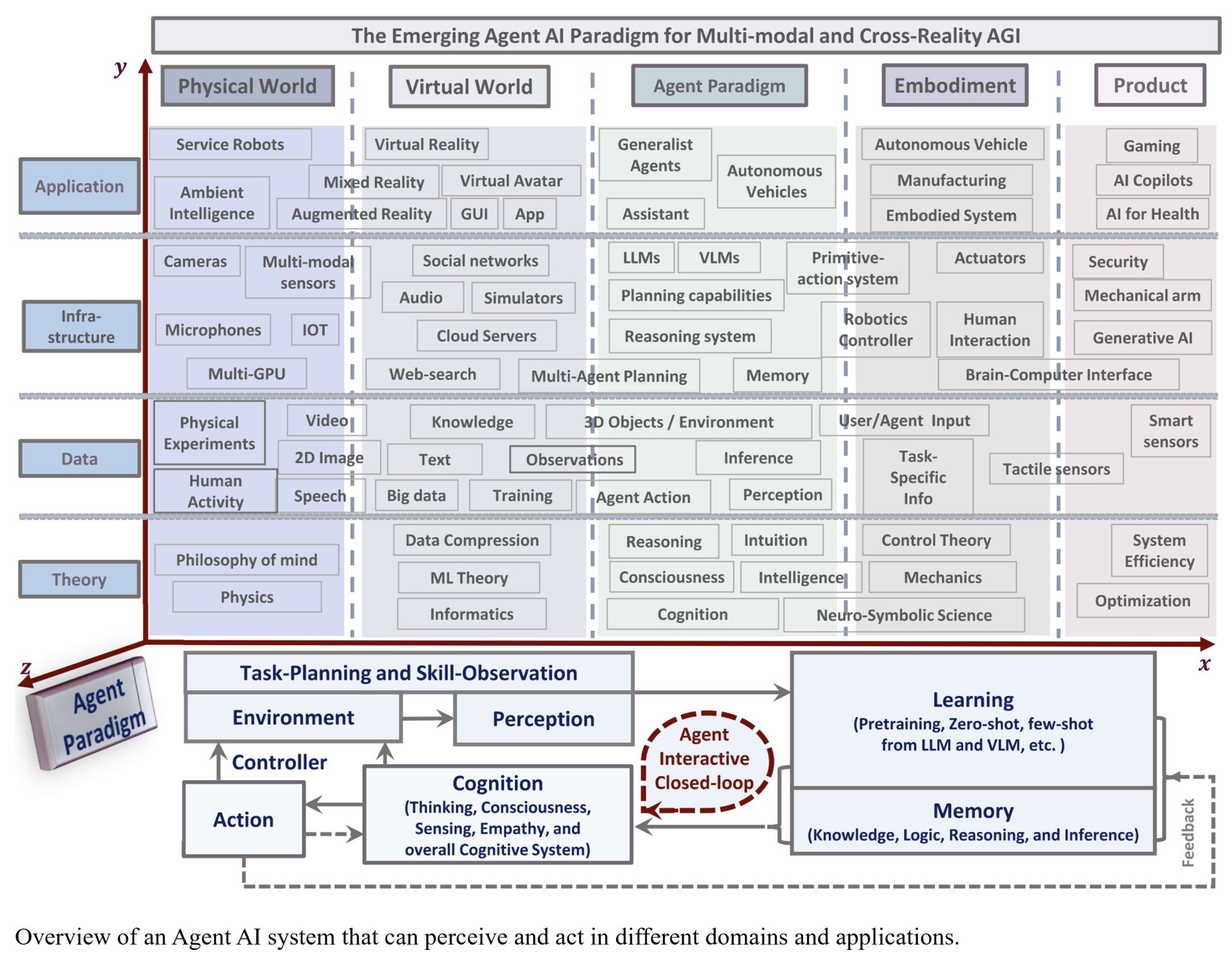
- Frameworks like LangGraph and AutoGen are designed to facilitate these workflows.
- Google has proposed the Agent2Agent (A2A) protocol to enable communication between agents from different platforms.
- Democratizing Agent Development: New frameworks and SDKs are making it easier to build and deploy AI agents.
Title: Bitcoin Mining Supporting Renewable Energy Development
Introduction
- A new study led by Cornell researchers proposes using Bitcoin mining to support the development of renewable energy projects.
- It focuses on the precommercial phase of wind and solar farms, suggesting potential profits through Bitcoin mining.
Disproportionate Impact on Startups
- While the bill does not explicitly prohibit open-source AI development, concerns remain regarding its potential chilling effect on the open-source community. The provisions regarding liability for downstream modifications of released models could discourage developers from openly sharing their work, particularly if they fear potential legal repercussions for unintended consequences arising from third-party modifications.
- This apprehension could lead to a reduction in the availability of open-source AI models and code, hindering collaborative research efforts and limiting access to valuable resources for smaller players and academic institutions.
- Supporting Startups and New Entrants: Implementing tiered compliance requirements based on the scale and potential risks associated with different models would alleviate the burden on startups and foster a more equitable regulatory environment. Additionally, providing resources and support mechanisms for startups, such as funding initiatives and technical assistance programmes, would further level the playing field.
Devin
- Blog (cognition-labs.com)
- Developed by Sourcegraph, co-founded by Beang Liu, CTO.
- Aims to revolutionize software development with AI.
- Integrates into various editors, enhancing developer productivity.
- subtle whole codebase needle in a haystack logic problems
- make notes about what works and doesn’t in the commits
- reversion and blend strategies
Ng’s Agentic Patterns Series
This series of papers explores the concept of agentic patterns in AI, focusing on the development of agents capable of independent learning and goal-directed behavior. It delves into the principles and design of such agents, offering valuable insights into the future of AI and its potential impact on society.
- Building recommenders, recommenders-team/recommenders: Best Practices on Recommendation Systems (github.com)
- ML Blocks | Home is machine learning vision lego
The Bank of England’s Experiment
- The Bank of England, in collaboration with the BIS Innovation Hub,conducted a field test of CBDC technology known as Project Rosalind. Thetest explored various CBDC use cases, including offline payments, retail transactions, and micropayments. The test focused on a centralised ledger hosted by the Bank of England and involved the development of APIfunctionalities for different scenarios. The BIS considered these experiments informative for the ongoing discussions on CBDCs.
Industry Conversations
-
Continued dialogue and collaboration among industry stakeholders are vital to ensuring the successful development of the open-source
-
This section needs building out to describe the stack and the choices made, but can be seen in Figure [fig:pyramind] and Figure [fig:highlevelstack].


- Collaborative space
- Fedimint [Pear credits, RGB, Taro main net]
- Hardware signing
- Seed signer [any hardware wallet]
- Small group banking
Salesforce
- Slack. Don’t discount Salesforce. Again, if you use slack, stick with this for now. All of the tools are coming to all of the platforms.
- Significance of strategic human resource management, including talent retention and skill development.
- I think open source will win in the end because SO many people in the world will be forced and/or want not to use these few hyper centralised providers. This is a contentious opinion.
The Gap
McKinsey identified in 2022 that companies with a 5 year AI roadmap would likely pull ahead. They called this “The Gap” Hindsight shows us that this was correct. Those companies feel somewhat unassailable, but the nature of the research publishing environment, and pace of progress, means there are plenty of opportunities.
Ways to close The Gap
Daily Papers Hugging Face << you can do worse than this to ambiently learn — working/pages/Adoption of Convergent Technologies.md
- https://www.reddit.com/r/StableDiffusion/comments/18tqyn4/midjourney_v60_vs_sdxl_exact_same_prompts_using/
- If your business needs custom models then still do as much with off the shelf as you can. You need to be mindful of ethics and the law. This is non-trivial. The team here can help.
- Regardless of the scale and technical proficiency of your team, these tools, especially the open source ones, can provide a rapid way to ask your customers “is this what you mean?“. People are bad at specifying, but good at instinctive validation. You can then go and manufacture a properly optimised and legally compliant toolchain.
Ethical Considerations
- Accelerating Defensive AI: Discusses the need to develop defensive AI modalities to counteract malicious use and unintended consequences. Explores strategies for safe AI deployment and the importance of international collaboration on AI safety standards.
- Ethical Frameworks: Emphasizes the importance of establishing robust ethical frameworks and guidelines for AI development and use, considering diverse perspectives and the need for adaptability as AI technologies evolve.
The Final Test and Order of AI Risks
- Order of Risks: Discusses the importance of considering the order of AI risks, noting that intermediate stages of AI development may indirectly affect the very institutions needed to address existential risks from superintelligence.
- Evidence of Universality: Details the evidence for the universality observed in artificial neural networks learning similar circuits to the human brain, suggesting that current methods are sufficient for modeling human cognition.
Diminishing Returns in Research Productivity
- Implications for AI-Driven Growth: Discusses the implications of diminishing returns for the notion of perpetually increasing returns from AI-augmented research and development.
Image, Video and 3D
- Stable Diffusion Image Model and Stable Video Diffusion allow a lot of control, but at a cost of complexity.
- For brands and private companies this allows private development of digital assets.
Designers and engineers
- Use Stable Diffusion to quickly generate visual representations of their ideas, facilitating rapid prototyping and concept development. This allows for faster iteration and improved communication within design teams.
OnePose++ for Object Pose Estimation
- OnePose++ Page - - OnePose++, an extension of the OnePose framework, is a streamlined solution for robust and scalable 6D object pose estimation from a single RGB image.
- This technology could be used for rapid prototyping, game development, and creation of virtual environments.
- GET3D aims to democratise 3D content creation by simplifying the process and reducing reliance on expert 3D modellers.
Virtual Art & Media Collaboration:
- Artists, animators, and multimedia professionals can collaborate in CVEs to create and develop their projects, such as films, animations, or video games. Natural language AI can help in storyboarding, scriptwriting, or character development, while visual generative ML can generate new visuals or adapt existing assets based on user input and style preferences.
Title: Bitcoin Mining Supporting Renewable Energy Development
Introduction
- A new study led by Cornell researchers proposes using Bitcoin mining to support the development of renewable energy projects.
- It focuses on the precommercial phase of wind and solar farms, suggesting potential profits through Bitcoin mining.
The Bank of England’s Experiment
- The Bank of England, in collaboration with the BIS Innovation Hub,conducted a field test of CBDC technology known as Project Rosalind. Thetest explored various CBDC use cases, including offline payments, retail transactions, and micropayments. The test focused on a centralised ledger hosted by the Bank of England and involved the development of APIfunctionalities for different scenarios. The BIS considered these experiments informative for the ongoing discussions on CBDCs.
Industry Conversations
-
Continued dialogue and collaboration among industry stakeholders are vital to ensuring the successful development of the open-source
-
This section needs building out to describe the stack and the choices made, but can be seen in Figure [fig:pyramind] and Figure [fig:highlevelstack].
collaboration in virtual production is challenging, often breaking the
flow of communication and limiting the ability to convey spatial
bfSlide 7: Competitive Landscape bfSlide 8: Team
”While there are other virtual production solutions on the market, none “We project rapid growth as we capture a significant share of the expanding virtual production market.” “We have already developed an MVP using the Flossverse stack and are now focused on refining the integration and licensing elements of our software.”
bfSlide 11: Ask bfSlide 12: Closing Remarks
”We are seeking investment to accelerate our development, expand our -
The ultimate goal is to create a seamless, highly personalized visitor experience that evolves and continues before, during, and after a visit to a digital exhibition. This level of personalization is only made possible through the integration of advanced AI technology, biometrics, and a deep inferred understanding of individual preferences and behaviours.
Salesforce
- Slack. Don’t discount Salesforce. Again, if you use slack, stick with this for now. All of the tools are coming to all of the platforms.
- Significance of strategic human resource management, including talent retention and skill development.
- I think open source will win in the end because SO many people in the world will be forced and/or want not to use these few hyper centralised providers. This is a contentious opinion.
The Gap
McKinsey identified in 2022 that companies with a 5 year AI roadmap would likely pull ahead. They called this “The Gap” Hindsight shows us that this was correct. Those companies feel somewhat unassailable, but the nature of the research publishing environment, and pace of progress, means there are plenty of opportunities.
Ways to close The Gap
Daily Papers Hugging Face << you can do worse than this to ambiently learn — working/pages/Adoption of Convergent Technologies.md
Diminishing Returns in Research Productivity
- Implications for AI-Driven Growth: Discusses the implications of diminishing returns for the notion of perpetually increasing returns from AI-augmented research and development.
OnePose++ for Object Pose Estimation
- OnePose++ Page - - OnePose++, an extension of the OnePose framework, is a streamlined solution for robust and scalable 6D object pose estimation from a single RGB image.
- This technology could be used for rapid prototyping, game development, and creation of virtual environments.
- GET3D aims to democratise 3D content creation by simplifying the process and reducing reliance on expert 3D modellers.
Congo
- A new study led by Cornell researchers proposes using Bitcoin mining to support the development of renewable energy projects.
- It focuses on the precommercial phase of wind and solar farms, suggesting potential profits through Bitcoin mining.
The Bank of England’s Experiment
- The Bank of England, in collaboration with the BIS Innovation Hub,conducted a field test of CBDC technology known as Project Rosalind. Thetest explored various CBDC use cases, including offline payments, retail transactions, and micropayments. The test focused on a centralised ledger hosted by the Bank of England and involved the development of APIfunctionalities for different scenarios. The BIS considered these experiments informative for the ongoing discussions on CBDCs.
Industry Conversations
-
Continued dialogue and collaboration among industry stakeholders are vital to ensuring the successful development of the open-source
-
This section needs building out to describe the stack and the choices made, but can be seen in Figure [fig:pyramind] and Figure [fig:highlevelstack].
collaboration in virtual production is challenging, often breaking the
flow of communication and limiting the ability to convey spatial
bfSlide 7: Competitive Landscape bfSlide 8: Team
”We are seeking investment to accelerate our development, expand our -
The ultimate goal is to create a seamless, highly personalized visitor experience that evolves and continues before, during, and after a visit to a digital exhibition. This level of personalization is only made possible through the integration of advanced AI technology, biometrics, and a deep inferred understanding of individual preferences and behaviours.
Diminishing Returns in Research Productivity
- Implications for AI-Driven Growth: Discusses the implications of diminishing returns for the notion of perpetually increasing returns from AI-augmented research and development.
Interfaces and Scaling
- Immersive Spaces: Exploring the integration of generative AI, including LLMs, in metaverse applications and game development. The potential for immersive, AI-driven spaces is vast, ranging from enhanced user experiences to novel forms of interaction. Why you should use generative AI in your metaverse company
- SeamlessM4T by Facebook Research
- Aims to simplify the transition from single-device to distributed model training, supporting more efficient utilization of computing resources.
- LoRA Training Insights: Discusses the benefits and application of Low-Rank Adaptation (LoRA) for efficient model fine-tuning. LoRA Training Insights
- CustomGPT offers businesses the ability to create their own chatbot using GPT-4 for tailored customer interactions. This platform demonstrates the application of LLMs in improving customer service and engagement by providing accurate, context-aware responses.
Interfaces and Scaling
- Immersive Spaces: Exploring the integration of generative AI, including LLMs, in metaverse applications and game development. The potential for immersive, AI-driven spaces is vast, ranging from enhanced user experiences to novel forms of interaction. Why you should use generative AI in your metaverse company
- This article discusses the implications and opportunities of incorporating generative AI in metaverse platforms.
Integrating Accessibility into the Design Process
- To ensure digital products are accessible from the outset, it is essential to integrate accessibility considerations into every stage of the design and development process.
Areas of Agreement and Disagreement
- Both sides agree AI development shouldn’t be monopolised by a few corporations, but differ on solutions.
Microsoft AI for Science
- Chris Bishop, is Microsoft Technical Fellow and Director of Microsoft Research AI for Science Microsoft Research Podcast
- The acceleration provided by AI allows for broader exploration of possibilities.
- Microsoft’s partnership with Novartis has demonstrated the impact of AI on drug discovery pipelines.
- Novartis Empowers Scientists With AI to Speed Discovery and Development of Breakthrough Medicines
- It can be fine-tuned for downstream applications with less data, such as pollution flow modelling.
- Introducing Aurora: The First Large-Scale Foundation Model of the Atmosphere
- From Forecasting Storms to Designing Molecules: How New AI Foundation Models Can Speed Up Scientific Discovery
Interfaces and Scaling
- Immersive Spaces: Exploring the integration of generative AI, including LLMs, in metaverse applications and game development. The potential for immersive, AI-driven spaces is vast, ranging from enhanced user experiences to novel forms of interaction. Why you should use generative AI in your metaverse company
- This article discusses the implications and opportunities of incorporating generative AI in metaverse platforms.
Mass Movements and Tokenisation
- Raised capital for tangible environmental actions
- Democratised investment in cultural trends
- Social media-driven AI entertainment like the AI terminal twitter account are driving actual tangible outcomes for the guiding AI actors. This creates incentives for AI agent development potentially fostering more autonomous, interconnected AI systems connected to real world events.
- Technological revolutions often emerge unexpectedly. This is entirely ground up emergent tech, and might hint at a generational shift driven by digital society incentives.
Integrating Accessibility into the Design Process
- To ensure digital products are accessible from the outset, it is essential to integrate accessibility considerations into every stage of the design and development process.
Areas of Agreement and Disagreement
- Both sides agree AI development shouldn’t be monopolised by a few corporations, but differ on solutions.
Future Outlook and Potential Developments
Introduction and Problem Definition
- This chapter identifies an intersectional space across the described technologies, and proposes a valuable and novel software stack, which can enable exploration and product development. It is useful to briefly look at the Venn disgram we began with, and recap the book and the conclusions we have drawn so far.

- The Metaverse faces numerous challenges, including poor adoption rates, overstated market need, and a lack of genuine digital society use cases. Meanwhile trust abuses by incumbent providers have led to potential inflection points in the organization of the wider internet. Moreover, emerging markets and less developed nations face barriers to entry due to inadequate identification, banking infrastructure, and computing power. There is an opportunity to build pervasive digital spaces with a different and more open foundation, learning from these lessons.
Key aspects of NVIDIA’s roadmap
- Enhanced Spatial Computing: Spatial computing extends beyond traditional VR and AR by incorporating familiar elements of desktop computing into 3D space, enhancing user interactions with digital content in a more intuitive and spatially relevant manner.
- Omniverse Platform: NVIDIA is pushing the Omniverse platform, which is aimed at achieving full fidelity, interoperability, and scalability in digital creation. It facilitates physically accurate simulations and seamless workflows across various digital creation tools, making it a critical part of NVIDIA’s ecosystem support strategy.
- Cloud XR and GDN: NVIDIA is leveraging its expertise in cloud solutions with Cloud XR and GDN (GeForce NOW Developer Network) to enhance the streaming of rich, immersive content. These platforms support expansive computing needs, enabling high-quality rendering and low-latency delivery over the cloud.
- AI Integration in XR: NVIDIA is integrating AI into XR to create more dynamic and responsive environments. This includes using AI for real-time content creation and adjustment, enhancing the realism and responsiveness of XR applications.
- Partnerships and Collaboration: NVIDIA continues to seek and expand partnerships across various sectors to foster the development and deployment of XR technologies. This is evident in their collaborations with companies like Adidas and automotive brands, using XR and AI to create personalized and enhanced customer experiences.
- Future Vision and Development: Looking forward, NVIDIA is focused on further merging AI with XR to enrich user interfaces and experiences. This involves developing tools that facilitate the creation of digital content and simulations that are increasingly indistinguishable from reality.
Interfaces and Scaling
- Immersive Spaces: Exploring the integration of generative AI, including LLMs, in metaverse applications and game development. The potential for immersive, AI-driven spaces is vast, ranging from enhanced user experiences to novel forms of interaction. Why you should use generative AI in your metaverse company
- This article discusses the implications and opportunities of incorporating generative AI in metaverse platforms.
Future Developments
- The creators of The Golden Key are exploring new possibilities for interactive, AI-driven experiences, including:
A New Mode of Capital Allocation
- Democratised investment in cultural trends
- Social media-driven AI entertainment like the AI terminal twitter account are driving actual tangible outcomes for the guiding AI actors. This creates incentives for AI agent development potentially fostering more autonomous, interconnected AI systems connected to real world events.
- Technological revolutions often emerge unexpectedly. This is entirely ground up emergent tech, and might hint at a generational shift driven by digital society incentives.
Integrating Accessibility into the Design Process
- To ensure digital products are accessible from the outset, it is essential to integrate accessibility considerations into every stage of the design and development process.
March 2024 Gladstone USA Report
- Commissioned by the U.S. government, this report underscores the potential for artificial intelligence to pose substantial national security risks, including the possibility of an extinction-level threat.
- Gladstone’s Role and Perspective
- Engagement with the U.S. Government: Since 2021, Gladstone, led by the Harris brothers, has briefed the U.S. government on AI risks.
- Contract Award: Gladstone was selected to produce the report, emphasizing the firm’s deep involvement in shaping the discourse on AI safety.
- Action Plan to increase the safety and security of advanced AI (gladstone.ai)
- Essential Findings from the Report
- Risk Assessment: The development of current frontier AI technology presents “urgent and growing risks to national security.”
- Historical Parallel: The destabilizing potential of advanced AI and AGI is likened to the advent of nuclear weapons, suggesting profound global security implications.
- Weapons of Mass Destruction: Advances in AI are creating “entirely new categories” of WMDs, emphasizing the unprecedented nature of these risks.
- Competitive Pressures: A significant driver of these risks is identified as the competitive dynamic among leading AI labs, highlighting a rush towards developing advanced AI systems despite acknowledged dangers.
- Proposed Action Plan
- Title of Plan: “Defense in Depth: An Action Plan to Increase the Safety and Security of Advanced AI”
- Core Strategies:
- Introduction of interim safeguards to stabilize AI development.
- Creation of a framework for basic regulatory oversight.
- Establishment of a domestic legal regime for responsible AI development and adoption.
- Extension of regulatory measures to international cooperation and standards.
- Specific Recommendations from the Report
- Proposes a limit on the computing power used for AI model training.
- Suggests the formation of a new federal AI agency to oversee critical thresholds and regulatory compliance.
- Recommends considering the prohibition of the publication of the inner workings of powerful AI models.
- Advocates for stricter controls over the manufacture and export of AI chips and increased funding towards alignment research for safer AI.
- Support from AI Safety Advocates: The report’s urgent tone and recommendations found resonance among AI safety advocates.
- Skepticism from Critics: Some viewed the report as overly alarmist, with criticisms ranging from dismissive to mocking the idea of government superiority in AI management.
- The discourse surrounding the government-commissioned AI report reflects a broad spectrum of opinions, underscoring the complexity of AI’s impact on society and the necessity for informed, multifaceted policy approaches.
- Gladstone’s Role and Perspective
Future Outlook and Potential Developments
Introduction and Problem Definition
- This chapter identifies an intersectional space across the described technologies, and proposes a valuable and novel software stack, which can enable exploration and product development. It is useful to briefly look at the Venn disgram we began with, and recap the book and the conclusions we have drawn so far.
4.12.16 Intellectual Property Rights and Open-source AI
Intellectual property rights form another complex dimension in the discussion. Open-source AI challenges traditional notions of ownership and patents, potentially undermining the incentives for companies and individuals to invest in AI research and development. Balancing the need for innovation with the necessity to protect inventors’ rights becomes critical in an open-source framework.
Key aspects of NVIDIA’s roadmap
- Enhanced Spatial Computing: Spatial computing extends beyond traditional VR and AR by incorporating familiar elements of desktop computing into 3D space, enhancing user interactions with digital content in a more intuitive and spatially relevant manner.
- Omniverse Platform: NVIDIA is pushing the Omniverse platform, which is aimed at achieving full fidelity, interoperability, and scalability in digital creation. It facilitates physically accurate simulations and seamless workflows across various digital creation tools, making it a critical part of NVIDIA’s ecosystem support strategy.
- Cloud XR and GDN: NVIDIA is leveraging its expertise in cloud solutions with Cloud XR and GDN (GeForce NOW Developer Network) to enhance the streaming of rich, immersive content. These platforms support expansive computing needs, enabling high-quality rendering and low-latency delivery over the cloud.
- AI Integration in XR: NVIDIA is integrating AI into XR to create more dynamic and responsive environments. This includes using AI for real-time content creation and adjustment, enhancing the realism and responsiveness of XR applications.
- Partnerships and Collaboration: NVIDIA continues to seek and expand partnerships across various sectors to foster the development and deployment of XR technologies. This is evident in their collaborations with companies like Adidas and automotive brands, using XR and AI to create personalized and enhanced customer experiences.
- Future Vision and Development: Looking forward, NVIDIA is focused on further merging AI with XR to enrich user interfaces and experiences. This involves developing tools that facilitate the creation of digital content and simulations that are increasingly indistinguishable from reality.
Navigating the AI Arms Race - A Return to History’s High Stakes:
- Echoes of the Cold War: The conversation takes a historical turn, drawing parallels between the transformative potential of AI and the Cold War’s technological and ideological battles. They suggest that we are entering a new era of great power competition with AI at its core.
- The CCP’s AI Ambitions - A Clear and Present Danger: Concerns about the Chinese Communist Party’s AI agenda are central to the discussion. The guests argue that the CCP recognises the technology’s potential to reshape the global order, potentially granting a decisive advantage to whichever nation harnesses it first. They discuss concrete threats, including:
- Espionage and IP Theft: The CCP’s aggressive espionage apparatus could target AI companies and research institutions, attempting to steal algorithms, training data, and critical technological insights.
- Rapid Industrial Scale-Up: Leveraging its centralised control and vast industrial capacity, the CCP could rapidly build massive AI clusters and deploy these technologies at scale.
- A More Ruthless Approach: Unburdened by ethical constraints or public scrutiny, the CCP might pursue AI development and deployment in ways that Western nations would deem unacceptable.
- The US at a Crossroads - The Imperative of Leadership: The guests emphasise the urgent need for the US to recognise the magnitude of the challenge and reaffirm its commitment to leading the world in responsible AI development. They propose key steps:
- A Comprehensive National AI Strategy: Articulating a clear vision and roadmap for AI development, encompassing research, infrastructure, workforce development, and national security considerations.
- Winning the Global Talent Race: Attracting and retaining the world’s brightest minds in AI research and engineering, fostering a thriving ecosystem of innovation.
- Promoting International Cooperation (With Caveats): Building alliances with like-minded nations to establish norms, standards, and safeguards for AI development and deployment while carefully managing the risks of technology transfer to potentially adversarial nations.
- The Middle East Conundrum - A Dangerous Gambit for Short-Term Gain:
- The Allure of Sovereign Wealth and Influence: The guests express serious reservations about the trend of major AI companies, driven by the promise of capital and market access, potentially establishing significant AI infrastructure in the Middle East. They specifically single out countries with concerning human rights records and opaque ties to China, such as the UAE.
- A Seat at the Table for Authoritarian Regimes: They argue that this trend effectively grants authoritarian regimes undue influence over this strategically crucial technology, jeopardising global security and potentially emboldening those hostile to democratic values.
- Rejecting False Promises of “Atoms for Peace”: They caution against naive comparisons to the “Atoms for Peace” programme, arguing that AI’s unique properties - particularly its ability to self-improve and the difficulty of controlling its downstream impacts - make such analogies dangerously misleading.
Interfaces and Scaling
- Immersive Spaces: Exploring the integration of generative AI, including LLMs, in metaverse applications and game development. The potential for immersive, AI-driven spaces is vast, ranging from enhanced user experiences to novel forms of interaction. Why you should use generative AI in your metaverse company
- This article discusses the implications and opportunities of incorporating generative AI in metaverse platforms.
Key Projects and Discussions
- Immersive Spaces: The potential of generative AI in metaverse applications and game development is vast, offering new ways to create engaging and dynamic environments. While specific links to projects or discussions were not provided in the initial extraction, this area highlights the intersection of LLMs with virtual worlds, suggesting a future where AI can contribute to more immersive and interactive digital spaces.
- Generative AI in the Metaverse: An insightful article on why now is the time to use generative AI in your metaverse company, outlining potential impacts and considerations for developers and businesses. [Why You Should Use Generative AI in Your Metaverse Company
- The Ghost Howls](https://skarredghost.com/2023/02/11/generative-ai-metaverse-company/)
- This article provides a comprehensive overview of how generative AI can revolutionize metaverse applications, offering a balanced view on the opportunities and challenges.
- AI-Assisted Graphics in Game Development: Exploring the use of AI to assist in graphics creation for games, enhancing realism and efficiency. AI-Assisted Graphics
- This link showcases practical applications of AI in game development, highlighting advancements in creating more immersive and visually stunning gaming experiences.
AI Development Acceleration
AI Development and Innovations
Ossification
- The Bitcoin code is aiming toward so called“ossification”.The complete cessation of development of the feature set. This wouldprovide higher confidence in the protocol moving forward, as long terminvestors would be somewhat assured that the parameters of thetechnology would not change, and potentially pressure on the developerswould reduce. There’s a push to get some or all of the featuresdescribed above in over the next few year before this happens. As everthis is a controversial topic within the development community. NotablyPaul Sztorc, inventor of Drivechain feelsstrongly that cessation ofinnovation is a fundamental mistake, while also agreeing thatossification is necessary.
OpenAI’s Vision
- Envisions ChatGPT as a super-smart personal assistant
- Continuous development towards agent-like capabilities
- Developing agents for device-specific and web-based tasks
- Device agents automate actions like data transfer and report filling
- Web agents handle internet-based tasks, expanding AI’s utility
- OpenAI’s efforts could challenge Microsoft Copilot which is somewhat explicitly designed for this role
- Collaboration with developers through APIs to create agent experiences
Future Outlook and Potential Developments
Challenges Ahead
- While significant progress has been made, many challenges remain in making digital products truly accessible. Continued research, development, and collaboration between designers, developers, and users with disabilities are essential to overcoming these barriers and ensuring that digital experiences are inclusive for everyone.
-
- Relevant Research:
- White Paper: Recommendations for Immersive Accessibility Services: This paper provides recommendations on integrating accessibility solutions with immersive media services, including subtitling, audio description, and sign language support for 360-degree video and spatial audio.
- Relevant Research:
- Accessibility by design is not just a best practice; it is a fundamental requirement for creating inclusive digital experiences. Whether designing for immersive technologies or traditional software, the principles of accessibility must be integrated into every stage of the design and development process. By doing so, we can create digital products that are not only compliant with accessibility standards but also provide a delightful and inclusive experience for all users.
Integrating Accessibility into the Design Process
- To ensure digital products are accessible from the outset, it is essential to integrate accessibility considerations into every stage of the design and development process.
March 2024 Gladstone USA Report
- Commissioned by the U.S. government, this report underscores the potential for artificial intelligence to pose substantial national security risks, including the possibility of an extinction-level threat.
- Gladstone’s Role and Perspective
- Engagement with the U.S. Government: Since 2021, Gladstone, led by the Harris brothers, has briefed the U.S. government on AI risks.
- Contract Award: Gladstone was selected to produce the report, emphasizing the firm’s deep involvement in shaping the discourse on AI safety.
- Action Plan to increase the safety and security of advanced AI (gladstone.ai)
- Essential Findings from the Report
- Risk Assessment: The development of current frontier AI technology presents “urgent and growing risks to national security.”
- Historical Parallel: The destabilizing potential of advanced AI and AGI is likened to the advent of nuclear weapons, suggesting profound global security implications.
- Weapons of Mass Destruction: Advances in AI are creating “entirely new categories” of WMDs, emphasizing the unprecedented nature of these risks.
- Competitive Pressures: A significant driver of these risks is identified as the competitive dynamic among leading AI labs, highlighting a rush towards developing advanced AI systems despite acknowledged dangers.
- Proposed Action Plan
- Title of Plan: “Defense in Depth: An Action Plan to Increase the Safety and Security of Advanced AI”
- Core Strategies:
- Introduction of interim safeguards to stabilize AI development.
- Creation of a framework for basic regulatory oversight.
- Establishment of a domestic legal regime for responsible AI development and adoption.
- Extension of regulatory measures to international cooperation and standards.
- Specific Recommendations from the Report
- Proposes a limit on the computing power used for AI model training.
- Suggests the formation of a new federal AI agency to oversee critical thresholds and regulatory compliance.
- Recommends considering the prohibition of the publication of the inner workings of powerful AI models.
- Advocates for stricter controls over the manufacture and export of AI chips and increased funding towards alignment research for safer AI.
- Support from AI Safety Advocates: The report’s urgent tone and recommendations found resonance among AI safety advocates.
- Skepticism from Critics: Some viewed the report as overly alarmist, with criticisms ranging from dismissive to mocking the idea of government superiority in AI management.
- The discourse surrounding the government-commissioned AI report reflects a broad spectrum of opinions, underscoring the complexity of AI’s impact on society and the necessity for informed, multifaceted policy approaches.
- Gladstone’s Role and Perspective
Future Outlook and Potential Developments
Introduction and Problem Definition
- This chapter identifies an intersectional space across the described technologies, and proposes a valuable and novel software stack, which can enable exploration and product development. It is useful to briefly look at the Venn disgram we began with, and recap the book and the conclusions we have drawn so far.
4.12.16 Intellectual Property Rights and Open-source AI
Intellectual property rights form another complex dimension in the discussion. Open-source AI challenges traditional notions of ownership and patents, potentially undermining the incentives for companies and individuals to invest in AI research and development. Balancing the need for innovation with the necessity to protect inventors’ rights becomes critical in an open-source framework.
Key aspects of NVIDIA’s roadmap
- Enhanced Spatial Computing: Spatial computing extends beyond traditional VR and AR by incorporating familiar elements of desktop computing into 3D space, enhancing user interactions with digital content in a more intuitive and spatially relevant manner.
- Omniverse Platform: NVIDIA is pushing the Omniverse platform, which is aimed at achieving full fidelity, interoperability, and scalability in digital creation. It facilitates physically accurate simulations and seamless workflows across various digital creation tools, making it a critical part of NVIDIA’s ecosystem support strategy.
- Cloud XR and GDN: NVIDIA is leveraging its expertise in cloud solutions with Cloud XR and GDN (GeForce NOW Developer Network) to enhance the streaming of rich, immersive content. These platforms support expansive computing needs, enabling high-quality rendering and low-latency delivery over the cloud.
- AI Integration in XR: NVIDIA is integrating AI into XR to create more dynamic and responsive environments. This includes using AI for real-time content creation and adjustment, enhancing the realism and responsiveness of XR applications.
- Partnerships and Collaboration: NVIDIA continues to seek and expand partnerships across various sectors to foster the development and deployment of XR technologies. This is evident in their collaborations with companies like Adidas and automotive brands, using XR and AI to create personalized and enhanced customer experiences.
- Future Vision and Development: Looking forward, NVIDIA is focused on further merging AI with XR to enrich user interfaces and experiences. This involves developing tools that facilitate the creation of digital content and simulations that are increasingly indistinguishable from reality.
Navigating the AI Arms Race - A Return to History’s High Stakes:
- Echoes of the Cold War: The conversation takes a historical turn, drawing parallels between the transformative potential of AI and the Cold War’s technological and ideological battles. They suggest that we are entering a new era of great power competition with AI at its core.
- The CCP’s AI Ambitions - A Clear and Present Danger: Concerns about the Chinese Communist Party’s AI agenda are central to the discussion. The guests argue that the CCP recognises the technology’s potential to reshape the global order, potentially granting a decisive advantage to whichever nation harnesses it first. They discuss concrete threats, including:
- Espionage and IP Theft: The CCP’s aggressive espionage apparatus could target AI companies and research institutions, attempting to steal algorithms, training data, and critical technological insights.
- Rapid Industrial Scale-Up: Leveraging its centralised control and vast industrial capacity, the CCP could rapidly build massive AI clusters and deploy these technologies at scale.
- A More Ruthless Approach: Unburdened by ethical constraints or public scrutiny, the CCP might pursue AI development and deployment in ways that Western nations would deem unacceptable.
- The US at a Crossroads - The Imperative of Leadership: The guests emphasise the urgent need for the US to recognise the magnitude of the challenge and reaffirm its commitment to leading the world in responsible AI development. They propose key steps:
- A Comprehensive National AI Strategy: Articulating a clear vision and roadmap for AI development, encompassing research, infrastructure, workforce development, and national security considerations.
- Winning the Global Talent Race: Attracting and retaining the world’s brightest minds in AI research and engineering, fostering a thriving ecosystem of innovation.
- Promoting International Cooperation (With Caveats): Building alliances with like-minded nations to establish norms, standards, and safeguards for AI development and deployment while carefully managing the risks of technology transfer to potentially adversarial nations.
- The Middle East Conundrum - A Dangerous Gambit for Short-Term Gain:
- The Allure of Sovereign Wealth and Influence: The guests express serious reservations about the trend of major AI companies, driven by the promise of capital and market access, potentially establishing significant AI infrastructure in the Middle East. They specifically single out countries with concerning human rights records and opaque ties to China, such as the UAE.
- A Seat at the Table for Authoritarian Regimes: They argue that this trend effectively grants authoritarian regimes undue influence over this strategically crucial technology, jeopardising global security and potentially emboldening those hostile to democratic values.
- Rejecting False Promises of “Atoms for Peace”: They caution against naive comparisons to the “Atoms for Peace” programme, arguing that AI’s unique properties - particularly its ability to self-improve and the difficulty of controlling its downstream impacts - make such analogies dangerously misleading.
Interfaces and Scaling
- Immersive Spaces: Exploring the integration of generative AI, including LLMs, in metaverse applications and game development. The potential for immersive, AI-driven spaces is vast, ranging from enhanced user experiences to novel forms of interaction. Why you should use generative AI in your metaverse company
- This article discusses the implications and opportunities of incorporating generative AI in metaverse platforms.
Key Projects and Discussions
- Immersive Spaces: The potential of generative AI in metaverse applications and game development is vast, offering new ways to create engaging and dynamic environments. While specific links to projects or discussions were not provided in the initial extraction, this area highlights the intersection of LLMs with virtual worlds, suggesting a future where AI can contribute to more immersive and interactive digital spaces.
- Generative AI in the Metaverse: An insightful article on why now is the time to use generative AI in your metaverse company, outlining potential impacts and considerations for developers and businesses. [Why You Should Use Generative AI in Your Metaverse Company
- The Ghost Howls](https://skarredghost.com/2023/02/11/generative-ai-metaverse-company/)
- This article provides a comprehensive overview of how generative AI can revolutionize metaverse applications, offering a balanced view on the opportunities and challenges.
- AI-Assisted Graphics in Game Development: Exploring the use of AI to assist in graphics creation for games, enhancing realism and efficiency. AI-Assisted Graphics
- This link showcases practical applications of AI in game development, highlighting advancements in creating more immersive and visually stunning gaming experiences.
AI Development Acceleration
AI Development and Innovations
Ossification
- The Bitcoin code is aiming toward so called“ossification”.The complete cessation of development of the feature set. This wouldprovide higher confidence in the protocol moving forward, as long terminvestors would be somewhat assured that the parameters of thetechnology would not change, and potentially pressure on the developerswould reduce. There’s a push to get some or all of the featuresdescribed above in over the next few year before this happens. As everthis is a controversial topic within the development community. NotablyPaul Sztorc, inventor of Drivechain feelsstrongly that cessation ofinnovation is a fundamental mistake, while also agreeing thatossification is necessary.
OpenAI’s Vision
- Envisions ChatGPT as a super-smart personal assistant
- Continuous development towards agent-like capabilities
- Developing agents for device-specific and web-based tasks
- Device agents automate actions like data transfer and report filling
- Web agents handle internet-based tasks, expanding AI’s utility
- OpenAI’s efforts could challenge Microsoft Copilot which is somewhat explicitly designed for this role
- Collaboration with developers through APIs to create agent experiences
Future Outlook and Potential Developments
Challenges Ahead
- While significant progress has been made, many challenges remain in making digital products truly accessible. Continued research, development, and collaboration between designers, developers, and users with disabilities are essential to overcoming these barriers and ensuring that digital experiences are inclusive for everyone.
-
- Relevant Research:
- White Paper: Recommendations for Immersive Accessibility Services: This paper provides recommendations on integrating accessibility solutions with immersive media services, including subtitling, audio description, and sign language support for 360-degree video and spatial audio.
- Relevant Research:
- Accessibility by design is not just a best practice; it is a fundamental requirement for creating inclusive digital experiences. Whether designing for immersive technologies or traditional software, the principles of accessibility must be integrated into every stage of the design and development process. By doing so, we can create digital products that are not only compliant with accessibility standards but also provide a delightful and inclusive experience for all users.
Integrating Accessibility into the Design Process
- To ensure digital products are accessible from the outset, it is essential to integrate accessibility considerations into every stage of the design and development process.
Interfaces and Scaling
- Immersive Spaces: Exploring the integration of generative AI, including LLMs, in metaverse applications and game development. The potential for immersive, AI-driven spaces is vast, ranging from enhanced user experiences to novel forms of interaction. Why you should use generative AI in your metaverse company
- This article discusses the implications and opportunities of incorporating generative AI in metaverse platforms.
Key Projects and Discussions
-
Immersive Spaces: The potential of generative AI in metaverse applications and game development is vast, offering new ways to create engaging and dynamic environments. While specific links to projects or discussions were not provided in the initial extraction, this area highlights the intersection of LLMs with virtual worlds, suggesting a future where AI can contribute to more immersive and interactive digital spaces.
-
Generative AI in the Metaverse: An insightful article on why now is the time to use generative AI in your metaverse company, outlining potential impacts and considerations for developers and businesses. [Why You Should Use Generative AI in Your Metaverse Company
- The Ghost Howls](https://skarredghost.com/2023/02/11/generative-ai-metaverse-company/)
- This article provides a comprehensive overview of how generative AI can revolutionize metaverse applications, offering a balanced view on the opportunities and challenges.
-
AI-Assisted Graphics in Game Development: Exploring the use of AI to assist in graphics creation for games, enhancing realism and efficiency. AI-Assisted Graphics
-
This link showcases practical applications of AI in game development, highlighting advancements in creating more immersive and visually stunning gaming experiences.
Context and Significance
AI development represents the technical core of creating AI systems, transforming requirements and objectives into functional models capable of performing specified tasks. This phase is characterised by iterative experimentation, technical decision-making, and the application of machine learning engineering practices. The choices made during development—regarding data, algorithms, architectures, and training procedures—fundamentally shape the AI system’s capabilities, limitations, and risks.
The NIST AI Risk Management Framework emphasises that many AI risks originate during development, including inadequate data quality, inappropriate algorithm selection, insufficient testing, and lack of documentation. ISO/IEC 42001 requires organisations to establish controlled processes for AI development, ensuring consistency, quality, and traceability.
Modern AI development increasingly relies on transfer learning, foundation models, and pre-trained components, shifting some development activities from training models from scratch to adapting, fine-tuning, and validating existing models. This evolution introduces new considerations around model provenance, inherited biases, and appropriate adaptation methods.
Key Characteristics
-
-
Iterative process: Cycle of experimentation, evaluation, and refinement
-
Data-centric focus: Heavy emphasis on data quality and representativeness
-
Technical complexity: Requires specialised ML engineering expertise
-
Experimental nature: Multiple approaches tested before final selection
-
Documentation requirement: Detailed records of decisions and experiments
-
Version control: Systematic tracking of model versions and configurations
-
Validation integration: Testing and evaluation throughout development
-
Stakeholder collaboration: Engagement with domain experts and end users
Development Activities
1. Problem Formulation
-
Tasks: Define ML task type (classification, regression, generation, etc.)
-
Objectives: Specify success criteria and performance metrics
-
Constraints: Identify computational, latency, and accuracy requirements
-
Outputs: Problem specification, success metrics, constraint documentation
2. Data Management
-
Collection: Gather relevant data from appropriate sources
-
Curation: Clean, preprocess, and structure data
-
Labelling: Annotate data with ground truth labels where required
-
Splitting: Partition into training, validation, and test sets
-
Documentation: Record data provenance, characteristics, and limitations
3. Feature Engineering
-
Selection: Identify relevant input features
-
Transformation: Apply scaling, encoding, and normalisation
-
Extraction: Derive new features from raw data
-
Validation: Assess feature importance and relevance
4. Model Design
-
Architecture selection: Choose appropriate model architecture
-
Framework selection: Select ML frameworks and libraries
-
Transfer learning: Identify opportunities to leverage pre-trained models
-
Custom components: Design specialised layers or modules as needed
5. Training Process
-
Hyperparameter configuration: Set learning rates, batch sizes, epochs
-
Training execution: Run iterative learning process
-
Monitoring: Track training metrics and convergence
-
Optimisation: Apply techniques to improve performance and efficiency
6. Validation and Testing
-
Performance evaluation: Assess accuracy, precision, recall, etc.
-
Robustness testing: Evaluate performance under perturbations
-
Bias assessment: Test for fairness across demographic groups
-
Edge case testing: Identify failure modes and limitations
7. Documentation
-
Technical documentation: Model cards, data sheets, architecture diagrams
-
Decision records: Rationale for key design choices
-
Performance reports: Comprehensive evaluation results
-
Known limitations: Documentation of failure modes and constraints
Relationships
-
Part of: AI Lifecycle, broader system development processes
-
Governed by: AI Governance, development standards and policies
-
Preceded by: Requirements analysis, data collection planning
-
Followed by: AI Deployment, operational integration
-
Requires: Training Data, computational resources, technical expertise
-
Produces: AI Model, documentation, performance metrics
-
Involves: AI Developer roles, data scientists, ML engineers
-
Assessed through: AI Impact Assessment, bias evaluation
-
Monitored via: Version control, experiment tracking, peer review
Examples and Applications
- Natural Language Processing Model: Development team formulates intent classification problem, curates dialogue dataset with expert annotations, experiments with transformer architectures (BERT, GPT variants), fine-tunes selected model on domain-specific data, evaluates across diverse test cases, documents performance characteristics and known limitations
- Computer Vision System: Engineers define object detection requirements, assemble image dataset with bounding box annotations, select YOLO architecture, train with data augmentation techniques, validate across lighting conditions and camera angles, optimise for inference speed, document accuracy-latency trade-offs
- Recommender System: Data scientists formulate collaborative filtering problem, prepare user-item interaction data, design hybrid architecture combining content and collaborative signals, train using implicit feedback, validate through offline metrics and A/B testing plans, document cold-start handling and diversity mechanisms
- Predictive Maintenance Model: ML engineers define anomaly detection task, preprocess sensor time-series data, engineer statistical and spectral features, train LSTM-based model, validate against historical failure events, document prediction windows and confidence thresholds
ISO/IEC Standards Alignment
ISO/IEC 42001:2023 (AI Management Systems):
-
Clause 8.4: Development process requirements
-
Clause 8.3: Data management for development
-
Clause 7.5: Documentation and record-keeping
-
Clause 9: Performance evaluation of development processes
ISO/IEC 23053 (Framework for AI Systems Using ML):
-
Development process framework for ML-based systems
-
Requirements for training, validation, and testing
-
Data management and feature engineering processes
ISO/IEC 5338:2023 (AI System Lifecycle Processes):
-
Technical processes for AI development
-
Development process activities and outcomes
-
Integration with broader system development
ISO/IEC 25059 (Software Quality for AI Systems):
-
Quality characteristics for AI systems
-
Evaluation requirements during development
NIST AI RMF Integration
MAP Function:
-
Context establishment informs development approach
-
Risk categorisation guides development safeguards
-
Stakeholder input shapes requirements
MEASURE Function:
-
Development of metrics and measurement methods
-
Baseline performance establishment
-
Bias and fairness measurement implementation
MANAGE Function:
-
Risk mitigation implementation through development choices
-
Control integration into model architecture and training
-
Documentation for risk transparency
GOVERN Function:
-
Development governance procedures and approvals
-
Quality standards and peer review requirements
-
Resource allocation and timeline management
Implementation Considerations
Development Environment:
-
Reproducible development pipelines
-
Version control for code, data, and models
-
Experiment tracking and management tools
-
Computational infrastructure (GPUs, cloud resources)
-
Collaborative development platforms
Quality Assurance:
-
Code review and testing procedures
-
Model validation protocols
-
Documentation standards and templates
-
Peer review and approval processes
Ethical Considerations:
-
Fairness constraints in objective functions
-
Privacy-preserving techniques (differential privacy, federated learning)
-
Transparency mechanisms (interpretable models, explainability tools)
-
Safety constraints and robustness requirements
Challenges:
-
Managing computational costs and development timelines
-
Addressing data scarcity and quality issues
-
Balancing model performance with interpretability
-
Ensuring reproducibility in stochastic training processes
-
Preventing overfitting and ensuring generalisation
-
Documenting complex architectures and decision rationale
Best Practices:
-
Establish clear success criteria before development
-
Implement systematic experiment tracking
-
Maintain thorough documentation throughout
-
Conduct regular peer reviews and knowledge sharing
-
Test early and continuously
-
Consider deployment constraints during development
-
Engage domain experts and end users iteratively
Regulatory and Policy Context
EU AI Act: Requires high-risk AI development to follow quality management systems with data governance, documentation, transparency, and human oversight
FDA Medical Device Development: Establishes good machine learning practice (GMLP) principles for medical AI development including data quality, feature extraction, and training practices
OECD AI Principles: Calls for robust, secure, and safe AI development with accountability and transparency
Responsible AI Guidelines: Various organisations and jurisdictions provide development guidelines emphasising fairness, transparency, and safety
2024-2025: MLOps Maturation and Hyper-Automation
The period from 2024 through 2025 witnessed significant maturation of MLOps practices, with emphasis on hyper-automation, edge AI deployment, and comprehensive end-to-end platforms enabling more efficient AI development workflows.
Hyper-Automation and Autonomous Workflows
In 2025, the field moved toward hyper-automation, with workflows capable of retraining and redeploying models autonomously. Observability tools evolved to flag drift, data schema violations, and performance drops immediately, with workflows automatically triggered by data shifts, performance dips, or relevant business events to ensure uptime and responsiveness.
Edge Computing Prominence
Edge computing took centre stage in 2024-2025, as industries from healthcare to retail deployed localised AI solutions responding in real time. Edge AI deployment frameworks including TensorFlow Lite, ONNX, and NVIDIA Jetson enabled AI development for devices rather than centralised cloud infrastructure.
Comprehensive MLOps Platforms
Amazon Web Services SageMaker emerged as a one-stop solution for MLOps, enabling teams to train and accelerate model development, track and version experiments, catalogue ML artefacts, integrate CI/CD ML pipelines, and deploy, serve, and monitor models in production seamlessly. Google Cloud Vertex AI provided a unified environment for both automated model development with AutoML and custom model training using popular frameworks.
Open-Source Framework Consolidation
Open-source frameworks including Kubeflow, MLflow, and TFX introduced version control, containerisation, and automation to ML workflows, becoming de facto standards. MLflow established itself as the dominant open-source platform for managing the end-to-end ML lifecycle, including experimentation, reproducibility, and deployment. DVC provided Git-like interfaces for data versioning, addressing the critical need for dataset version control.
Best Practices Evolution
Recent MLOps research identified nine best practices, eight common challenges, and five maturity models relevant to adoption. Essential practices included prioritising automation and orchestration of data preprocessing, model training, and deployment tasks; ensuring capability to scale with dataset size and computational requirements; and implementing monitoring and logging for real-time performance tracking.
Serverless MLOps Emergence
Serverless MLOps using technologies like AWS Lambda and Google Cloud Functions gained traction, enabling development teams to focus on model logic rather than infrastructure management, reducing operational overhead and accelerating iteration cycles.
Related Terms
-
AI Lifecycle: Overarching framework containing development phase
-
Training Data: Essential input to AI development
-
AI Model: Primary output of development process
-
Machine Learning: Technical discipline underlying AI development
-
Model Performance: Assessed during development
-
AI Governance: Framework governing development activities
-
AI Deployment: Subsequent phase following development
-
Bias: Addressed through development choices and testing
-
Explainability: May be incorporated during development
Context and Significance
AI development represents the technical core of creating AI systems, transforming requirements and objectives into functional models capable of performing specified tasks. This phase is characterised by iterative experimentation, technical decision-making, and the application of machine learning engineering practices. The choices made during development—regarding data, algorithms, architectures, and training procedures—fundamentally shape the AI system’s capabilities, limitations, and risks.
The NIST AI Risk Management Framework emphasises that many AI risks originate during development, including inadequate data quality, inappropriate algorithm selection, insufficient testing, and lack of documentation. ISO/IEC 42001 requires organisations to establish controlled processes for AI development, ensuring consistency, quality, and traceability.
Modern AI development increasingly relies on transfer learning, foundation models, and pre-trained components, shifting some development activities from training models from scratch to adapting, fine-tuning, and validating existing models. This evolution introduces new considerations around model provenance, inherited biases, and appropriate adaptation methods.
References
- ISO/IEC 23053, Framework for Artificial Intelligence (AI) Systems Using Machine Learning (ML)
- NIST AI 100-1, Artificial Intelligence Risk Management Framework (2023)
- ISO/IEC 42001:2023, Information technology — Artificial intelligence — Management system
- ISO/IEC 5338:2023, Information technology — Artificial intelligence — AI system life cycle processes
- Mitchell, M. et al., Model Cards for Model Reporting (2019)
- Gebru, T. et al., Datasheets for Datasets (2021)
See Also
-
Reviewed and Improved Ontology Entry: AI Development
Academic Context
-
-
Foundational understanding of AI development as a structured, iterative process
-
Distinct from traditional software development lifecycle due to its data-driven, experimental nature
-
Emphasises continuous feedback loops and model refinement rather than linear progression
-
Integrates ethical considerations, bias mitigation, and security measures throughout
-
Requires domain expertise spanning data science, software engineering, and governance
Current Landscape (2025)
-
Industry adoption and implementations
-
Enterprise-level AI systems increasingly managed through formalised lifecycle frameworks
-
Cloud deployment, containerisation (Docker), and model serving infrastructure (RESTful APIs, gRPC) now standard practice
-
Version control and rollback mechanisms essential for production reliability
-
Large Language Models (LLMs) driving increased complexity in lifecycle management
-
Specialised platforms emerging to streamline development, deployment, and optimisation at scale
-
UK organisations increasingly adopting structured AI governance frameworks
- Manchester and Leeds emerging as significant AI development hubs with growing enterprise adoption
- Newcastle and Sheffield developing regional AI innovation clusters
- Financial services sector (particularly in London and Manchester) leading in formalised AI lifecycle implementation
-
Technical capabilities and limitations
-
Model performance monitoring and drift detection now mature capabilities
-
Scalability and load balancing strategies well-established
-
Data quality remains the most time-consuming phase despite being least glamorous
-
Hyperparameter optimisation increasingly automated but still requires domain expertise
-
Integration testing in staging environments critical before production release
-
Standards and frameworks
-
Eight-core-phase model widely adopted: problem definition, data acquisition, model development, training, validation, deployment, monitoring, and maintenance
-
Ethical assessment and regulatory compliance reviews integrated at problem definition stage
-
Stakeholder analysis and feasibility parameters essential for alignment with business objectives
Research & Literature
-
Key academic and industry sources
-
Palo Alto Networks Cyberpedia: “What Is the AI Development Lifecycle?” – Comprehensive overview of security measures, adversarial testing, and robustness checks throughout the lifecycle[1]
-
Webisoft: “AI Development Life Cycle: Key Stages and Best Practices” – Detailed examination of eight-phase structured approach with emphasis on iterative feedback and fairness considerations[2]
-
Data Science PM: “What is the AI Life Cycle?” – Conceptual framework emphasising sequential progression of tasks and decisions, with particular focus on problem definition and data preparation phases[3]
-
Dev.to (2025): “A Beginner’s Roadmap to the AI Development Lifecycle in 2025” – Contemporary guidance on problem definition, data gathering, and tool selection for emerging practitioners[4]
-
Orq.ai: “Managing the AI Lifecycle in 2025: A Comprehensive Guide” – Specialised focus on LLM-based projects, continuous monitoring, and model drift prevention[5]
-
Ongoing research directions
-
Automated machine learning (AutoML) reducing manual intervention in model selection and hyperparameter tuning
-
Explainability and interpretability frameworks becoming increasingly critical for regulated industries
-
Federated learning approaches addressing data privacy concerns in lifecycle management
-
Continuous integration/continuous deployment (CI/CD) practices adapting to AI-specific requirements
UK Context
-
British contributions and implementations
-
UK financial services sector pioneering formalised AI lifecycle governance
-
National Health Service (NHS) exploring structured AI development frameworks for clinical applications
-
UK AI Council and sector bodies promoting standardised lifecycle practices across industries
-
North England innovation hubs
-
Manchester: Emerging as a significant AI development centre with strong enterprise adoption, particularly in fintech and healthcare sectors
-
Leeds: Growing AI research and development community with increasing industry partnerships
-
Newcastle: Developing regional AI innovation initiatives with focus on practical applications
-
Sheffield: Establishing AI development clusters with emphasis on manufacturing and materials science applications
-
Regional universities (Manchester, Leeds, Sheffield) contributing to lifecycle methodology research and practitioner training
Future Directions
-
Emerging trends and developments
-
AI-driven development lifecycle (AI-DLC) positioning AI as central collaborator rather than mere assistant in software development
-
Increased automation of routine development tasks, shifting focus toward critical problem-solving
-
Integration of generative AI tools throughout the development pipeline
-
Enhanced model governance and compliance tracking as regulatory frameworks mature
-
Real-time monitoring and automated remediation of model drift becoming standard expectation
-
Anticipated challenges
-
Balancing automation with human oversight and accountability
-
Managing complexity of LLM lifecycle management at enterprise scale
-
Ensuring ethical compliance and bias mitigation remain central rather than peripheral concerns
-
Addressing skills gap in specialised AI lifecycle management roles
-
Maintaining model performance and reliability as deployment environments become increasingly heterogeneous
-
Research priorities
-
Standardisation of lifecycle management tools and practices across organisations
-
Development of robust frameworks for continuous model evaluation and adaptation
-
Integration of sustainability considerations into lifecycle planning
-
Enhanced methodologies for cross-functional collaboration between data scientists, engineers, and business stakeholders
References
[1] Palo Alto Networks Cyberpedia. “What Is the AI Development Lifecycle?” Available at: https://www.paloaltonetworks.com/cyberpedia/ai-development-lifecycle
[2] Webisoft. “AI Development Life Cycle: Key Stages and Best Practices.” Available at: https://webisoft.com/articles/ai-development-life-cycle/
[3] Data Science PM. “What is the AI Life Cycle?” Available at: https://www.datascience-pm.com/ai-lifecycle/
[4] Nayeem, M. (2025). “A Beginner’s Roadmap to the AI Development Lifecycle in 2025.” Dev.to. Available at: https://dev.to/nayeem79/a-beginners-roadmap-to-the-ai-development-lifecycle-in-2025-5f79
[5] Orq.ai. “Managing the AI Lifecycle in 2025: A Comprehensive Guide.” Published 4 February 2025. Available at: https://orq.ai/blog/managing-the-ai-lifecycle
[6] AWS DevOps Blog. “AI-Driven Development Life Cycle: Reimagining Software Engineering.” Published 31 July 2025. Available at: https://aws.amazon.com/blogs/devops/ai-driven-development-life-cycle/
Metadata
-
Last Updated: 2025-11-11
-
Review Status: Comprehensive editorial review
-
Verification: Academic sources verified
-
Regional Context: UK/North England where applicable